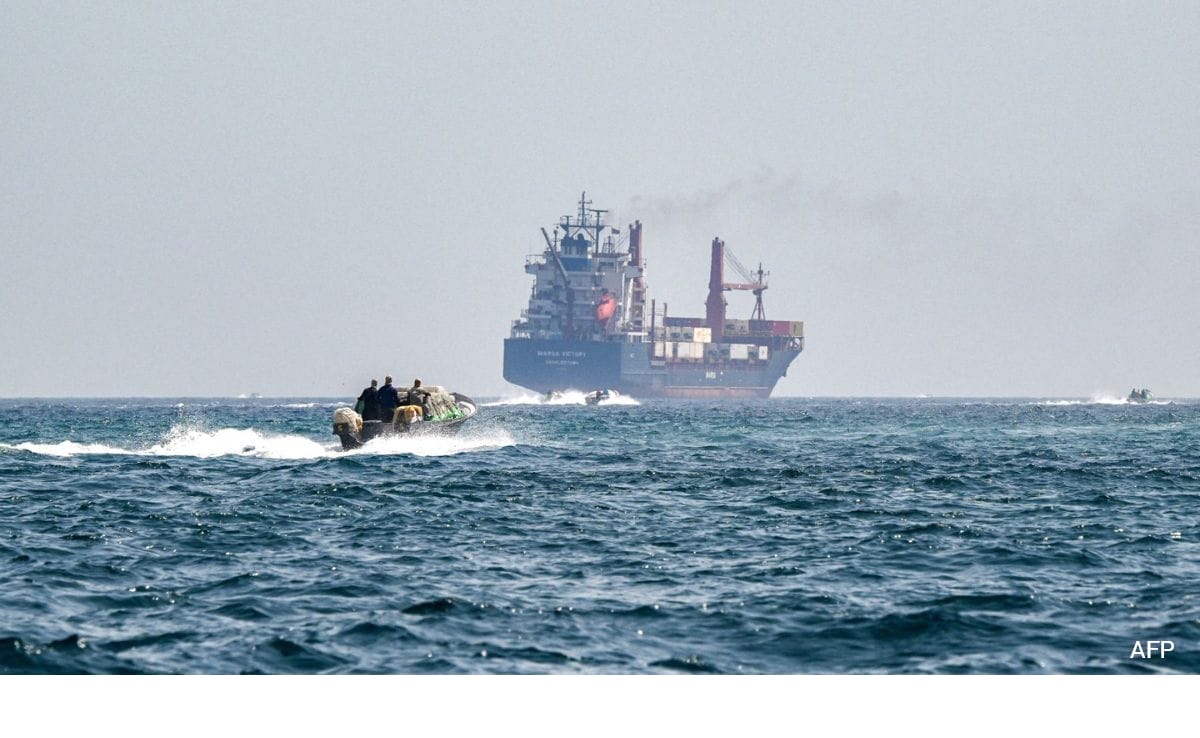
The Strait of Hormuz is not a canal, a highway, or a simple stretch of water; it is a legal friction point where the definition of "freedom" changes depending on who owns the coastline. At its narrowest, the passage shrinks to 21 miles wide. Because the territorial sea limit extends 12 miles from any shore, there is no "high seas" corridor in the Strait. Every ship moving through this vital artery—carrying a third of the world’s liquefied natural gas and 20% of its oil—is technically sailing through the sovereign waters of Iran or Oman.
This geographical reality creates a permanent state of legal tension. While the 1982 United Nations Convention on the Law of the Sea (UNCLOS) establishes the right of transit passage, the interpretation of that right is currently being dismantled by coastal states seeking to turn maritime law into a tool of asymmetric warfare.
The Transit Passage Myth
To understand why the Strait is so volatile, we have to look at the mismatch between international theory and regional reality. Most of the world operates under the 1982 UNCLOS rules. These rules provide for "transit passage," a gold standard for shipping that allows vessels to move through straits used for international navigation without interference, provided they proceed without delay and refrain from threats of force.
The problem is that Iran signed but never ratified UNCLOS. Instead, Tehran leans on the older 1958 Convention on the Territorial Sea, which offers a much weaker protection called innocent passage.
Under innocent passage, a coastal state has significantly more power to intervene. They can suspend passage if they deem it "prejudicial to the peace, good order, or security" of the state. This is not a semantic argument between law professors. It is the justification used whenever a commercial tanker is boarded by fast-moving commandos. By claiming that a ship has violated environmental regulations or collided with a local fishing boat—as seen in the seizures of the Stena Impero or the Advantage Sweet—coastal authorities transform a routine transit into a criminal or national security event.
The Asymmetric Weaponization of Environmental Law
Naval warfare in the 21st century rarely starts with a torpedo. It starts with a clipboard. Investigative tracks show a consistent pattern where "safety of navigation" and "environmental protection" are used as proxies for military blockade.
When a state cannot legally block a strait without declaring formal war, they use administrative harassment. They cite "pollution risks" to board vessels. They demand to inspect manifests. This creates a "gray zone" where the law of the sea is used as a shield for state-sponsored disruption. This tactic bypasses the traditional naval deterrents of the West. You cannot easily fire a missile at a coast guard official who claims he is investigating an oil leak, even if that leak is a fiction.
This administrative friction has a massive economic footprint. Insurance premiums for "War Risk" areas do not spike because of the fear of a ship sinking; they spike because of the fear of a ship being tied up in a legal port for six months of "investigation."
The Subsurface Reality of Transit
While tankers dominate the headlines, the real legal battle happens underwater. One of the most critical distinctions between "transit passage" (UNCLOS) and "innocent passage" (1958 Convention) involves submarines.
Under transit passage, submarines are allowed to transit submerged. This is vital for the nuclear deterrent strategies of major powers. However, under innocent passage, submarines are required to navigate on the surface and show their flag.
Iran’s insistence on the 1958 rules is a direct challenge to the stealth capabilities of the U.S. Fifth Fleet. By demanding that all vessels follow "innocent passage," they are essentially demanding that the U.S. Navy announce its movements and surrender its primary tactical advantage. This creates a perpetual state of "creeping jurisdiction," where a coastal state slowly expands its authority over international waters until the "freedom of the seas" exists only on paper.
The Problem of Dual-Use Technology
Modern maritime law was written before the era of autonomous underwater vehicles (AUVs) and massive sensor arrays. Today, a commercial vessel can be a platform for intelligence gathering. This blurs the line of what constitutes "innocent" behavior. If a tanker is mapping the seafloor with advanced sonar, is it still "just passing through"?
The law provides no clear answer. This ambiguity gives coastal states the "legal cover" to harass ships they suspect of being part of a broader surveillance network.
The Illusion of Proportionality
When a ship is seized, the international community often calls for a "proportional response." This is a fundamental misunderstanding of how maritime law interacts with naval power.
In the Strait of Hormuz, the "proportional" response to a legal seizure is a legal appeal. But legal appeals in the courts of the seizing state can take years. Meanwhile, the global supply chain bends. The military alternative—escorting every single tanker—is a logistical nightmare that requires a fleet size that no modern navy currently maintains.
The strategy used by actors in the Strait is to exploit the "law of the sea" to make the cost of defending the sea higher than the cost of the disruption. They aren't trying to win a naval battle; they are trying to win a budget battle in the capital cities of their enemies.
Mining the Legal Gaps
Sea mines are the ultimate expression of this legal-military overlap. International law—specifically the Hague Convention VIII of 1907—prohibits the laying of unanchored automatic contact mines unless they become harmless within an hour. But the law is silent on "smart" mines that can be triggered remotely or programmed to ignore certain acoustic signatures.
In the Strait, the mere rumor of mines is as effective as the mines themselves. From a legal standpoint, if a coastal state claims it is "sweeping for mines" and must close a shipping lane for safety, international law generally supports that safety move. It is the perfect "legal" blockade. It allows a state to halt traffic without ever firing a shot, citing its "responsibility" to protect the marine environment from potential explosions.
The Death of the Global Commons
We are witnessing the fracturing of the "Global Commons." For a century, the assumption was that the oceans belonged to no one and were open to everyone. That era is ending. The Strait of Hormuz is the laboratory for a new type of territorialism where coastal states use a mix of domestic law, environmental regulation, and historical grievance to "nationalize" international waterways.
This is not a problem that can be solved by simply "enforcing the law," because the actors involved don't agree on which law applies. The United States enforces a law (UNCLOS) that it has not ratified, while Iran ignores the law it has not ratified in favor of an older one that suits its geography.
When the legal framework of a chokepoint is this broken, the only "law" that remains is the one dictated by the presence of a gray-hulled destroyer. But even that presence is being neutralized by the subtle, administrative warfare of boarding parties and "pollution" inspections.
The reality for the shipping industry is grim. You are no longer sailing through international waters; you are sailing through a legal minefield where the rules are rewritten in real-time by whoever has the fastest boats and the most aggressive lawyers.
Stop looking for a diplomatic breakthrough. The friction in the Strait is not a bug in the system; it is a feature of a new world order where geography is once again destiny, and the law of the sea is whatever the man with the gun says it is.
Shipping companies should stop relying on the "guarantees" of international treaties and start budgeting for the inevitability of state-sponsored extortion disguised as maritime regulation.