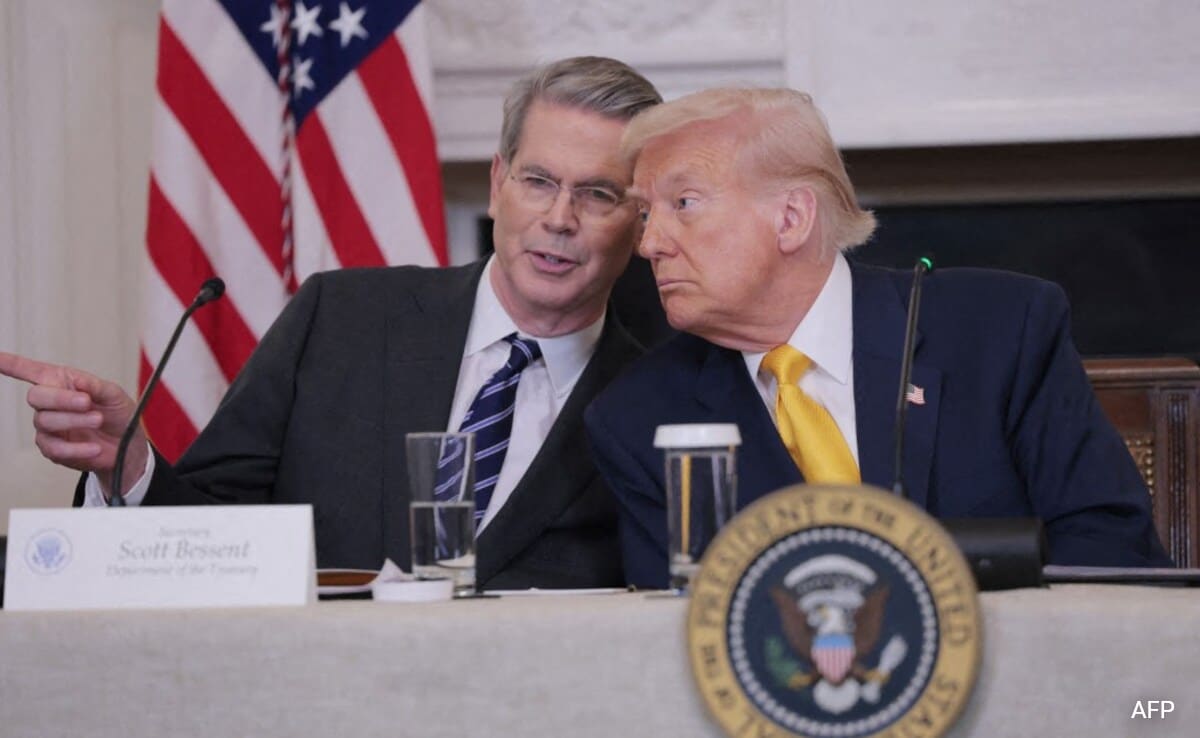
The global oil market operates on a binary of perceived and actual enforcement, a distinction the U.S. Treasury is currently exploiting to manage domestic energy prices without formally lifting legislative barriers. When Treasury officials signal a shift toward "unsanctioning" oil that is already in transit, they are not describing a change in law, but a strategic adjustment in the Enforcement Probability Function. This maneuver seeks to increase global supply by reducing the "risk premium" applied by shippers, insurers, and refineries when handling Iranian crude, thereby lowering the Brent-WTI spread without the political cost of a formal treaty.
The Triad of Sanction Friction
To understand how "unsanctioning" works in practice, one must first deconstruct the three layers of friction that currently prevent Iranian barrels from reaching the open market at scale. Sanctions do not physically stop oil; they increase the cost of transaction until the trade becomes economically non-viable for most actors.
- Financial Intermediation Risk: The difficulty of clearing USD-denominated payments through the SWIFT system or finding non-sanctioned correspondent banks.
- Logistical Stealth Costs: The "Ghost Fleet" requirement. This involves Ship-to-Ship (STS) transfers, disabling Automatic Identification Systems (AIS), and utilizing aging tankers that operate without P&I Club insurance.
- The Buyer’s Discount: Because the oil is "tainted," it typically sells at a significant markdown—often $10 to $15 below the benchmark—to compensate Chinese "teapot" refineries for the regulatory risk.
When the Treasury Chief discusses softening the stance on oil already shipped, the goal is to collapse these friction points. By signaling that "waterborne" barrels will not be seized or their financiers targeted, the U.S. effectively lowers the Logistical Stealth Cost. If a refiner believes the cargo in front of them will not trigger secondary sanctions, the necessity for the "Buyer’s Discount" diminishes, and the volume of trade naturally accelerates.
The Strategic Logic of Retroactive Immunity
The focus on oil "already being shipped" is a calculated choice in timing. Sanctioning a wellhead is a long-term geopolitical move; sanctioning a tanker is a short-term market intervention. By focusing on transit, the U.S. Treasury targets the most liquid part of the supply chain.
The Theory of Managed Seep
The U.S. administration faces a "Trilemma" where they must balance three competing objectives:
- Maintaining a hardline stance on nuclear proliferation.
- Preventing a spike in domestic gasoline prices during an election cycle.
- Limiting the revenue flow to the Iranian Revolutionary Guard Corps (IRGC).
The solution is Managed Seep. By allowing oil that has already left Iranian ports to reach its destination without interference, the administration adds 500,000 to 1 million barrels per day (bpd) to global supply. This volume is sufficient to dampen price volatility caused by OPEC+ production cuts or Red Sea shipping disruptions. Because the oil is already "out of the bag," the Treasury can claim they are simply recognizing a fait accompli rather than rewarding a hostile state.
Operationalizing the "Unsanctioning" Signal
Market participants do not wait for a formal press release to change their behavior. They watch for shifts in the Office of Foreign Assets Control (OFAC) Enforcement Density.
A period of "unsanctioning" is characterized by three observable phenomena:
- Issuance of General Licenses: Broadening the scope of what constitutes "humanitarian" or "incidental" transactions.
- Enforcement Silence: A measurable drop in the designation of new tankers or front companies associated with the Iranian National Oil Company (NIOC).
- Technical Guidance Adjustments: Subtle updates to "Advisories to the Maritime Industry" that soften the requirements for due diligence regarding the origin of blended crudes.
This creates a "grey zone" where compliance officers at major commodity houses feel safe enough to facilitate trades, provided they have a thin layer of plausible deniability. The Treasury’s rhetoric serves as the green light for this internal policy shift within private banks.
The Cost-Benefit Calculus for Iran and the West
From a cold analytical perspective, this policy shift represents a transfer of leverage.
For Iran, the benefit is immediate liquidity. Even at a discount, selling 1.5 million bpd provides the hard currency necessary to stabilize the Rial. However, they remain vulnerable to "snapback" enforcement. If the U.S. decides to tighten the screws again, the Iranian economy faces a "bullwhip effect" where suddenly stranded assets (tankers at sea) become massive liabilities.
For the U.S., the benefit is price stability at zero fiscal cost. They are essentially using Iranian oil as a "Strategic Petroleum Reserve" that they don't have to pay for. The risk, however, is Sanction Erosion. Once the infrastructure for bypassing sanctions becomes normalized and "unsanctioned" by silence, it becomes exponentially harder to re-impose those barriers later. The "Ghost Fleet" matures into a permanent, parallel shadow economy that is immune to future Western financial pressure.
Structural Bottlenecks and the Limits of Policy
Even if the U.S. Treasury completely ignores every Iranian tanker currently at sea, supply will not increase infinitely. Physical and structural constraints create a ceiling:
- Storage Saturation: Much of the "unsanctioned" oil is already sitting in bonded storage in places like Dalian or Qingdao. Releasing it into the market helps prices, but it doesn't represent new production.
- Refinery Configuration: Iranian Light and Heavy grades require specific refinery configurations (complex cracking). Only a subset of global refineries can process this crude without significant maintenance downtime.
- Insurance Gaps: Even with a "wink and a nod" from the U.S., top-tier European insurers will not touch these vessels without a formal, written waiver. This keeps the oil trapped in the shadow fleet, which is prone to accidents that could create a catastrophic environmental liability, further complicating the "unsanctioning" narrative.
The Strategic Pivot
The current trajectory indicates that the U.S. is moving toward a Commodity-First Foreign Policy. In this framework, the stability of the global energy price index takes precedence over the absolute isolation of adversarial regimes.
Market participants should anticipate a period of "Selective Enforcement," where the frequency of tanker seizures or financial penalties correlates inversely with the price of Brent crude. If Brent exceeds $90 per barrel, expect a surge in "already shipped" Iranian oil hitting the market with quiet Treasury approval. If prices dip below $70, the administration will likely resume aggressive enforcement to appease domestic political critics, knowing the market can absorb the supply shock.
The immediate tactical move for energy traders is to monitor the Iranian Floating Storage metrics. A drawdown in these levels, coinciding with "conciliatory" language from the Treasury, confirms that the de facto unsanctioning is in effect. This is the signal to price in a "supply surplus" regardless of what the official OPEC+ quotas suggest. The era of binary sanctions is over; we have entered the era of the Geopolitical Thermostat, where the U.S. Treasury dials Iranian exports up or down to maintain the optimal global economic temperature.
Would you like me to analyze the specific impact this "Managed Seep" strategy has on the Brent-WTI spread over the next fiscal quarter?