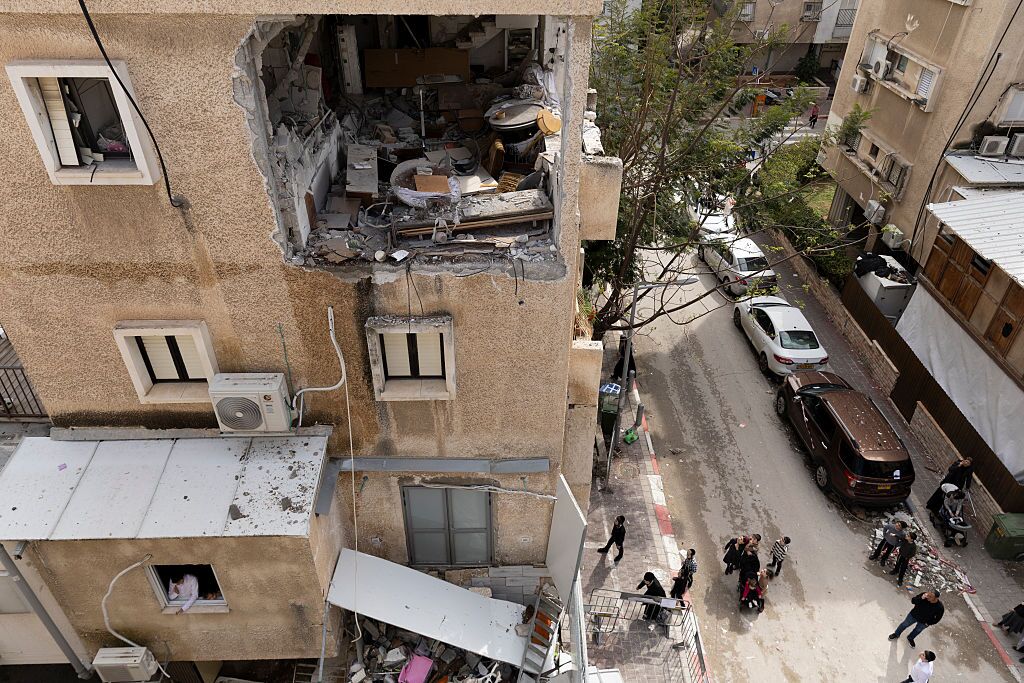
The headlines are carbon copies of a dying medium. "Man in court charged with murder of woman at high-rise block of flats." It is a clinical, detached, and utterly useless piece of stenography. It serves the court's schedule, not the public's understanding.
Standard crime reporting operates on a "lazy consensus" that the only thing that matters is the mechanical sequence of the arrest and the initial hearing. This is a failure of imagination and a disservice to the community. We are fed the who and the when while the why—specifically the environmental and systemic failures of high-density housing—is ignored.
I have spent years looking at the intersection of urban planning and social decay. I have seen developers throw up "blocks of flats" as if they are solving a housing crisis, only to create vertical silos of isolation. When a tragedy happens within these walls, the media treats the building like a neutral backdrop. It is not. The architecture is an accomplice.
The Myth of Neutral Spaces
Most people believe that crime is a purely moral failing of the individual. This is a comforting lie. It suggests that if we just "get the bad guys," the problem vanishes. But the "high-rise block" isn't just a location; it is often a catalyst for social friction.
When you stack hundreds of people on top of each other with minimal communal space, broken lifts, and zero oversight from onsite management, you are not building homes. You are building pressure cookers. Standard news articles fail to mention the history of the building, its occupancy rates, or its security failures. They treat the court appearance as the climax when the real story is the slow-motion collapse of the environment that preceded it.
Imagine a scenario where a reporter actually looked at the noise complaint records of that building. Imagine they looked at how many times the police were called for non-violent disputes that were ignored until they became fatal. The "high-rise" is a specific typology of urban living that requires specific social support systems. When those are absent, the "charge in court" is merely the inevitable conclusion of a failed social experiment.
The False Comfort of the Courtroom
The courtroom is a theater of order. It exists to convince the public that the system is functioning. By focusing solely on the "man in court," media outlets reinforce the idea that the problem is being handled.
But is it?
The legal system deals with the aftermath. It does nothing to address the "criminogenic" factors of the modern city. Criminology experts like Oscar Newman, who pioneered the concept of "Defensible Space" in the 1970s, proved that the physical layout of housing directly influences the rate of violent crime. Newman argued that:
- Territoriality: Residents must feel they own the space outside their front door.
- Natural Surveillance: The ability to see and be seen without cameras.
- Image: The building must not look like an institutionalized warehouse.
Most modern high-rises fail all three tests. They are anonymous, opaque, and intimidating. When a crime occurs, the media focuses on the individual's "evil" rather than the environment's "void."
Dismantling the Victim-Offender Binary
The "lazy consensus" of crime reporting demands a clear hero and a clear villain. While legal culpability is black and white, the social reality is a muddy grey.
We are taught to ask: "What was he thinking?"
We should be asking: "Who else knew this was coming?"
In high-density housing, neighbors often hear the screams. They hear the arguments through thin walls for months. Why don't they intervene? It isn't always apathy. It is "diffusion of responsibility," a psychological phenomenon where individuals feel less likely to take action when others are present—or in this case, when hundreds of others are behind closed doors. The architecture of the high-rise amplifies this. It makes you a spectator in your own community.
If you want to understand the murder at the block of flats, stop reading the court transcripts. They are sanitized. They are designed to fit into a legal box. Instead, look at the broken intercom system that allowed the intruder in. Look at the lighting in the stairwell that hasn't worked since 2024. Look at the property management company that has its office three cities away.
The Actionable Truth for the Resident
If you live in one of these vertical silos, the standard news cycle is gaslighting you. It tells you that violence is an anomaly. It is not. It is a predictable outcome of neglected infrastructure.
Stop waiting for the police to "solve" crime. They are a reactive force. Instead, you must disrupt the anonymity of your own environment.
- Demand Onsite Presence: If your building has more than fifty units and no onsite manager, it is a liability.
- Audit Your Defensible Space: If you can’t see the entrance from a common area, the building is poorly designed.
- Weaponize the Data: When a crime occurs, don't just mourn. Pull the Freedom of Information requests for the building's historical police calls. Force the narrative away from the "individual monster" and toward the "negligent landlord."
The Cost of Our Obsession with "Man in Court"
Every time we click on a headline that focuses on the trial and ignores the context, we are voting for more of the same. We are saying that we don't care about the conditions that breed violence; we only care about the punishment.
This is the dark secret of the news industry: Blood sells, but structural reform is boring. It is much easier to write about a man in a dock than it is to write about the failures of the Ministry of Housing or the predatory practices of "luxury" flat developers who cut corners on safety.
I admit the downside of this perspective. It feels colder. it doesn't offer the emotional release of seeing a "monster" behind bars. It requires us to look at our own cities and admit that we have designed them to be dangerous. It forces us to acknowledge that the "high-rise" is often a vertical slum with a fresh coat of paint.
The next time you see a headline about a tragedy in a block of flats, don't look at the face of the accused. Look at the building behind him. That is where the real evidence is buried.
Stop asking if he did it. Start asking how we made it so easy for him.