The narrative is lazy. We are told that Iran stole U.S. blueprints, and now the U.S. is desperately "learning" from Iranian tactics. This "Copycat Drone War" frame is a fundamental misunderstanding of how military evolution actually works. It treats high-end aerospace engineering like a high schooler’s physics project where the person who peeks at the neighbor's paper wins.
The truth is far more brutal. Nobody is winning the "copying" game because the game itself is obsolete. While analysts obsess over whether the Shahed-136 looks like a Reaper or whether the Pentagon’s "Replicator" program is just a belated response to Tehran, they are missing the seismic shift: We have entered the era of the Attritable Meat-Grinder.
The U.S. didn't "copy" Iran. The U.S. hit a wall of economic reality. Iran didn’t "copy" the U.S.; they simply exploited the fact that a $20,000 lawnmower engine with wings can force a $2 million interceptor missile to fire. This isn't a race for intellectual property. It’s a race to the bottom of the price-to-kill ratio.
The Fetish of the High-End Platform
For three decades, the U.S. military-industrial complex operated on a "Quality over Quantity" dogma. We built the F-35 and the Global Hawk—marvels of engineering that cost more than small-nation GDPs. These are beautiful, fragile things. They are the Ferraris of the sky.
Iran looked at the Ferrari and realized they didn't need one to win a street fight. They needed a million bricks.
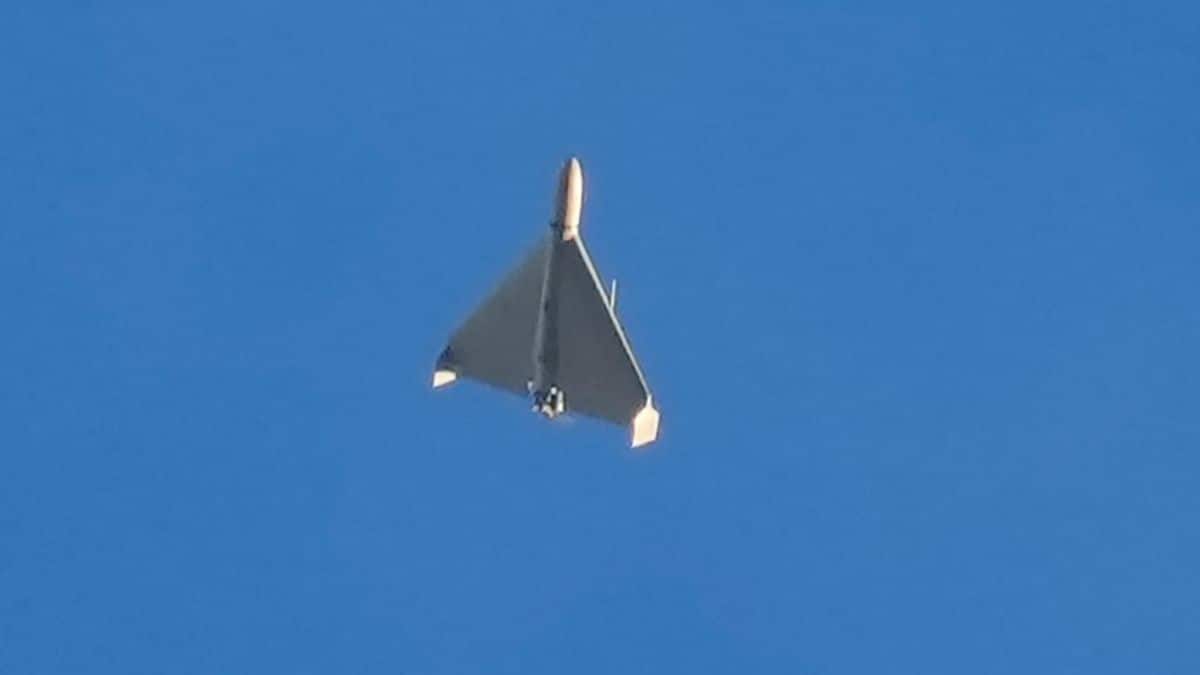
The Shahed-136 is not a "drone" in the sense that a Predator is. It is a slow, loud, incredibly stupid cruise missile. It uses off-the-shelf components, civilian GPS, and a motor you could find in a hobby shop. It has zero "sophistication." And that is its greatest strength.
When you see headlines about the U.S. "adopting Iranian-style tactics," what they really mean is the U.S. is finally admitting that $100 million platforms are liabilities in a saturated environment. If you lose one F-22, it’s a national tragedy. If Iran loses 50 Shaheds, it’s Tuesday.
The Interceptor Trap: Math as a Weapon
The media loves to talk about "stealth" and "range." I’ve spent years looking at procurement budgets, and the only metric that matters right now is Cost Per Intercept.
Imagine a scenario where an adversary launches a swarm of 100 drones, each costing $25,000. Your defense system—let’s say a Patriot battery—fires interceptors that cost $3 million to $4 million each.
- Attacker Spend: $2.5 million
- Defender Spend: $300 million to $400 million
The attacker wins even if every single drone is shot down. They win by bankrupting the defender. This is the "Asymmetric Attrition" model that Iran mastered while the West was still trying to figure out how to make a drone that could do a 3D scan of a target's shoelaces.
The U.S. "copying" Iran is actually a desperate attempt to fix its broken math. Programs like "Replicator" aren't about mimicking Iranian tech; they are about trying to find a way to mass-produce cheap, "attritable" (military-speak for "disposable") systems before the next major conflict drains the Treasury.
The Myth of the "Captured" RQ-170
The origin story of this "copycat" narrative usually points to the 2011 capture of a U.S. RQ-170 Sentinel by Iran. The "consensus" says Iran reverse-engineered it to create the Saegheh.
Let's be real: looking at a stealth shape doesn't give you the RCS (Radar Cross Section) coatings, the engine metallurgy, or the sensor fusion software. Iran "copying" the Sentinel is like a carpenter looking at a smartphone and carving a piece of wood into the same shape. It looks similar on a parade float, but the internal guts are worlds apart.
The danger isn't that they copied the tech. The danger is that they proved you don't need the tech to disrupt a superpower. They used "good enough" engineering to create a regional denial umbrella. While we were playing chess, they were just throwing the chessboard at our heads.
Why "Replicator" is Already Behind
The Pentagon's Replicator initiative aims to field thousands of cheap drones within two years. It’s the U.S. trying to play the "Quantity" game. But there’s a massive problem that nobody in D.C. wants to admit: The Supply Chain is not in Virginia.
Iran can build thousands of drones because they aren't tied to the "Gold-Plating" requirements of U.S. defense contractors. A U.S. drone needs a specific, certified screw from a specific, certified sub-contractor that takes six months to ship. An Iranian drone uses whatever is available on the black market or from Chinese civilian manufacturers.
If the U.S. wants to "copy" the success of low-cost drone warfare, it has to dismantle its own bureaucratic procurement process. You cannot build a "cheap" drone using the same companies that build $2 billion submarines. Their overhead alone would make a $20,000 drone cost $200,000.
Software is the Only Moat Left
If there is a real "Copycat War," it's happening in the code, not the airframes. The airframes are solved science. Anyone with a YouTube tutorial and a carbon fiber mold can build a delta-wing drone.
The true frontier—and where the U.S. actually holds a lead—is Autonomous Swarm Coordination.
Currently, Iranian drones are mostly "dumb." They fly to a coordinate and explode. The next step is a swarm that talks to itself. If drone #1 gets shot down, drones #2 through #10 re-route in real-time to fill the gap. This requires edge computing and AI that Iran currently struggles to miniaturize and mass-produce.
But don't get comfortable. The gap is closing because the "civilianization" of AI means that the same algorithms used for delivery drones or self-driving cars can be repurposed for kinetic kills.
The Brutal Truth for the Taxpayer
We are entering a period where the expensive "Shields" are being outpaced by the cheap "Spears."
For decades, the U.S. Navy could park a Carrier Strike Group off any coast and command the sky. Now, that carrier is a $13 billion target that can be harassed, if not neutralized, by $10 million worth of drone swarms.
The "Copycat" headline is a distraction. It suggests a balance of power where two sides are mimicking each other. It’s not a balance. It’s a collapse of the old way of war. We are watching the sunset of the "Exquisite Platform."
If you're still looking for the "next" F-35, you've already lost the war. The future isn't a better plane; it's a swarm so thick and so cheap that "stealth" becomes a redundant concept. Why hide when you can just overwhelm?
Stop asking who is copying whom. Start asking why we are still spending billions to defend against 3D-printed wings.
Would you like me to analyze the specific electronic warfare counter-measures being developed to jam these low-cost swarms?