The convergence of Ukrainian operational requirements with Gulf state strategic interests represents more than a diplomatic meeting; it is a forced synchronization of two distinct defense architectures facing a shared technological bottleneck. At the center of this trilateral dialogue is the failure of traditional, high-cost kinetic interceptors to scale against low-cost, mass-produced autonomous threats. The fundamental problem is not a lack of ammunition, but a catastrophic inversion of the cost-exchange ratio.
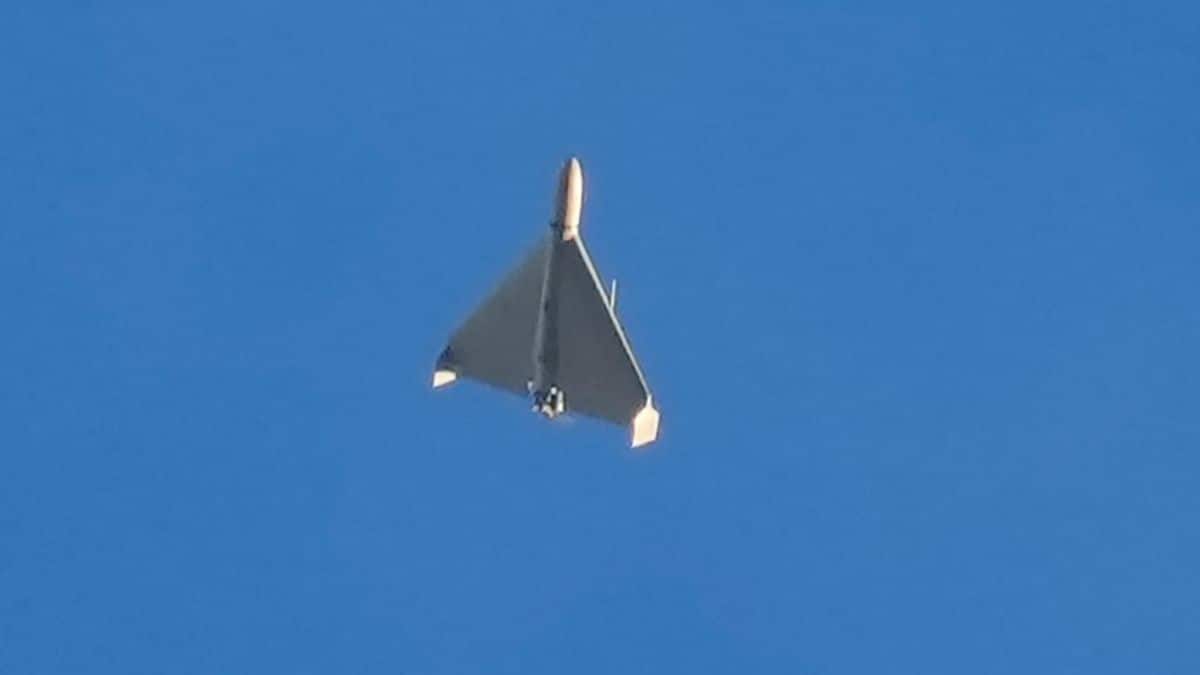
Ukrainian defense forces currently face a multi-tiered aerial threat profile, ranging from long-range "one-way attack" (OWA) munitions like the Shahed-136 to tactical FPV (First Person View) drones that saturate the front lines. The Gulf states—specifically the UAE and Saudi Arabia—have spent the last decade absorbing similar, albeit less frequent, strikes against energy infrastructure. The common denominator is the transition from "exquisite" electronic warfare to "commodity" attrition.
The Three Pillars of Modern Drone Detection
Effective drone defense is categorized by a sequence of three technical hurdles: detection, classification, and mitigation. The current talks prioritize the first two, as mitigation is useless without a high-fidelity track.
- Passive RF Sensing: This involves scanning the electromagnetic spectrum for the specific control frequencies or telemetry links used by the drone. The advantage is zero emissions; the defender does not give away their position. The limitation occurs when drones transition to autonomous, pre-programmed GPS paths or use frequency-hopping spread spectrum (FHSS) techniques that blend into background noise.
- Acoustic Triangulation: This method utilizes arrays of high-sensitivity microphones to detect the specific decibel peaks and frequency signatures of small internal combustion or electric motors. In Ukraine, this has been decentralized into "sensor networks" using modified smartphones. While cheap, these systems suffer from a high "false positive" rate in active combat zones where artillery and heavy machinery create constant acoustic interference.
- Active Radar (AESA): Active Electronically Scanned Array radars are the gold standard for precision. However, the radar cross-section (RCS) of a plastic or carbon-fiber drone is negligible. Detecting a Mavic-sized drone is equivalent to tracking a large bird at several kilometers, requiring high-frequency (X-band or Ku-band) radars that are expensive and vulnerable to anti-radiation missiles.
The Cost Function of Persistent Defense
The economic reality of this conflict is dictated by the Cost per Intercept. If a defender uses a $2 million interceptor missile to down a $30,000 drone, the defender loses the war of attrition even if they "win" the engagement.
The strategic shift discussed in these talks involves moving away from "Point Defense" (protecting a single building) toward "Area Denial" (protecting a region). To achieve this, the sensor architecture must be commoditized. The Gulf states bring capital and historical data on Iranian-designed platforms, while Ukraine provides a real-world testing ground for signal processing algorithms.
- Signal Processing Latency: The time between detection and weapon lock. In high-density environments, the "OODA loop" (Observe, Orient, Decide, Act) must be compressed to under 15 seconds.
- Sensor Fusion: Combining RF, thermal, and optical data into a single "track." If an RF sensor sees a signal but the thermal camera sees no heat, the system must be smart enough to ignore the "ghost" or identify it as an electronic warfare decoy.
The Bottleneck of Electronic Warfare (EW)
The second limitation is the "Friendly Fire" paradox in the EM spectrum. When Ukraine or its partners deploy high-powered jammers to drop enemy drones, they frequently blind their own communications and GPS-guided munitions. This creates a "Radio Silence" requirement that often leaves gaps in the defense.
The talks are likely focusing on Directed Energy Weapons (DEW) and High-Power Microwaves (HPM). Unlike traditional jammers, these systems focus a narrow beam of energy to fry the internal circuitry of a drone without washing out the entire local spectrum. This technology exists in prototype stages in the US and the Gulf, but it requires massive power supplies, making it difficult to deploy in the highly mobile environment of the Ukrainian front.
Data Sovereignty and the Library of Signatures
A critical, often overlooked component of these negotiations is the "Signature Library." Every drone engine, every transmitter, and every flight controller has a unique digital fingerprint.
- The Gulf Data: Years of intercepting Houthi-launched drones have provided a massive dataset on the flight characteristics and RF profiles of Iranian-origin hardware.
- The Ukrainian Data: Real-time telemetry from the most dense EW environment in human history.
Sharing these libraries allows AI-driven detection systems to identify a threat the millisecond it appears on the horizon, distinguishing a lethal munition from a civilian quadcopter. The friction in these talks is likely centered on the classification of this data; it is highly sensitive intelligence that reveals the specific capabilities of the detectors themselves.
Tactical Implementation: The "Networked Mesh"
The outcome of these tripartite talks will likely manifest as a "Mesh Network" of sensors. Instead of relying on a few multimillion-dollar radar stations, the strategy involves deploying thousands of low-cost, networked nodes.
- Distributed Processing: Each node performs its own basic analysis to reduce the amount of data sent back to the central command.
- Multi-Static Radar: Using one transmitter and multiple separate receivers to detect drones from different angles, making "stealth" shapes or materials irrelevant.
- Autonomous Interceptors: Small, "hunter-killer" drones that use the sensor mesh to find and ram enemy drones, bringing the cost of intercept down to the low thousands.
The primary risk is the rapid evolution of drone autonomy. As drones move toward "terminal AI"—where the drone uses an onboard camera to navigate and hit a target without any radio link—traditional RF detection and jamming become obsolete. Detection must then rely entirely on visual and thermal imaging, which are hindered by weather, smoke, and night conditions.
The strategic play is to move the detection threshold further from the target. By the time a drone is audible or visible to a human operator, the response window is too narrow. The goal of the US-Ukraine-Gulf collaboration is the creation of a "Translucent Shield": an integrated sensor layer that makes the low-altitude airspace as visible as the high-altitude corridors managed by traditional air traffic control. Success is not measured by the number of drones shot down, but by the stabilization of the cost-exchange ratio to a point where mass drone swarms are no longer a viable economic weapon.
The immediate priority must be the standardization of data protocols between US-made Aegis/Patriot systems, Gulf-operated tactical sensors, and Ukrainian frontline EW units. Without a unified data language, these platforms remain isolated "islands" of defense, vulnerable to the very saturation they were built to prevent.