Military analysts love a good comeback story. Currently, they are obsessed with the "return of the torpedo." They point to the sinking of the Moskva, the rising tension in the South China Sea, and the development of the Russian Poseidon—a nuclear-powered, cobalt-salted nightmare—as evidence that we are entering a new golden age of sub-surface carnage.
They are wrong. For an alternative perspective, check out: this related article.
The torpedo is not returning. It is being reinvented as a niche, last-resort delivery system for a brand of warfare that is increasingly allergic to the water itself. To call the current shift in naval power a "torpedo renaissance" is like calling a smartphone a "telegraph renaissance" just because it still sends text.
The industry is clinging to the romanticized image of the Das Boot era because it is comfortable. It fits the established procurement cycles of billion-dollar defense contractors. But if you look at the physics and the telemetry of modern engagement, the traditional heavyweight torpedo is a dinosaur waiting for a comet. Further analysis on this trend has been shared by Mashable.
The Weight of Failure
The common argument is that torpedoes are the "silent killers" because they attack the hull from below, using the incompressible nature of water to snap a ship’s keel. It sounds devastating. It is.
But it’s also nearly impossible to pull off against a peer competitor today.
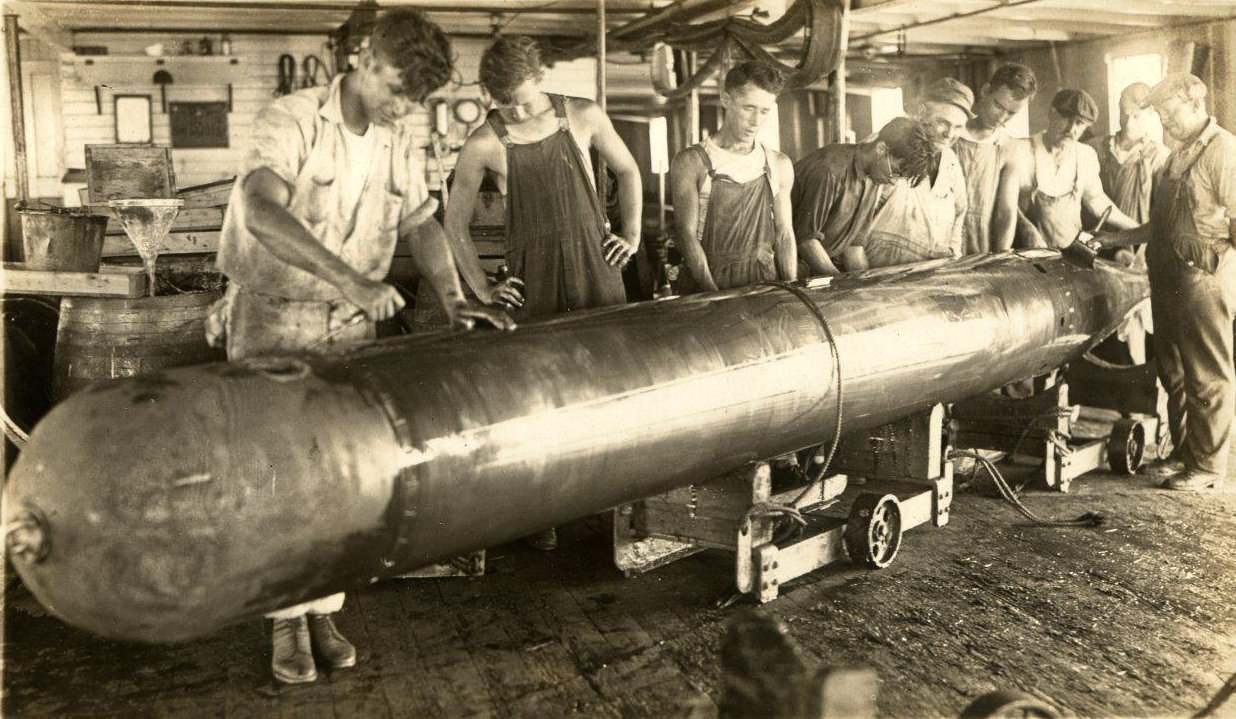
A standard Mark 48 ADCAP (Advanced Capability) torpedo costs roughly $5 million per unit. It requires a $3 billion nuclear-powered attack submarine (SSN) to get within a meaningful range. Once that torpedo is fired, the "silent" part of the equation vanishes. The moment that thermal engine kicks in or the active sonar pings, every acoustic sensor within fifty miles knows exactly where the shooter is.
In modern anti-submarine warfare (ASW), firing a torpedo is often a suicide note.
We have spent forty years perfecting Distributed Maritime Operations (DMO). We have arrays of "smarter" sea mines, P-8 Poseidon aircraft dropping sonobuoy grids that can hear a shrimp sneeze, and MAD (Magnetic Anomaly Detection) sensors that make the ocean transparent. The idea that a submarine can casually "stalk" a carrier strike group and slip a heavyweight torpedo under the screen is a fantasy maintained to justify massive naval budgets.
The Drone Delusion
Then we have the buzzword of the decade: Unmanned Underwater Vehicles (UUVs).
The "consensus" is that swarms of cheap, autonomous torpedo-drones will replace traditional submarines. This ignores the brutal reality of underwater physics.
- The Communication Barrier: Radio waves don't travel through salt water. If you want to talk to your "autonomous" swarm, you need an acoustic modem. These have the bandwidth of a 1990s dial-up connection and the range of a megaphone in a hurricane.
- Energy Density: Moving through water is hard. It is roughly 800 times denser than air. To move a torpedo-shaped object at speeds necessary to intercept a moving warship requires massive energy. You cannot do that with a Tesla battery and a dream.
When people talk about the "return of the torpedo" via UUVs, they are actually talking about slow-moving, smart mines. A mine is a stationary or slow-drifting trap. A torpedo is a high-speed interceptor. Conflating the two is a tactical error that leads to wasted R&D.
I have seen programs burn through $200 million trying to create "swarming torpedoes" only to realize they created a fleet of very expensive, very lost metal tubes that couldn't find their target without a tether.
The Real Threat is Not Under the Surface
If you want to kill a ship in 2026, you don't go under it. You go over it—very, very fast.
The obsession with torpedoes ignores the reality of the Hypersonic Gap. While we debate the merits of the Spearfish or the Black Shark torpedo, hypersonic cruise missiles are moving at Mach 5+.
A torpedo moves at maybe 50 to 60 knots.
A hypersonic missile moves at 3,800 miles per hour.
The math of modern interception favors the missile. Even with the best Aegis Combat System, the reaction time for an incoming hypersonic projectile is measured in heartbeats. For a torpedo? You have minutes. You have decoys like the AN/SLQ-25 Nixie. You have maneuverability.
The torpedo has become the "bolt-action rifle" of naval combat. Is it lethal? Yes. Do you want to rely on it when the other guy has a drone-directed artillery battery? Absolutely not.
The Poseidon Problem
Let’s address the elephant in the room: Russia’s Status-6 (Poseidon).
The media calls it a "mega-torpedo." It’s actually a slow-moving, nuclear-powered drone designed for shore-side genocide. It is not a weapon of naval warfare; it is a weapon of atmospheric terror.
Using the Poseidon as an example of a "torpedo comeback" is intellectually dishonest. It’s a delivery vehicle for a radioactive tidal wave. It doesn't solve the problem of how to win a naval engagement; it simply ensures that if you lose the war, everyone else loses the planet.
In a tactical sense, the Poseidon is a failure. It is loud. It is slow. It can be tracked by the Integrated Undersea Surveillance System (IUSS) from the moment it leaves the pier. Its only "strength" is that it’s too deep to hit with current interceptors—a problem that is being solved by—you guessed it—better missiles, not better torpedoes.
Acoustic Superiority is a Ghost
We need to stop pretending that "stealth" in the water is a permanent state.
Quantum sensing is the end of the torpedo’s relevance. We are approaching a point where gravity-gradient sensors and SQUIDs (Superconducting Quantum Interference Devices) will be able to detect the displacement of water by any large metallic object from miles away, regardless of how quiet its engine is.
When the ocean becomes transparent, the torpedo becomes a bright, glowing line on a HUD.
The future isn't a faster torpedo. The future is a multi-domain kinetic kill. We are looking at "encapsulated" weapons—missiles that are fired from a submarine, travel through the water in a dry shroud, and then ignite into the air to hit a target from the blind spot of the ship's radar.
The water is no longer the medium for the kill; it is merely the hiding spot for the launch.
Stop Buying the Hype
If you are a defense contractor or a policy maker, the "return of the torpedo" is a seductive lie. It allows you to keep building the same platforms we’ve used since 1970 with minor incremental upgrades.
The actual disruptive tech is in Non-Acoustic Detection and High-Speed Subsurface Cavitation.
Supercavitating torpedoes, like the Russian Shkval, have existed for years. They travel at 200+ knots by creating a bubble of gas around the projectile, effectively flying through the water. But they have a major flaw: you can't steer them because you can't use sonar through a gas bubble. They are unguided rockets under water.
The "nuance" the competitor missed is that the torpedo hasn't returned; it has hit a physical ceiling.
Until we solve the problem of high-speed underwater guidance—which requires a fundamental leap in physics, not just a "better" torpedo—the weapon remains a relic of a slower age.
The Actionable Reality
If you're looking at where the money is actually going, follow the sensors, not the shooters.
- Invest in seabed warfare: The real fight is over the fiber-optic cables and the energy pipelines. You don't need a Mark 48 to cut a cable. You need a small, dexterous ROV.
- Ignore the "Swarms": Until someone solves the underwater battery density problem, any "swarm" is just a collection of expensive anchors.
- Focus on Cross-Domain Interception: The winner of the next naval conflict won't be the one with the best torpedo. It will be the one who can force the enemy's submarines to surface—or stay so deep they are irrelevant—using air-dropped autonomous sensors.
The torpedo is a security blanket for admirals who grew up watching The Hunt for Red October. It’s time to grow up and realize that in the next war, if you're close enough to use a torpedo, you're already dead.
Move your assets. Change your range. Stop thinking in 2D.
The water is a shield, not a weapon. Use it that way.