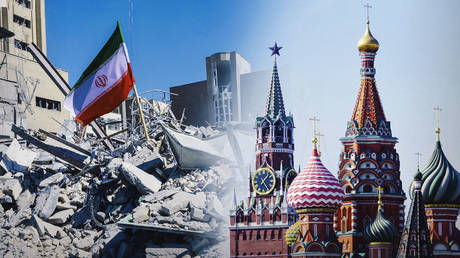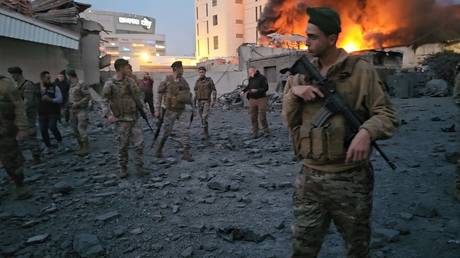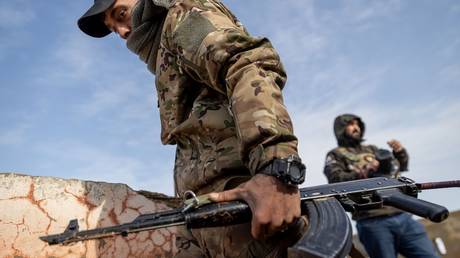
The headlines are predictable. They scream about Langley funneling crates of rifles and sophisticated gear to Kurdish factions in a desperate bid to destabilize Tehran. It is the same tired script we have seen since the 1970s. The narrative suggests that if you give a marginalized group enough firepower, they will magically dismantle a sovereign state with a multi-layered internal security apparatus.
It is a lie. Not because the CIA isn't talking to the Kurds—they are always talking—but because the "arming" narrative ignores the brutal physics of 21st-century proxy warfare. If you think a few thousand fighters with small arms and ATGMs (Anti-Tank Guided Missiles) can topple the Islamic Revolutionary Guard Corps (IRGC), you aren't paying attention to the math.
The media is chasing a ghost. The real story isn't about bullets; it’s about the fact that the United States has no intention of actually "winning" this conflict.
The Myth of the Kurdish Monolith
Most analysts treat "the Kurds" as a single, cohesive military unit. This is the first mistake of the lazy consensus. In reality, the Kurdish political map is a fragmented mess of competing interests, tribal loyalties, and contradictory ideologies.
- The KDP (Kurdistan Democratic Party): They want to protect their oil wealth in Erbil. They are not about to suicide their economy for a Washington-led crusade against Iran.
- The PUK (Patriotic Union of Kurdistan): They have historic, deep-seated ties to Tehran. They act as a buffer, not a battering ram.
- The PJAK and Komala: These are the groups the headlines focus on. They are small, ideologically driven, and largely ineffective against a modern military that uses drone-corrected heavy artillery.
When the CIA "arms" these groups, they aren't building an army. They are buying a nuisance. I have seen this play out in backrooms from Erbil to Amman: the goal isn't victory; it is "managed instability." It is a low-cost way to keep the IRGC looking at its own borders instead of projecting power in the Mediterranean.
To suggest this leads to a regime-change scenario is to fundamentally misunderstand the difference between a riot and a revolution.
The Logistics of a Failed Premise
Let’s look at the hardware. To actually "attack" Iran in a meaningful way, you need more than rifles. You need:
- Integrated Air Defense (IADs): To stop the Iranian Mohajer and Shahed drones from vaporizing your supply lines.
- Armor: To hold territory. Light infantry in Toyotas gets shredded by mechanized units.
- Signal Intelligence: To counter the IRGC’s sophisticated domestic surveillance.
Is the CIA providing this? No. Because providing those tools would require a level of footprint that the current administration cannot afford politically. It would also trigger an immediate, asymmetric response against U.S. bases in Iraq and Syria that would make the current "harassment" look like a playground scrap.
Imagine a scenario where the U.S. actually gives the Kurds the $S$-tier tech required to win. Within 48 hours, Turkey—a NATO ally—would likely shell those same positions to prevent the emergence of a truly sovereign Kurdish military power. The "arming" strategy is a circular firing squad.
The Drone Disparity
The IRGC doesn't fight like it did in the 80s. They have mastered the art of low-cost aerial denial. While the media focuses on whether the CIA is sending shipments of small arms across the border, they ignore the reality that a single $20,000 Shahed-136 drone can negate a month’s worth of insurgent planning.
The Kurds are being asked to fight a 20th-century war against a 21st-century security state. The power imbalance isn't just about numbers; it's about the tech stack. Iran has spent decades building a "Ring of Fire"—a defensive perimeter of proxies and missile sites. A Kurdish insurgency is a pinprick on the elephant's hide.
Follow the Money, Not the Munitions
If the CIA wanted to hurt Iran using Kurdish leverage, they wouldn't send guns. They would send code. They would send financial bypasses for Kurdish traders to gut the Iranian black market. They would use the region as a digital staging ground for cyber-ops against Iranian infrastructure.
The obsession with "arming" is a relic of the Cold War. It's what people talk about when they don't have a real strategy. It’s "optics-based warfare." It allows the U.S. to look like it’s doing something to "support the oppressed" while actually keeping them in a permanent state of high-risk, low-reward conflict.
The Betrayal is Baked In
History is a flat circle in the Middle East. From the Algiers Accord in 1975 to the 2017 independence referendum, the Kurds have been used as a geopolitical currency that the West spends and then devalues.
The current "arming" rumors are a signal to Tehran, not a promise to Erbil. It is a negotiation tactic. By leaking stories about arming insurgents, Washington is trying to gain leverage in nuclear talks or regional security agreements. The Kurds are the chips on the table, not the players at it.
If you are a Kurdish commander reading the "media reports" about CIA support, you shouldn't be checking your inventory for new rifles. You should be checking your back for the inevitable knife.
The Intelligence Failure of "Destabilization"
The most dangerous misconception is that a "destabilized" Iran is a win for the West. A fractured Iran, leaking refined weapons and radicalized IRGC remnants into a vacuum, is a nightmare scenario for global energy markets and regional shipping.
The CIA knows this. The State Department knows this. The only people who don't seem to know this are the pundits writing the "CIA arms Kurds" clickbait. They want a simple story of David vs. Goliath. But in this version, David is being given a broken sling and Goliath has a thermal-imaging drone.
We need to stop asking "When will the CIA arm the Kurds?" and start asking "Why are we still pretending this 50-year-old failure of a policy is a viable strategy?"
The Iranian state is not going to fall because of a few cross-border raids by light infantry. It will change only when the internal economic contradictions become unbearable for the urban middle class in Tehran, or when the cost of maintaining the "Ring of Fire" exceeds the IRGC’s ability to print money.
Until then, arming the Kurds isn't a strategy. It's a cruelty.
Stop looking for the next revolution in the mountains. It isn't coming from there. And the people telling you otherwise are either selling a narrative or selling out a nation.
Move your eyes to the digital infrastructure and the internal banking collapses. That is where the real war is being fought. Everything else is just smoke and mirrors designed to keep the defense contractors in business and the journalists in copy.
Throw away the map of the border. Start looking at the ledger.