The smoke rising over West Bank villages isn't just from a few isolated scuffles. It's the physical manifestation of a massive, systemic failure that's tearing the region apart. When you see footage of masked individuals smashing car windows or torching olive groves, you're looking at a breakdown of law and order that goes far deeper than a simple "clash." This is a coordinated expansion of territory, often happening right under the noses of the people paid to stop it.
Recent reports from the ground in places like Al-Bireh and various hamlets near Nablus paint a grim picture. We aren't just talking about graffiti anymore. We’re talking about organized groups entering Palestinian neighborhoods at night, dousing private property in accelerants, and leaving before the owners can even process what's happening. If you think this is just about "extremists" on the fringe, you're missing the bigger story.
The Strategy Behind the Flames
These attacks follow a predictable, haunting pattern. It usually starts with a small group of settlers entering a village under the cover of darkness. They target the most visible signs of Palestinian livelihood: cars, homes, and the ancient olive trees that represent both income and heritage.
According to data from Yesh Din, an Israeli human rights organization that tracks these incidents, the vast majority of these cases never result in an indictment. That’s the core of the problem. When there are no consequences, the behavior doesn't just continue—it scales. I’ve seen how this works in conflict zones. Impunity is the ultimate fuel. If you know the police will likely close your file for "lack of evidence" despite video footage, why would you stop?
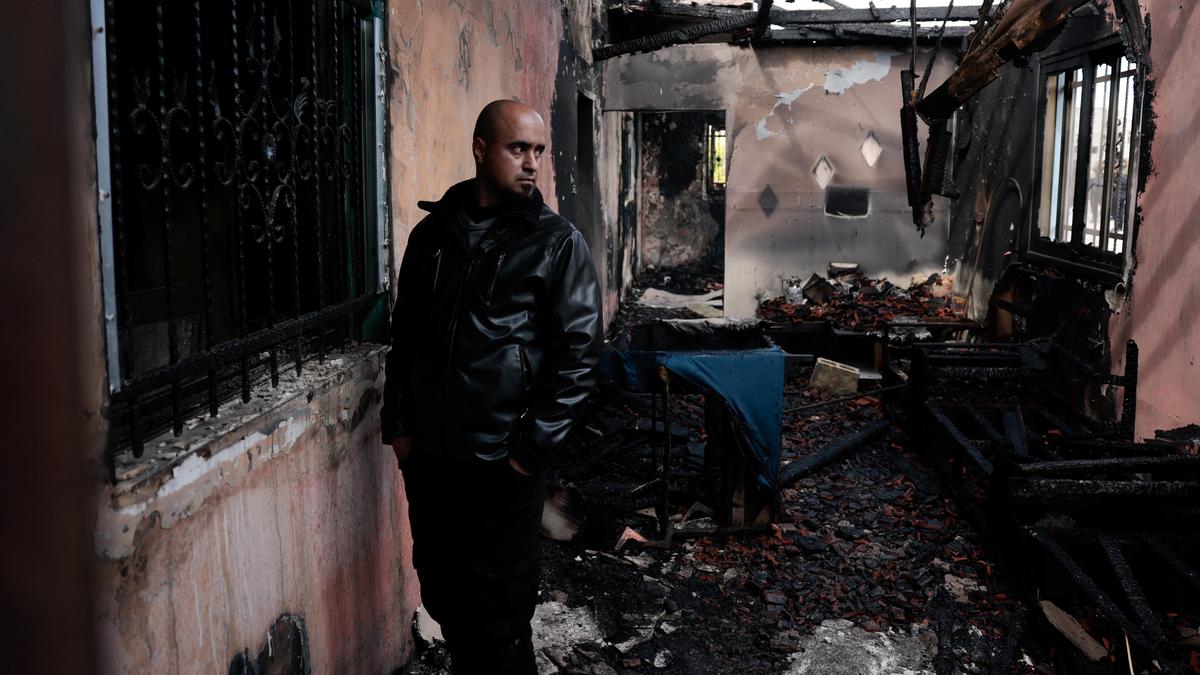
The impact is devastating. Families wake up to find their only means of transportation—the car they use to get to work or take kids to school—charred to a frame. The psychological toll is even heavier. Living in a constant state of "when," not "if," changes the way a community functions. It creates a vacuum of safety that state actors are currently failing to fill.
A Systemic Failure of Protection
The Israeli Defense Forces (IDF) are the sovereign power in the West Bank. Under international law, an occupying power has a direct responsibility to protect the civilian population. Yet, time and again, we see reports of soldiers standing by or, in some cases, providing cover for these incursions.
It’s not just a few bad apples. It’s a policy of looking the other way.
UN OCHA (the United Nations Office for the Coordination of Humanitarian Affairs) has documented a sharp rise in settler-related incidents since 2023. We’re seeing a shift from spontaneous outbursts to what looks like tactical land grabs. By making life unbearable for Palestinian villagers, the attackers hope to force them to move, leaving the land open for settlement expansion. It’s a slow-motion displacement happening in real-time.
The Economic Warfare of Olive Harvests
You can't understand the West Bank without understanding the olive tree. For Palestinians, these trees are more than plants; they’re a multi-generational bank account. Burning an olive grove is an act of economic warfare.
During harvest season, the violence usually spikes. Groups of settlers often block farmers from reaching their land or physically assault those who try to pick their fruit. When a tree that has been in a family for 200 years is hacked down or burned, that’s not a "property crime." It’s a deliberate attempt to sever a people's connection to their land.
The numbers are staggering. Thousands of trees are destroyed every year. The loss isn't just measured in liters of oil or shekels. It's the loss of a future. When a farmer can't harvest, they can't pay for school. They can't repair their home. The cycle of poverty tightens.
Why the International Response is Falling Short
The world watches, issues a "statement of concern," and then moves on. We've seen various countries impose sanctions on specific "extremist settlers," but let’s be real: that’s a band-aid on a gunshot wound. Sanctioning five people when five hundred are involved in the movement does very little to change the math on the ground.
The real pressure needs to be on the institutions that allow this to happen. Without a fundamental shift in how the Israeli legal system treats settler violence against Palestinians, the burnings will continue. You don't stop a fire by asking it nicely to go out. You stop it by removing the oxygen—in this case, the legal immunity provided to the perpetrators.
The Human Cost Behind the Headlines
I want you to think about a father in a village like Burqa or Hawara. He spends his life savings on a used car so he can work in a nearby city. One Tuesday at 3:00 AM, he hears glass shattering. By the time he gets outside, his car is an orange ball of fire. He sees the shapes of men running toward a nearby hilltop outpost.
He calls the police. They arrive hours later. They ask him if he saw their faces. He says they were masked. They take a note, look at the smoking wreck, and leave.
That man doesn't just lose a car. He loses his faith in any semblance of justice. That’s how radicalization happens. That’s how the "cycle of violence" everyone loves to talk about actually gets greased. It’s not a mystery. It’s the logical result of systemic injustice.
Breaking the Cycle of Impunity
The only way out of this mess is a total overhaul of security priorities. If the IDF and the Israeli police wanted to stop this, they could. They have the technology, the manpower, and the intelligence capabilities. The fact that they don't is a choice.
We need to stop pretending these are "fringe elements." Many of these outposts receive state funding, protection, and infrastructure. The line between the "settler movement" and the state has become dangerously blurred. Until that line is redrawn with clear, enforceable boundaries, the West Bank will stay on the verge of a total explosion.
If you're looking for a way to stay informed or help, start by following organizations that provide verified, on-the-ground reporting like B'Tselem or Al-Haq. Don't just read the headlines. Look at the maps. See where the outposts are growing. Support legal aid groups that represent Palestinian families trying to hold onto their land through the court system. The situation is dire, but silence is exactly what the people holding the matches want.