British Cabinet ministers spent the weekend performing a delicate linguistic dance. While the Israeli Defense Forces (IDF) took to social media to warn that Iranian ballistic missiles can now "reach London, Paris, or Berlin," the official line from Whitehall remains a study in calculated skepticism. Housing Secretary Steve Reed, appearing on the Sunday morning political circuit, was blunt: there is no intelligence assessment suggesting Iran has the intent—or even the verified capability—to strike the United Kingdom.
This public dismissal comes at a friction point in the 2026 conflict. As the United States and Israel press forward with Operation Epic Fury (also known as Roaring Lion), Britain is attempting to maintain a perimeter of de-escalation. The gap between Jerusalem’s alarmism and London’s calm is not just a difference of opinion; it is a fundamental disagreement over the trajectory of missile physics and the geopolitical price of being "dragged in."
The Diego Garcia Incident
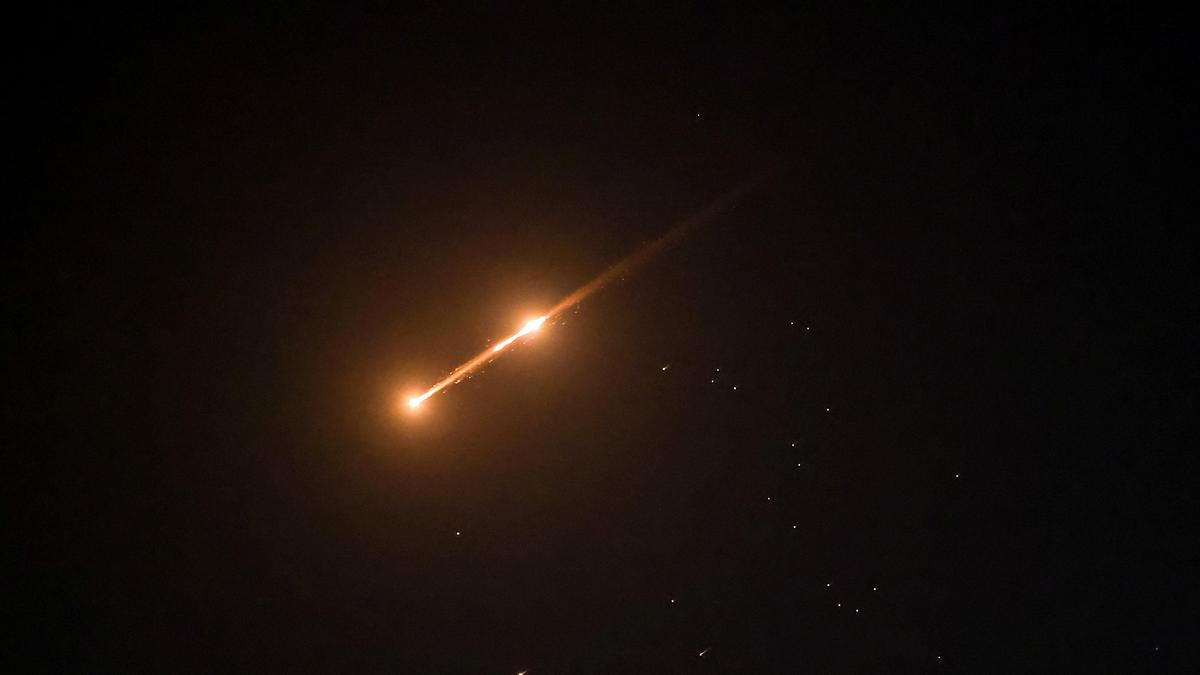
The catalyst for this sudden urgency was an unsuccessful strike on the joint UK-US base at Diego Garcia. On Friday, March 20, two ballistic missiles were fired toward the remote Indian Ocean outpost. One suffered a catastrophic mid-flight failure; the other was neutralized by a US warship’s Aegis defense system.
At 3,800 kilometers from Iranian soil, Diego Garcia is significantly further away than the 2,000-kilometer range limit Tehran has historically claimed to observe. If the Iranian Revolutionary Guard Corps (IRGC) can put a warhead over the Chagos Islands, the mathematical reality is that they can put one over the Palace of Westminster.
"You wouldn't expect me to comment on Iran's specific capabilities," Reed told Sky News, dodging the technical implications. "We have systems and defences in place that keep the United Kingdom safe."
🔗 Read more: The Broken Compass of Northern Border Enforcement
The refusal to acknowledge the shift in range suggests a political strategy rather than a technical one. By denying the capability exists, the Starmer government avoids the domestic pressure to join the US-led bombing campaign currently devastating Iranian infrastructure.
The Physics of the 4,000 Kilometer Claim
Military analysts have long tracked Iran's Self-Sufficiency Jihad Organization (SSJO) and its push to bridge the gap between Medium-Range Ballistic Missiles (MRBMs) and Intercontinental Ballistic Missiles (ICBMs). While the Sejjil and Khorramshahr series are verified at the 2,000-kilometer mark, the leap to 4,000 kilometers requires sophisticated multi-stage separation and advanced solid-fuel propellants.
Evidence suggests this leap has already happened. In early 2025, intelligence tracked a shipment of 1,000 tons of sodium perchlorate—a critical oxidizer for solid rocket fuel—arriving at Bandar Abbas. This was enough to fuel hundreds of high-performance motors. Furthermore, there is a growing consensus that Chinese satellite navigation support via the BeiDou network has provided the precision necessary for long-range targeting that was previously impossible for the IRGC.
Range Comparison of Key Iranian Systems
| Missile Model | Estimated Range (km) | Capability Tier |
|---|---|---|
| Fateh-313 | 500 | Short-range / Tactical |
| Kheibar Shekan | 1,450 | Precision MRBM |
| Sejjil-2 | 2,000 | Regional Strategic |
| "Diego Garcia" Variant | 3,800 - 4,000 | Intermediate Range (IRBM) |
The 4,000-kilometer threshold is the "Red Line" for European security. At this distance, the entire continent—from the Mediterranean to the North Sea—falls within the "footprint" of a potential strike.
The Cost of Interception
While the British government points to its "defensive capabilities," the economics of missile defense are increasingly unsustainable. The Shahed-136 and its successors cost between $20,000 and $50,000 to produce. To intercept a single incoming threat, the UK must rely on Type 45 destroyers or land-based systems firing missiles that cost upwards of £2 million per shot.
Iran’s strategy is built on asymmetric mass. They do not need to hit London to win; they only need to fire enough cheap projectiles to bankrupt the Royal Navy's interceptor stockpile. In the current 2026 war, Iran has already transitioned to what intelligence calls an "economy of munitions," firing single, high-value missiles like the Fattah-1 hypersonic to test defenses while holding back mass swarms for a potential escalation against Europe.
Diplomacy by Denial
London's insistence that there is "no evidence" of a threat to Europe serves two masters. First, it protects the UK’s fragile post-2025 finances from the astronomical costs of a full-scale kinetic war. Second, it maintains a bridge to Tehran that Washington has long since burned.
The Starmer administration has already faced the ire of the Trump White House for refusing to allow RAF Fairford to be used for "offensive" sorties into Iranian airspace. By downplaying the missile threat, Britain is signaling that it will not be used as a proxy for a broader regime-change objective.
However, this "Vietnam-style" neutrality—as Reed explicitly compared it—relies on the assumption that the IRGC shares Britain's desire for de-escalation. If the 28th wave of Operation True Promise shifts its gaze from Tel Aviv to the North Sea, the "no evidence" stance will crumble in an afternoon.
The missiles over Diego Garcia proved the reach is there. The only remaining question is whether the IRGC believes the political cost of hitting a European capital is still higher than the reward. For now, Britain is betting its security on the hope that Tehran’s 4,000-kilometer reach is a bluff they never intend to call.
Would you like me to analyze the specific satellite imagery reports of the Iranian launch sites used in the Diego Garcia strike?