The British government has officially condemned what it labels as "thuggish and intimidating behaviour" following a series of aggressive anti-immigrant demonstrations targeting major ports. If you have been following the headlines out of Dover and Portsmouth, you already know the situation on the ground has escalated past standard political discourse. Masked agitators are blocking critical transport arteries, confronting emergency lifeboats, and creating severe public disorder under the guise of border activism.
Let us break down what is actually happening, why these flashpoints are shifting, and how Westminster is responding to the unrest.
The Reality Behind the Port Blockades
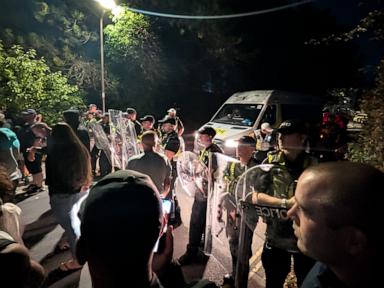
Over a single weekend, public order incidents brought parts of Britain's vital maritime infrastructure to a standstill. First, hundreds of masked individuals clad in dark clothing blocked roads leading to the Port of Dover, choking traffic and stranding freight vehicles heading for France. Days later, a similar playbook played out further west in Portsmouth.
A small boat carrying roughly 140 asylum seekers arrived off the Hampshire coast after making a much longer, riskier voyage from Normandy, bypassing the traditional crossing zones near Calais. Activists descended on the area, attempting to block buses carrying the new arrivals to processing facilities and clashing with local police forces until the early hours of the morning.
Observers and local officials pointed out a clear tactical shift by organizers linked to far-right networks, moving beyond traditional hotspots to test police preparedness in smaller ports.
Why Tensions Are Boiling Over Now
The English Channel remains one of the most volatile political flashpoints in British politics. Successive administrations have wrestled with small boat arrivals, while hard-right politicians frequently characterize the crossings as a national crisis.
Yet, the statistical reality on the ground tells a slightly different story than the rhetoric online. Government data indicates that stepped-up law enforcement cooperation between Britain and France has helped reduce total cross-Channel arrivals by more than 40 percent compared to previous periods.
Smugglers are adapting by launching boats from alternative, less-policed stretches of the French coast, creating extreme risks for migrants and logistical nightmares for local authorities who lack the specialized infrastructure found in Dover. Far-right agitators are exploiting these evolving routes to mobilize crowds, turning local anxiety into aggressive street confrontations.
The Official Response and What Happens Next
Ministers have drawn a sharp line between democratic rights and outright criminality. While upholding the legal right to peaceful assembly, government spokespeople have made it clear that balaclava-clad mobs blockading highways and intimidating emergency services cross an unacceptable line into public disorder.
Local police forces are facing intense scrutiny over whether their intelligence sharing and rapid-response protocols were adequate for handling coordinated flash mobs. Lawmakers representing affected coastal towns have urged agitators to disperse, pointing out that disruptive street theatre does nothing to solve complex border management issues.
Expect heightened police deployments around secondary ports and stricter dispersal orders as authorities try to prevent smugglers' shifting routes from sparking permanent zones of domestic unrest. Border security strategy will face even harsher scrutiny in Parliament as ministers balance international enforcement treaties with domestic public safety.