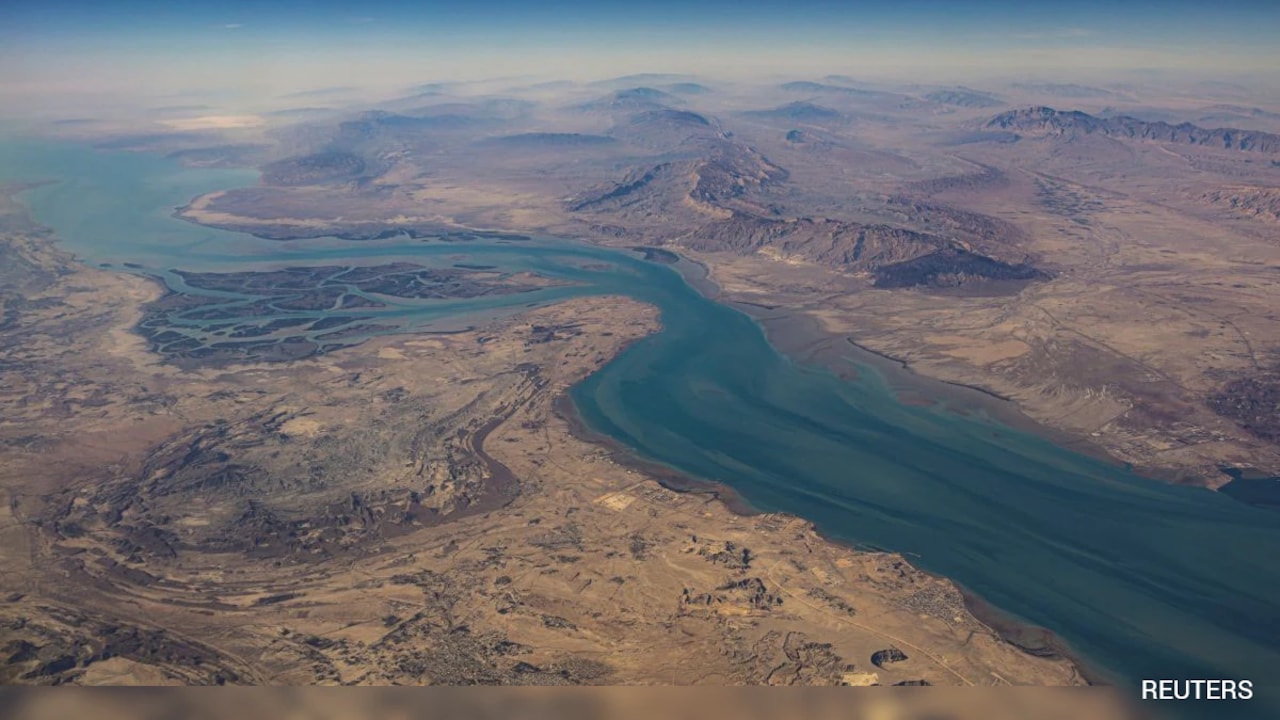
Geopolitical control over maritime corridors operates on strict economic and kinetic vectors rather than abstract political posturing. When Mohsen Rezaei, head of Iran's Supreme National Security Council, announced plans for an exclusionary maritime perimeter contiguous to the Strait of Hormuz, the operational calculus of the Persian Gulf shifted from localized naval skirmishing to systemic trade interdiction. Understanding this development requires stripping away diplomatic rhetoric to analyze the structural mechanics of maritime blockades, the cost functions of energy transit, and the asymmetrical doctrines governing modern naval warfare.
The announcement follows the breakdown of the mid-year interim understanding and retaliatory exchanges, notably United States strikes on three Iranian oil tankers after ballistic missile engagements targeting American warships. Rather than treating the planned exclusion zone as a mere tactical threat, military and economic planners must evaluate it as an institutionalized choke mechanism designed to weaponize maritime geography.
The Tripartite Architecture of the Exclusion Zone
The proposed perimeter is defined not by coordinates alone, but by a functional layering of naval enforcement, economic penalization, and geographic control. The architecture relies on three distinct operating vectors.
The outer boundary originates at the interface of the existing United States naval blockade, which currently deploys over twenty surface combatants to intercept and redirect commercial vessels moving toward Iranian ports. By anchoring the western edge of the exclusion zone to this adversarial line, Tehran creates an overlapping theater of friction where enforcement mechanisms collide.
The transit vector extends from this demarcation corridor directly into the navigational paths leading to the Strait of Hormuz, sweeping downward into the upper Persian Gulf. Vessels identified within this spatial envelope with the intent of traversing the chokepoint face immediate designation on national sanctions registries and direct kinetic risk. This converts a geographic area into a legal and financial liability zone for shipowners, insurers, and charterers.
The enforcement layer relies on distributed asymmetric assets, including fast-attack craft, coastal anti-ship cruise missile batteries, underwater mine-laying capabilities, and aerial drones. Because the Strait of Hormuz narrows to roughly twenty-one miles at its widest point—with inbound and outbound shipping lanes only two miles wide separated by a two-mile buffer zone—even a low-probability threat profile imposes catastrophic risk metrics on commercial underwriters.
The Cost Function of Transit Interdiction
Global energy markets operate on marginal pricing sensitivity. When physical throughput through the Strait of Hormuz experiences structural friction, the economic shockwaves propagate instantaneously across international futures exchanges. The fundamental economic variable is not just the volume of crude prevented from leaving the Gulf, but the risk premium applied to every barrel remaining in transit.
[Interdiction Threat] -> [Underwriter Risk Premium Surge] -> [Freight Cost Inflation] -> [Global Energy Price Volatility]
Underwriters respond to prospective exclusion zones by adjusting war-risk insurance premiums exponentially. Even when vessels successfully clear the corridor under United States Navy escort operations—which have sought to mitigate disruptions and maintain baseline flows estimated by energy officials at varying fractions of pre-conflict volumes—the baseline cost of capital and insurance dictates a permanently elevated floor for global energy prices.
The strategic utility for Tehran lies in cost asymmetry. Deploying asymmetric maritime denial assets incurs minimal operational expenditure compared to the capital cost required by the United States Navy to maintain a continuous, multi-carrier and surface-combatant presence enforcing counter-blockades and escort duties. By formalizing an exclusion zone, Iran attempts to shift the burden of economic deterrence onto consuming nations and flag states.
Second-Order Effects on Regional Compliance
The establishment of overlapping maritime zones forces third-party states with high energy dependencies into difficult operational postures. Recent warnings issued by Iran's foreign ministry to nations considering military deployments or security contributions to United States-led operations in the strait highlight the diplomatic friction generated by the zone.
When middle powers evaluate participation in coalition escorts, their decision matrix balances domestic energy security against the immediate threat of direct retaliation or secondary trade blacklisting by Tehran. This dynamic fractures unified international maritime coalitions, as nations weigh the cost of naval participation against the imperative of securing unhindered access to hydrocarbons.
Furthermore, the expansion of the conflict from targeting purely commercial vessels to active exchanges involving naval warships and designated oil tankers raises the baseline threshold of escalation. Commercial operators no longer face incidental collateral risk; they operate inside a contested battlespace where legal definitions of neutrality are actively dismantled by competing sovereign decrees.
Strategic Outlook and Enforcement Realities
Enforcing an exclusion zone without absolute air and sea supremacy presents severe tactical vulnerabilities for Iran, particularly given the sustained presence of advanced United States naval assets and aerial reconnaissance. However, total sea control is not required to achieve the objective of trade disruption. The mere existence of an enforceable punitive framework—backed by historical precedent in laying defensive minefields and utilizing swarm tactics—is sufficient to deter risk-averse commercial shipping lines.
The operational trajectory points toward chronic friction within the corridor. As long as economic sanctions and kinetic blockades remain the primary instruments of Western policy, counter-interdiction zones will serve as Tehran's principal mechanism for imposing symmetrical economic pain on global markets. Strategic planning must therefore account for a permanent risk premium in Persian Gulf transit, rendering traditional assumptions of open maritime commons obsolete for the foreseeable future.