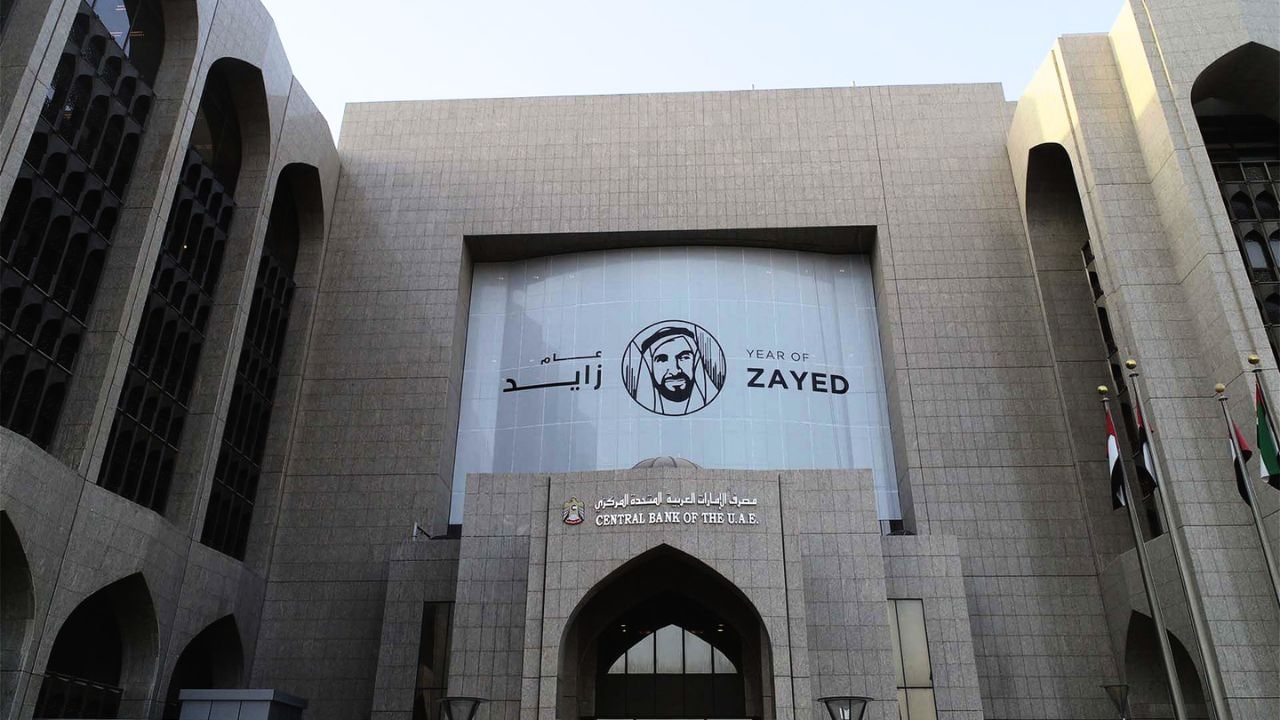
Central banks specialize in the art of the tranquilizer. When the Central Bank of the UAE (CBUAE) issues a statement claiming the financial sector remains "resilient" despite a boiling regional war between Israel, Iran, and their various proxies, they aren't just reporting data. They are managing a narrative. They have to. In a region where capital flight can happen at the speed of a fiber-optic pulse, "resilience" is the required script.
But resilience is a lagging indicator. It tells you what survived yesterday, not what is rotting today. The comfortable consensus—that high oil prices and deep sovereign wealth funds act as an impenetrable shield—ignores the structural fragility of a hub economy caught in a kinetic crossfire.
If you believe the official press releases, the UAE is an island of stability. If you look at the mechanics of credit risk and insurance premiums, you see a different story.
The Liquidity Trap of Geopolitical Noise
The standard argument for UAE stability rests on two pillars: massive capital buffers and a diversified economy. This is a half-truth. While the banking sector maintains Tier 1 capital ratios that make European banks look like penny slots, capital adequacy is not the same as operational immunity.
When missiles fly in the neighborhood, the cost of doing business doesn't just tick up; it undergoes a fundamental repricing. We are seeing a quiet, aggressive shift in how international "correspondent banks" view Middle Eastern exposure. It doesn't matter how many gold bars are in the vault in Abu Dhabi if the digital plumbing of global finance begins to treat the region as a "high-friction" zone.
I have seen desks in London and New York quietly trim their credit lines to Gulf entities not because of a bad balance sheet, but because the "Value at Risk" (VaR) models literally cannot compute the outcome of a direct Iran-Israel escalation. When the models break, the money leaves. Resilience isn't a wall; it’s a fluid. And right now, the fluid is thickening.
The Real Estate Mirage
The UAE’s non-oil growth is the darling of every optimistic white paper. It is driven by real estate and "wealth migration." But here is the nuance the central bank won't mention: wealth migration is fickle.
The "safe haven" status of Dubai and Abu Dhabi depends entirely on the perception that the conflict stays "over there." The moment that perception shifts—even by a fraction—the premium on UAE assets evaporates.
- The Insurance Tax: Shipping and aviation insurance rates in the Gulf don't wait for a central bank report. They react in real-time. If it costs 15% more to insure a cargo hull or a flight path, that is a direct tax on the UAE's hub model.
- The Talent Flight: High-net-worth individuals aren't loyal to a geography; they are loyal to their own security. The "resilience" of the banking sector is irrelevant if the people holding the deposits decide that Lisbon or Singapore is 5% safer.
The CBUAE points to "liquid assets" as a sign of strength. In a crisis, liquidity is a ghost. Ask any trader who tried to exit a "liquid" position during the 2008 crash or the 2020 oil price collapse. Assets are only liquid if there is a buyer who isn't also terrified.
The Peg is a Golden Handcuff
The UAE Dirham is pegged to the US Dollar. This provides "stability," but in a regional war scenario, it becomes a strategic liability.
As the US Federal Reserve navigates its own domestic inflation and debt crises, the UAE is forced to import American monetary policy, regardless of whether it fits a regional war economy. If the US dollar spikes because of a "flight to quality" during a global conflict, the Dirham goes with it. This makes UAE exports—and its vital tourism sector—drastically more expensive exactly when the economy needs a stimulus.
You cannot claim to have a sovereign, resilient financial strategy when your currency's value is decided by a committee in Washington D.C. that isn't thinking about the Strait of Hormuz.
The Myth of the Sovereign Wealth Fund Shield
The common refrain is: "The UAE has trillions in its sovereign wealth funds (SWFs); they can just bail out the banks."
This assumes the SWFs are a giant ATM. In reality, funds like ADIA and Mubadala are heavily invested in global equities, tech, and Western real estate. If a regional war triggers a global recession, those "shields" shrink in value at the exact moment they are needed at home.
You cannot use a devalued global portfolio to prop up a domestic banking system that is suffering from a local liquidity crunch. That’s not a strategy; it’s a circular firing squad.
Stop Asking if the Banks are "Safe"
The public and the media are obsessed with the wrong metric. They ask, "Will the banks fail?" The answer is almost certainly no. The UAE government will never let a major bank go under.
The real question is: "At what cost does stay-alive resilience come?"
When the central bank forces resilience, it usually means:
- Tightening Credit: Small and medium enterprises (SMEs) get choked out as banks hoard cash to maintain those "robust" ratios.
- Hidden NPLs: Non-performing loans are restructured and "evergreened" to keep them off the books, creating a zombie banking layer that looks healthy on paper but doesn't actually facilitate growth.
- State Intervention: The government drains its reserves to subsidize a "business as usual" image, trading long-term fiscal health for short-term optics.
The Brutal Reality of Hub Economics
The UAE has spent two decades positioning itself as the "Switzerland of the Middle East." But Switzerland has the Alps and a centuries-old history of neutrality that the world respects. The UAE has a hyper-modern infrastructure sitting on one side of the world’s most volatile maritime choke point.
True resilience would require an admission of vulnerability. It would involve diversifying the currency peg, creating a domestic bond market that doesn't rely on Western appetite, and acknowledging that a "sector-wide" stress test is useless if it doesn't account for a total closure of the Strait of Hormuz for 30 days.
Instead, we get press releases.
The financial sector isn't resilient because it is invincible; it is "resilient" because the state is currently wealthy enough to paper over the cracks. But paper burns.
If you are an investor or a business leader, stop reading the CBUAE’s "all clear" signals. Look at the credit default swaps. Look at the private insurance premiums for regional logistics. Listen to the silence of the correspondent banks.
The UAE is a high-beta play on regional peace. If the peace fails, the financial "resilience" will be revealed for what it is: a very expensive, very temporary facade.
Move your capital into assets that don't rely on a government's ability to subsidize a narrative. Hedge against the peg. Recognize that in a war of drones and proxies, a "Tier 1 capital ratio" is just a number on a screen that can't stop a supply chain from snapping.
The central bank says the sector is resilient. I say it is subsidized, stressed, and one miscalculation away from a liquidity event that no amount of oil money can fix.
Stop looking at the balance sheets. Start looking at the horizon.