Rain on a canvas tent sounds different when you are waiting for a battery to die. It is a dull, rhythmic thudding that counts down the minutes.
Inside the shelter, a young corporal stares at a glowing ruggedized tablet. Outside, the night is pitch black, somewhere in a valley where the grid never existed. The tablet displays a map, a series of shifting thermal signatures, and a battery icon currently sitting at twelve percent.
The corporal has a choice. He can keep the device running to monitor the ridge line, or he can shut it down to save the final burst of power for an emergency call. If he chooses wrong, the dark wins.
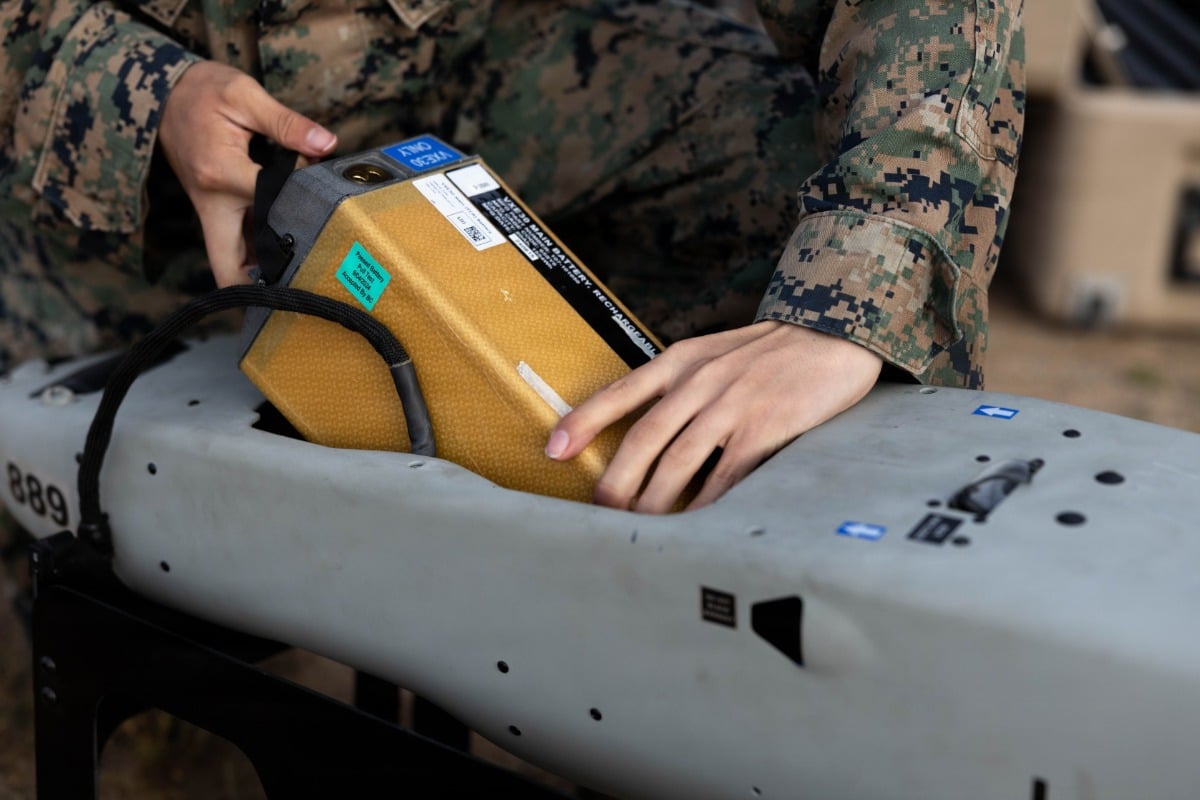
To understand the modern military, you have to understand the sheer weight of survival. A standard infantry soldier carries anywhere from sixty to one hundred pounds of gear into the field. A staggering chunk of that weight is not ammunition, food, or water. It is lithium. Bricks of it. Blocky, heavy plastic-wrapped cells crammed into rucksacks, tactical vests, and cargo pockets.
We live in an era where warfare is defined by data. Drones, night-vision optics, encrypted radios, target acquisition systems, and heads-up displays have turned the individual soldier into a walking tech hub. But every piece of glass and silicon demands juice. Right now, the Pentagon’s solution to this problem is simple, brutal, and primitive: make human beings carry more batteries.
It is a logistical nightmare hiding behind a high-tech veneer.
The Defense Advanced Research Projects Agency, or DARPA, has finally decided that the human spine has reached its limit. Under a new initiative called the Carb-X program, the Pentagon’s central brain for breakthrough technology is attempting to rewrite the fundamental chemistry of portable power. They are not looking to tweak the battery inside your smartphone. They want to replace the chemical foundations of energy storage entirely.
The stakes are invisible until they are catastrophic.
The Chemistry of Fear
Consider the lithium-ion battery. It is a marvel of the modern world, powering everything from the device you are reading this on to the electric vehicles filling our highways. But inside a combat zone, lithium-ion is a temperamental roommate.
A standard battery relies on a delicate dance of electrons moving through a liquid electrolyte. If that battery is punctured by a piece of shrapnel, crushed by a falling vehicle, or exposed to the intense heat of an explosion, a phenomenon called thermal runaway occurs. The liquid boils. The casing swells.
Then, it bursts into an unstoppable, self-sustaining chemical fire that burns at over one thousand degrees.
Imagine being a soldier trapped in an armored vehicle, knowing that the rucksack pressed against your lower back is effectively a cluster of miniature incendiary devices. If one goes, they all go.
DARPA’s new directive aims to eliminate this vulnerability by transitioning to solid-state chemistry and novel energetic materials. The goal is to strip away the volatile liquids entirely. They want a power source that you can shoot with a rifle bullet, cut in half with a saw, or submerge in saltwater without a single spark.
But safety is only half the battle. The real crisis is density.
Right now, an infantry platoon on a seventy-two-hour mission requires hundreds of pounds of batteries just to keep their communications alive. Think about the physical cost of that weight. It slows reflexes. It destroys knees. It saps the cognitive energy needed to make split-second decisions under fire. Every pound of battery carried is a pound of medical supplies, food, or ammunition left behind.
The Carb-X program is targeting an energy density milestone that sounds almost mythical: a five-fold increase over current field technology.
If they succeed, a rucksack filled with thirty pounds of batteries shrinks to six pounds. The shadow that chases every commander—the fear of a unit going dark in the middle of an operation—begins to lift.
The Logistical Tether
The problem stretches far beyond the individual soldier. It winds its way backward through a massive, fragile supply chain that spans oceans.
Every dead battery in a remote outpost represents a promise that must be kept by a supply convoy. To get fresh power to that corporal staring at his fading tablet, a diesel-guzzling truck must drive down a dirt road prone to roadside bombs. Or a helicopter must fly through a contested airspace, burning thousands of gallons of fuel to deliver a box of plastic cells.
We have built a military that can see through walls and strike targets from across continents, yet it remains utterly tethered to the availability of AA and lithium-sulfur variants.
DARPA’s approach isn't just about packing more energy into a smaller box; it is about changing how these devices interact with the environment. The program is exploring structural energy storage. This means building the battery into the equipment itself.
Imagine the frame of a soldier’s backpack, the armor plates on their chest, or the chassis of a reconnaissance drone actually being the power source. The gear becomes the battery. The distinction between the tool and the energy required to run it disappears.
Achieving this requires venturing into materials science that feels like science fiction. Researchers are looking at carbon nanotube weaves that can withstand the impact of a hammer blow while simultaneously holding an electrical charge. They are experimenting with silicon-dominant anodes that can pull power out of temperature differentials or kinetic movement.
It is a messy, uncertain path. Chemistry is a stubborn beast. When you push for higher energy density, stability usually drops. When you push for extreme safety, performance tends to plummet. Finding the intersection where a battery is simultaneously five times more powerful, completely non-flammable, and cheap enough to manufacture by the millions is a task that many commercial tech giants have abandoned as financially unviable.
That is why DARPA steps in. They exist to fund the brilliant, terrifying ideas that Wall Street won't touch because the risk of failure is too high.
Beyond the Uniform
While the immediate funding for Carb-X comes from a defense budget, the ripples of this research will inevitably wash ashore in civilian life.
History shows us this pattern clearly. The internet you use, the GPS that guides your car, and the freeze-dried food in your pantry all began as military necessities. The drive to keep a radio running on a ridge line in a conflict zone is the exact same drive that will eventually give us pacemakers that never need replacing, smartphones that charge once a week, and electric planes that can cross the Atlantic.
If DARPA can crack the code on solid-state, high-density military batteries, the commercial manufacturing sector will follow the trail. The dangerous, mining-heavy reliance on cobalt and lithium might shift toward more sustainable, earth-abundant materials discovered during these military trials.
But for now, the focus remains small, sharp, and immediate.
Back in the canvas tent, the rain shows no signs of stopping. The tablet screen flickers down to nine percent. The corporal turns it off. The room plunges into a heavy, suffocating darkness, lit only by the faint green glow of a watch dial.
He sits in the dark, waiting for dawn, carrying the weight of a system that is brilliant at processing data but still learning how to carry its own light.