The headlines are screaming about a "historic kill." They want you to believe that a pair of Qatari F-15QAs intercepting two Iranian Su-24s is a watershed moment for Gulf security. It isn’t. If you’re reading the mainstream analysis, you’re being fed a diet of defense contractor PR and tactical vanity.
Here is the cold, hard reality: Shooting down a Soviet-era Su-24 in 2026 is the aerial equivalent of winning a drag race against a tractor. The fact that Doha had to scramble its $100 million-plus "Advanced" Eagles to handle a swing-wing relic from the 1970s doesn't prove Qatar’s dominance. It exposes the massive, expensive vulnerability of the entire regional energy architecture.
Stop celebrating the "kill" and start looking at the math.
The Su-24 is a Ghost in the Machine
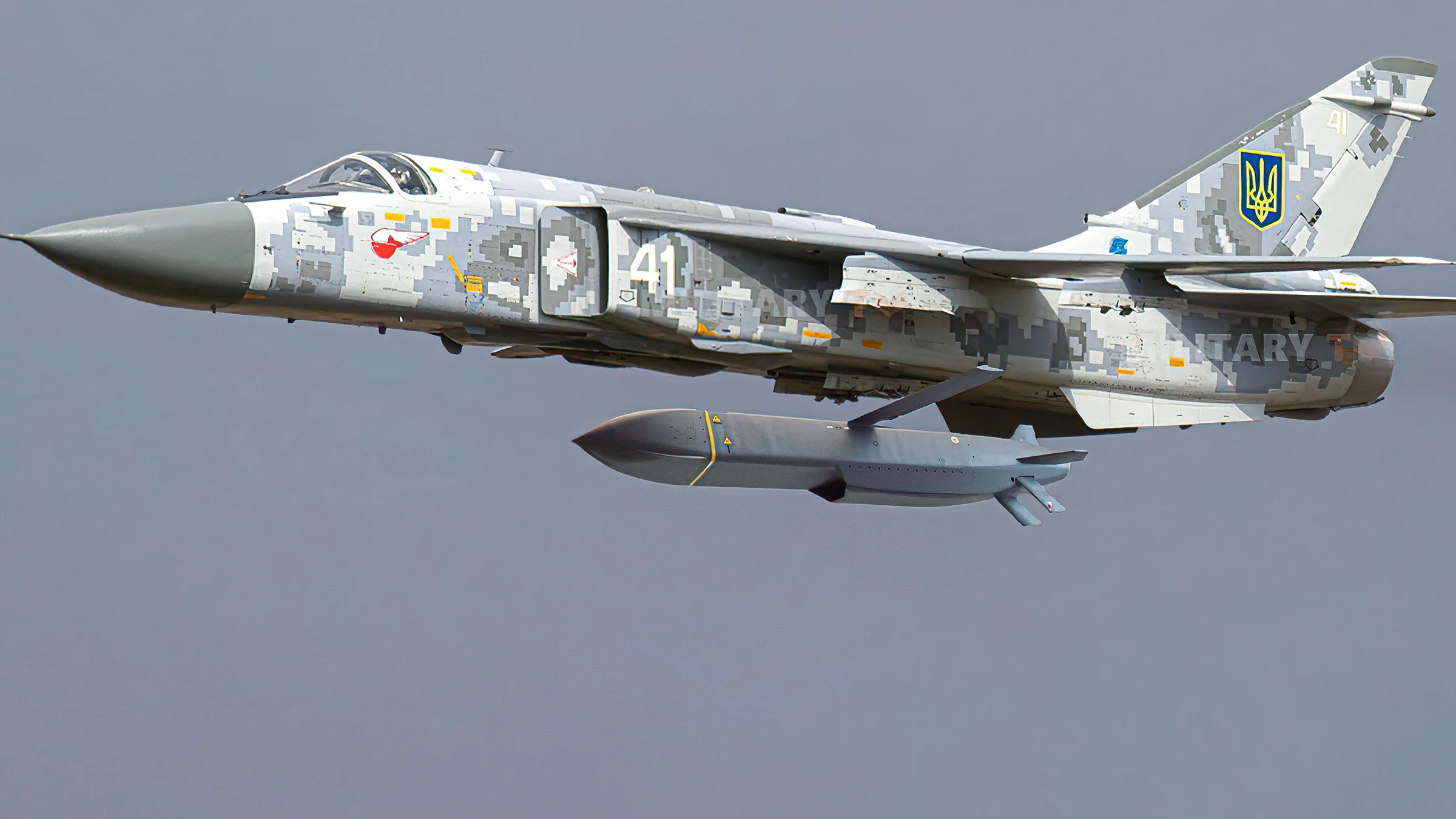
The Su-24 Fencer was designed for a world that no longer exists. It is a low-level supersonic strike aircraft built to penetrate NATO air defenses in the Cold War. In a modern conflict involving active electronically scanned array (AESA) radars and integrated air defense systems, a Fencer is basically a flying target.
When Tehran sends Su-24s toward a Qatari energy facility, they aren't expecting them to come back. These aren't "fighters." They are high-speed, manned cruise missiles. The mainstream media frames this as a "dogfight." There was no dogfight. There was a long-range radar lock and a button press.
If we look at the physics of the engagement:
- The Su-24 has a radar cross-section (RCS) roughly the size of a small apartment building.
- The F-15QA’s AN/APG-82(V)1 radar can see that "building" from over 150 kilometers away.
- The AIM-120D AMRAAM travels at Mach 4.
Claiming this is a "historic achievement" for Qatari pilots is like praising a professional sniper for hitting a stationary barn. The real story isn't that the Su-24s fell out of the sky; it’s that they were in the sky near those facilities at all.
The Cost-Exchange Ratio is a Death Spiral
Defense analysts love to talk about "air superiority." They rarely talk about the accounting.
Each F-15QA costs Qatar roughly $100 million to $120 million. That doesn't include the billions spent on the infrastructure, the pilot training, or the Raytheon-built missiles. On the flip side, Iran is flying airframes that were paid for decades ago.
When Iran loses two Su-24s, they lose two pilots and two pieces of scrap metal. When Qatar "defends" its airspace, it burns millions of dollars in operational costs and reveals its electronic warfare signatures to every Russian and Chinese listening post in the region.
Imagine a scenario where Tehran sends 20 drones and 4 Su-24s simultaneously. If Qatar uses its high-end interceptors to swat away the Su-24s, they are wasting their most precious assets on the least dangerous threats. This is "asymmetric exhaustion." The goal isn't to win the air battle; the goal is to make the defense of the gas fields so expensive and complex that the system eventually collapses under its own weight.
The Myth of the "Energy Shield"
The EurAsian Times and others are framing this as a successful defense of energy infrastructure. That is a dangerous delusion.
Modern energy facilities—specifically liquefied natural gas (LNG) terminals—are the most fragile targets on the planet. You don't need to "destroy" an LNG plant to win. You just need to create enough kinetic risk that the insurance companies pull their coverage.
If an Iranian Su-24 gets within 50 miles of a terminal before being shot down, the "mission" was a success for Tehran. The global market reacts. Insurance premiums for tankers in the North Field skyrocket. The "security" Qatar bought with its billions of dollars in US hardware vanishes because the perception of safety is gone.
The status quo says: "Buy more jets, build more shields."
The contrarian truth says: "The more you rely on high-end jets to solve low-end incursions, the more vulnerable you become."
Why the F-15QA is the Wrong Tool for This Job
The F-15QA is a magnificent piece of engineering. It’s arguably the best 4.5-generation fighter in the world. It’s also entirely the wrong tool for policing the Persian Gulf.
We are seeing a repeat of the mistake made by Western air forces for twenty years: using a $30,000-per-hour flight platform to perform tasks that a ground-based battery or a cheaper, loitering interceptor could handle.
The Eagle is designed for large-scale, high-intensity conflict against a peer adversary. Using it to intercept Su-24s is like using a scalpel to chop wood. It’s inefficient, it dulls the blade, and it’s a waste of the surgeon’s time.
If Qatar wants to actually secure its energy interests, it needs to stop playing Top Gun and start investing in:
- Distributed Autonomous Interceptors: Cheap, attritable drones that can meet a Su-24 at the border.
- Hardened Passive Defense: If your gas terminal can't survive a near-miss, no amount of F-15s will save your economy.
- Electronic Blindness: Instead of shooting things down, focus on making the target invisible to the Su-24’s antiquated targeting systems.
The Hidden Intelligence Failure
The press is so focused on the "shootdown" that they’ve missed the glaring intelligence gap. How did two Su-24s get into a position to threaten a "massive strike" before being engaged?
Early warning is supposed to be the backbone of the GCC’s defense strategy. If the intercept happened close to the energy facilities, the "historic kill" is actually an "embarrassing late-game save."
In the world of high-stakes defense, a kill is a failure of deterrence. If the Iranians felt confident enough to put those Fencers in the air, they’ve already calculated that the Qatari response—while lethal—is predictable. They are testing the edges of the sensor net. They are measuring the response times. They are data-mining the F-15QA’s radar patterns.
Qatar just gave Iran a free masterclass in how their $12 billion air force operates. That isn't a victory; it’s a security leak.
The Fragility of Technical Superiority
We’ve seen this before. In the 1990s, the US thought the F-117 Nighthawk was invisible. Then a Serbian commander with an old Soviet SA-3 battery and some clever math shot one down.
The "Advanced" Eagle is only advanced until it isn't. By relying so heavily on the technical superiority of the F-15QA, Qatar is creating a single point of failure. If the Iranians (or their Russian advisors) find a way to spoof the APG-82 radar or jam the Link-16 data link, Doha’s entire defense strategy evaporates in ten minutes.
The obsession with "kills" obscures the fact that modern warfare is won through resilience, not highlights. Two Su-24s are at the bottom of the sea, but Iran still has dozens more. They have thousands of drones. They have hundreds of ballistic missiles.
Qatar has a handful of elite pilots and a limited supply of AMRAAMs. In a war of attrition, the "inferior" force with the higher volume always beats the "superior" force with the higher price tag.
Stop looking at the wreckage. Look at the invoice.
The "Historic Kill" isn't a sign of Qatari strength. It’s the sound of a trap snapping shut on a country that has spent billions to buy a version of security that can be defeated by a $5 million Cold War relic and a suicidal pilot.
If you're still cheering for the Eagle, you've already lost the war.
Deploy a surface-to-air network that doesn't require a $100 million escort every time a neighbor sneezes.