The joint U.S.-Israeli elimination of Supreme Leader Ali Khamenei on February 28, 2026, represents the first successful execution of a "maximum pressure" kinetic strategy aimed at systemic regime collapse. This operation, codified as Operation Epic Fury, did not merely target a head of state; it sought to dismantle the central node of a complex, theocratic command-and-control apparatus. By neutralizing Khamenei alongside approximately 40 senior officials, the coalition has moved beyond traditional deterrence into the realm of active structural degradation.
The strategic logic of this intervention rests on three distinct pillars: the acceleration of the Iranian nuclear breakout timeline, the domestic delegitimization of the clerical establishment, and the tactical superiority of advanced ISR (Intelligence, Surveillance, and Reconnaissance) systems.
The Architecture of Attrition: Why Decapitation Was Prioritized
The primary driver for the timing of the strike was the collapse of diplomatic channels in February 2026. The U.S. administration identified a critical bottleneck: Iranian negotiators lacked the authority to offer concessions on ballistic missile range and permanent enrichment halts, as these were ideological non-negotiables for the Office of the Supreme Leader.
By removing the ultimate decision-maker, the U.S. and Israel are betting on a Power Vacuum Dynamics model.
- Institutional Paralysis: The Iranian constitution mandates a provisional Leadership Council (Article 111), but this body lacks the religious and political "Velayat-e Faqih" (Guardianship of the Jurist) legitimacy required to command the Islamic Revolutionary Guard Corps (IRGC) without friction.
- Command Fragmentation: The death of secondary leadership nodes—including Mohammad Pakpour and Ali Shamkhani—creates a lateral communication breakdown. Without a singular authority to adjudicate between the regular army (Artesh) and the IRGC, the state’s ability to coordinate a "Total Deterrence" response is significantly compromised.
Technical Execution: The Intelligence-Kinetic Loop
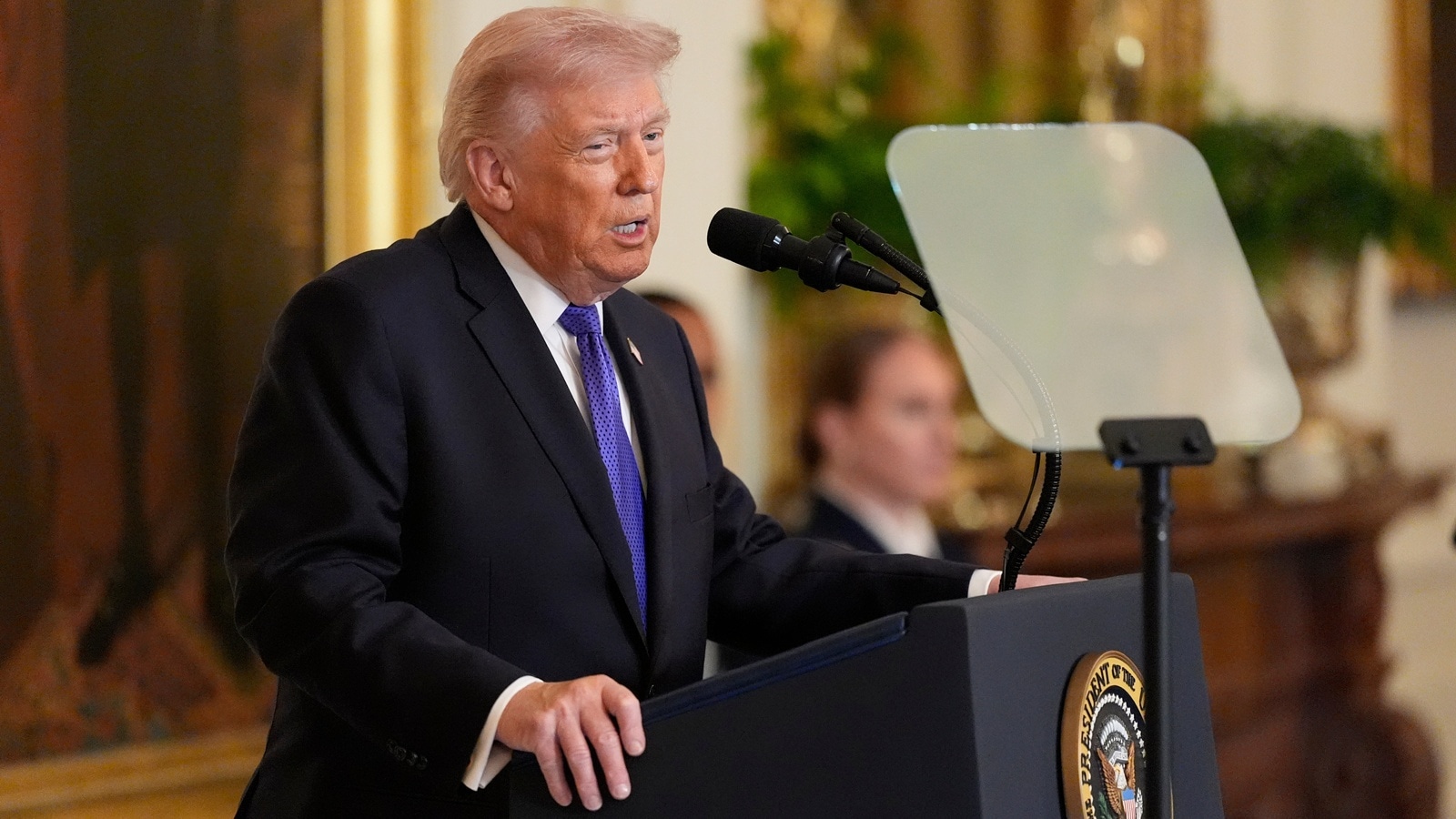
The success of the operation highlights a paradigm shift in tracking high-value targets within hardened urban environments. President Trump’s briefing emphasized "Highly Sophisticated Tracking Systems," which points to the integration of satellite-based SIGINT (Signals Intelligence) and localized mesh networks.
- Signal Interception: Despite the use of secure couriers and air-gapped communications, the coalition likely utilized hyperspectral imaging and quantum-resistant decryption to identify the Supreme Leader's precise location within his Tehran compound.
- Kinetic Precision: The use of bunker-busting munitions in a high-density urban area suggests a refined collateral damage estimation (CDE) framework. The objective was the total destruction of the Command and Control (C2) infrastructure without inducing a city-wide firestorm.
The Cost Function of Regional Retaliation
Tehran’s response has shifted from shadow warfare to overt regional disruption. The closure of the Strait of Hormuz—through which 20% of the world's oil flows—and the targeting of GCC (Gulf Cooperation Council) aviation hubs in Dubai and Abu Dhabi serve as a mechanism to externalize the cost of the war.
The Economic Stress Test
The global economy is currently absorbing a 10% spike in Brent crude prices, which are trending toward $100 per barrel. This is not merely an energy crisis; it is a direct assault on the logistics of the "Global South." For energy-importing nations, the secondary effects include:
- Hyper-inflationary Pressure: Increased transport costs for food and basic commodities.
- Fiscal Instability: Debt-servicing capabilities for emerging markets are strained as energy subsidies consume national budgets.
The Proxy Activation Threshold
The "Axis of Resistance"—comprising Hezbollah, the Houthis, and various Iraqi militias—is currently operating with increased autonomy. This creates a "Many-Headed Hydra" problem. While the central brain in Tehran is damaged, the peripheral limbs are capable of independent, highly destructive actions against U.S. naval assets in the Red Sea and Eastern Mediterranean.
Strategic Constraints and Operational Risks
The "Venezuela Scenario" cited by the administration—where a regime is hollowed out while maintaining the broader bureaucratic structure—faces significant hurdles in the Iranian context.
- The Martyrdom Narrative: The Iranian leadership is actively framing Khamenei’s death as a unifying "martyrdom" event. If the interim Leadership Council can successfully channel public grief into nationalist fervor, the projected regime collapse may be delayed or inverted.
- Talent Shortage: The loss of over 40 high-ranking officials creates a technical and administrative void. If the U.S. continues to target secondary nodes, the risk shifts from "regime change" to "state failure," potentially resulting in a fragmented territory similar to post-2011 Libya, but with a sophisticated missile arsenal.
The Geopolitical Rupture: Russia and China
The intervention has accelerated the formation of a counter-hegemonic bloc. Moscow’s condemnation of the "cynical violation" of international law and Beijing’s warning against the "law of the jungle" indicate that the post-WWII security order is effectively defunct.
Russia and Iran’s 2025 strategic partnership treaty now serves as a potential trigger for direct Russian involvement, particularly in providing advanced air defense or electronic warfare support to the surviving Iranian factions. This transforms a regional conflict into a high-stakes standoff between nuclear-armed great powers.
The strategic play moving forward requires a pivot from kinetic destruction to Governance Engineering. The coalition must identify and empower pragmatic factions within the Iranian bureaucracy that are willing to trade the nuclear program for survival and sanctions relief. Failure to secure a credible local partner within the next 4-5 weeks will likely result in a prolonged war of attrition that could destabilize global energy markets indefinitely. The window for a managed transition is closing; the next phase of the campaign must prioritize diplomatic off-ramps over further decapitation strikes.