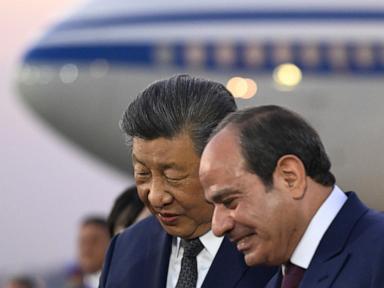
Geopolitical alignment rarely occurs through sudden shifts in sentiment; it is forged by the convergence of sovereign macro-incentives and structural bottlenecks. The comprehensive strategic partnership between Beijing and Cairo, underscored by high-level diplomatic exchanges marking seven decades of formal relations, represents a calculated realignment of industrial capacity and geographical leverage. Superficial analyses frame these diplomatic engagements as mere symbolic diplomacy or opportunistic responses to Western retrenchment. A rigorous examination reveals a deeper transactional architecture: China requires secure maritime chokepoints and industrial export platforms to absorb its domestic overcapacity, while Egypt requires external capital injection and technology transfer to service its macro-financial obligations and execute its industrial localization agenda.
The Geographic Rent Function
Egypt occupies a non-replicable node in global trade architecture. The Suez Canal processes a significant share of global maritime volume, connecting East Asian manufacturing hubs directly to European consumer markets. When regional security fractures—exemplified by maritime disruptions across the Red Sea, the Bab el-Mandeb strait, and the wider Middle Eastern theater—the cost function of international trade spikes exponentially.
China's strategic interest in Cairo is anchored in the preservation of this maritime vector. Beijing cannot project sustained economic expansion without predictable maritime logistics. Consequently, the intensification of bilateral security coordination and intelligence sharing regarding Red Sea corridors is not an altruistic peacekeeping maneuver. It is a risk-mitigation strategy designed to protect sovereign trade arteries.
By integrating naval and logistical communication channels with Cairo, Beijing ensures that its primary export highway remains insulated from regional volatility. For Egypt, this security convergence provides essential diplomatic backing, allowing Cairo to assert its role as a regional anchor while securing preferential financing for national infrastructure.
The Industrial Localization Vector
Bilateral economic engagement has undergone a structural transition over the past decade. Traditional models built around the exchange of finished Chinese goods for raw materials have hit a ceiling, constrained by Egypt's foreign currency reserves and strategic imperative to foster domestic manufacturing.
The mechanism has shifted toward the localization of production capacity. This evolution is concentrated within the Suez Canal Economic Zone, particularly through scaled projects like the TEDA cooperation framework. Rather than exporting completed electric vehicles, renewable energy components, or battery storage systems directly to African and Middle Eastern markets, Chinese manufacturing entities are establishing assembly and production hubs on Egyptian soil.
This arrangement solves two distinct optimization problems:
- For Beijing: Establishing manufacturing footprints inside North Africa allows Chinese corporations to bypass rising trade barriers, reduce long-haul transport costs, and utilize Egypt's network of preferential free trade agreements spanning the African continent and the Mediterranean.
- For Cairo: Domestic production replaces costly imports, generates technical employment for a growing workforce, and facilitates the direct transfer of high-value capabilities in telecommunications, artificial intelligence, and space technology.
The Financial Balancing Act
Macroeconomic stability in Egypt relies heavily on external liquidity management. Amid fluctuating Western monetary policies and the structural costs of regional instability, Cairo has diversified its multilateral portfolio. Accession to the BRICS bloc and the New Development Bank provides alternative channels for financial connectivity and trade settlement outside traditional dollar-denominated systems.
Debt-to-investment conversions and multi-billion-dollar green energy agreements—including massive commitments to green hydrogen and ammonia production—demonstrate how financial obligations are being restructured into productive industrial assets. Rather than relying strictly on short-term debt stabilization, the partnership channels capital directly into long-term infrastructure and energy independence. This shifts the financial risk profile from immediate default pressures to long-term operational execution.
The Multipolar Strategic Equilibrium
Diplomatic maneuverability depends on an administration's ability to cultivate multiple reliable partnerships without becoming structurally captive to any single superpower. Cairo's deepening engagement with Beijing operates as an exercise in calculated equilibrium. As traditional security umbrellas experience shifting priorities, Egypt utilizes its geostrategic value to secure technological cooperation and defense diversification.
Beijing benefits similarly by demonstrating that its diplomatic outreach yields tangible developmental outcomes without the conditionality historically attached to Western financial assistance. By positioning itself as a non-interventionist economic partner that focuses on infrastructure, industrial capacity, and technological modernization, China solidifies its footprint across the Global South.
Execute the bilateral transition framework by prioritizing the legal codification of technology transfer agreements over raw capital inflows, ensuring that industrial zones mandate localized workforce training to convert foreign direct investment into permanent domestic competency.