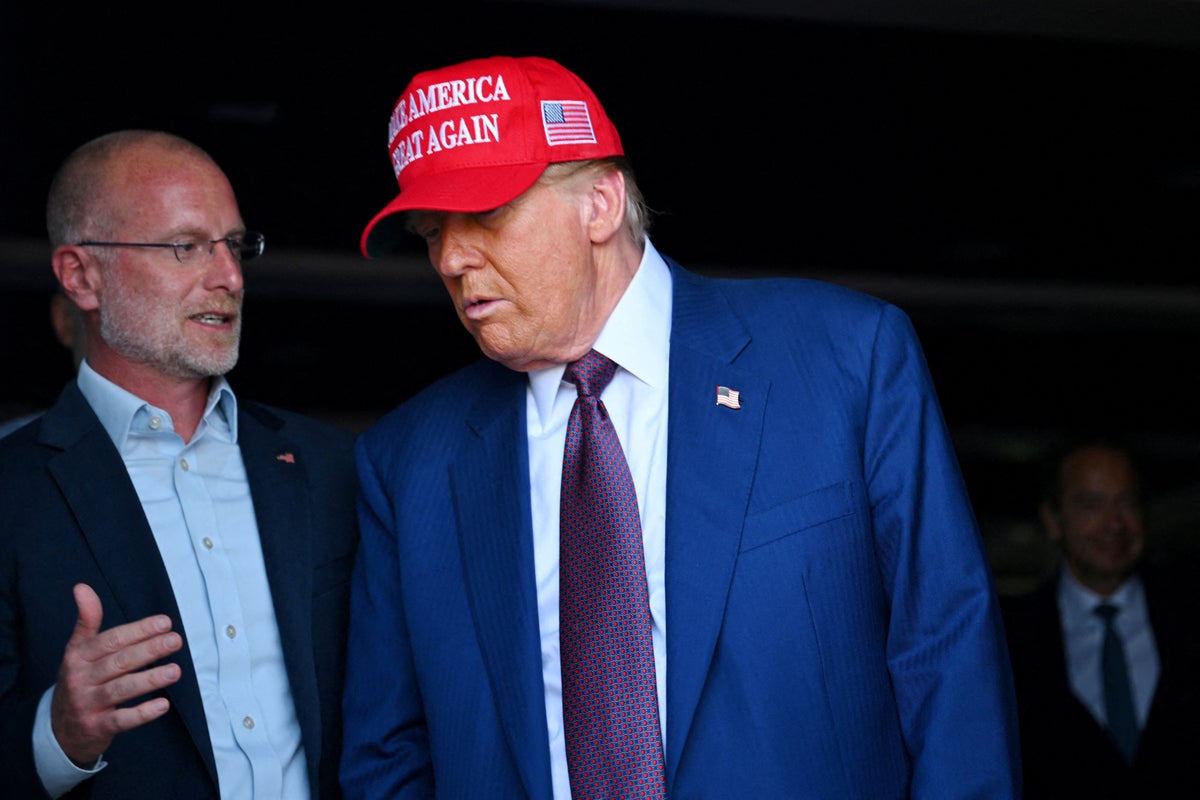
The proposed shift in federal communications policy represents a fundamental move from procedural neutrality to substantive content curation. By leveraging the Federal Communications Commission (FCC) to mandate "patriotic programming," the administration is attempting to solve a perceived market failure in the distribution of national narratives. This strategy hinges on the reclassification of the "public interest" standard—a long-standing but loosely defined legal hook—to enforce specific thematic outputs from private broadcast entities. Understanding the mechanics of this shift requires an analysis of the legal bottlenecks, the economic incentives of broadcasters, and the technical limitations of 20th-century regulatory tools in a 21st-century fragmented media environment.
The Mechanism of Public Interest Obligations
Broadcasters operate on electromagnetic spectrum frequencies owned by the public. In exchange for this exclusive access, the Communications Act of 1934 requires stations to operate in the "public interest, convenience, and necessity." Historically, the FCC has interpreted this through the lens of localism and diversity. The new plan seeks to append a third pillar: national cohesion.
This transition involves three specific regulatory levers:
- License Renewal Audits: The FCC possesses the authority to review a station’s performance every eight years. By introducing "patriotic quotas" or qualitative content benchmarks into this review process, the commission creates a high-stakes compliance environment where the penalty for non-conformity is the total loss of the business’s primary asset.
- Structural Ownership Rules: To gain leverage over large media conglomerates, the commission may tie the approval of mergers and acquisitions to "voluntary" programming commitments. This converts corporate growth strategies into a delivery system for state-preferred narratives.
- The Restoration of Directorial Oversight: Unlike the Fairness Doctrine, which required the presentation of opposing views, the current proposal leans toward a prescriptive model. This moves the regulator from a referee role (ensuring balance) to a curator role (ensuring specific themes).
The Economics of Compelled Content
Media entities are primarily optimized for two variables: CPM (Cost Per Mille) and brand safety. Forcing a "patriotic" content mandate introduces a series of market distortions that may decouple broadcast television from its remaining advertising base.
The Opportunity Cost of Airtime
Every hour dedicated to mandated programming is an hour stripped from market-optimized content. If the mandated programming fails to achieve the same viewership metrics as the displaced content, the broadcaster suffers a direct revenue hit. This creates a "Regulatory Tax" on traditional broadcasting that does not exist for streaming platforms like Netflix or YouTube, which fall outside the FCC’s Title III jurisdiction.
Audience Fragmentation and Leakage
The primary risk of prescriptive programming is "audience leakage." In a low-friction media environment, viewers respond to perceived didacticism by switching to unregulated digital alternatives. This accelerates the terminal decline of linear television. The unintended consequence of a patriotic mandate could be the further erosion of the very platform the administration seeks to utilize for national messaging.
Legal Constraints and the First Amendment Barrier
The primary friction point for this plan is the "No Censorship" provision (Section 326) of the Communications Act, paired with the First Amendment. While the Supreme Court upheld the FCC's right to regulate content in Red Lion Broadcasting Co. v. FCC (1969) based on the "scarcity" of the airwaves, that legal foundation is increasingly fragile.
The argument for re-balancing media must navigate two distinct legal thresholds:
- Content Neutrality: The government generally cannot mandate speech based on its viewpoint. Defining "patriotic" is inherently subjective. If the FCC defines it through specific political tropes, it triggers "strict scrutiny," the highest level of judicial review, which requires the government to prove a compelling interest and the narrowest possible means of achievement.
- The Scarcity Doctrine Obsolescence: In 2026, the argument that broadcast frequencies are "scarce" is technically difficult to maintain. With the proliferation of fiber, 5G, and satellite internet, the unique justification for regulating broadcast content differently than print or digital media is under systemic legal attack.
Operational Execution: The "Scorecard" Model
If the FCC chair moves forward, the most likely implementation is not a direct script-approval process, but a "Public Interest Scorecard." This would require stations to document the number of hours dedicated to specific categories such as "National History," "Civic Duty," or "Community Achievement."
This creates a compliance-industrial complex within media organizations. Legal departments, rather than creative directors, will begin to dictate programming blocks to ensure the station hits its percentage targets. This bureaucratic approach to content creation often results in "compliance programming"—low-cost, high-repetition content designed to satisfy a regulator rather than engage an audience.
The Bottleneck of Jurisdiction
The most glaring strategic weakness in the plan is the jurisdictional gap. The FCC’s authority is almost entirely confined to "over-the-air" broadcast stations (ABC, CBS, NBC, FOX affiliates). It has significantly less authority over cable networks (CNN, MSNBC, Fox News) and virtually zero authority over social media algorithms or streaming services.
This creates a "regulatory arbitrage" situation:
- Talent Migration: Creative professionals will move to platforms where they are not subject to government-mandated thematic constraints.
- Capital Flight: Investors will prioritize digital-native media companies that are immune to FCC license renewal risks.
- Information Siloing: If broadcast TV becomes a state-curated patriotic channel, the skeptical segment of the population will migrate entirely to digital bubbles, worsening the polarization the plan theoretically intends to heal.
The Cost Function of Implementation
Implementing this policy requires a massive expansion of the FCC's monitoring capabilities. The commission currently relies largely on self-reporting and public complaints. To enforce qualitative "patriotic" standards, the agency would need to develop a robust auditing arm capable of analyzing thousands of hours of local programming.
This leads to a "Definition Crisis." Does a documentary about the flaws of a past administration count as patriotic because it highlights the strength of democratic institutions, or is it disqualified? The moment the FCC begins making these distinctions, it enters the realm of viewpoint discrimination.
Strategic Forecast
The push for "re-balanced" media is less about immediate programming changes and more about a long-term shift in the power dynamic between the state and the press. By re-establishing the FCC’s willingness to use the license renewal process as a political tool, the administration creates a "chilling effect" that encourages self-censorship and proactive alignment with state goals without the need for formal rulemaking.
The endgame is likely a series of high-profile license challenges against stations owned by perceived "hostile" conglomerates. These challenges will serve as a forcing function, compelling media companies to negotiate over their editorial standards in exchange for regulatory peace.
To navigate this, media organizations must pivot from purely editorial defenses to technical and economic ones. They must argue that the "Public Interest" is best served by a commercially viable broadcast sector that can fund local news, rather than a subsidized mouthpiece that loses its audience to unregulated digital competitors. The survival of the broadcast model depends on maintaining its status as a trusted, independent intermediary; once it is viewed as a regulated utility for national messaging, its market value—and its societal influence—will effectively hit zero.