Prediction markets are the new horoscopes for the suit-and-tie crowd.
When Kalshi bettors wager that tanker traffic won't return to "normal" for months, they aren't predicting the future of global energy. They are betting on a misunderstanding of what "normal" actually looks like in 2026. The consensus is lazy, driven by a surface-level reading of geopolitical friction and a fundamental ignorance of how modern maritime logistics actually function.
The narrative is simple: Tension equals blockage. Blockage equals delay. Delay equals a broken market.
It is a beautiful, linear, and completely wrong story.
I have spent years watching commodities traders burn through capital because they reacted to headlines instead of looking at the AIS (Automatic Identification System) data. The "crisis" in the Strait of Hormuz is not a physical bottleneck; it is a psychological one that has been priced into the market so deeply that the reality of the flow no longer matters to the price of a barrel.
The Myth of the "Normal" Flow
What is "normal"? In the eyes of the average retail bettor, normal is a 2015-era steady stream of Suezmax and VLCC (Very Large Crude Carrier) vessels moving without a care in the world.
That world is dead.
Normal today is a fragmented, dark-fleet-heavy, spoofing-dependent shuffle. If you look at the raw tonnage moving through the Strait, it hasn't "stopped." It has just changed its digital signature. The bettors are looking at "official" traffic counts while ignoring the fact that a significant percentage of the global oil trade now operates under the radar to bypass various sanctions and "risky" designations.
When the mainstream media or a prediction market talks about traffic returning to normal, they are measuring the wrong thing. They are measuring the comfort level of Western insurance underwriters. They are not measuring the actual volume of hydrocarbons hitting the water.
Why the Bettors are Wrong
Prediction markets thrive on fear. Fear is a lagging indicator.
- The Ghost Fleet Factor: Roughly 10% to 15% of the global tanker fleet now operates in the "shadow" market. These ships do not care about "normal" traffic patterns. They thrive in the friction. While Kalshi users bet on delays, these vessels are already moving, often with their transponders off or broadcasting fake locations.
- The Risk Premium Paradox: High risk in the Strait is the best thing that ever happened to certain regional players. It justifies the "war risk" premiums that allow shippers to bake massive margins into their contracts. There is a financial incentive for the "abnormal" to persist on paper, even when the ships are physically clearing the point of entry.
- Logistics Elasticity: The industry has already rerouted. The "crisis" assumes a static world. But global supply chains are more like water than stone. They find the path of least resistance. By the time the bettors decide the Strait is "clear," the market will have already moved on to the next bottleneck.
The Math of Movement
Let's look at the actual physics of a VLCC. A standard VLCC carries about 2 million barrels of oil.
Suppose the daily flow through the Strait is $Q$. If we assume a disruption factor $d$, where $0 < d < 1$, the perceived flow is $Q(1-d)$.
The bettors are obsessed with $d$. They think $d$ is going to stay high. What they miss is that the global demand $D$ must be met. If $D$ is constant, the price $P$ simply scales to find a new equilibrium where the cost of $d$ is absorbed.
$$P_{new} = P_{old} \times \frac{D}{Q(1-d)}$$
In this equation, the "traffic" isn't the variable that matters; the price of the traffic is. The ships will move as long as $P_{new}$ covers the insurance hike. They are moving right now. To say traffic hasn't "returned to normal" is like saying the internet is broken because everyone started using VPNs. The data is still moving; you just can't track it the way you used to.
The Misunderstood Role of Prediction Markets
Prediction markets are touted as the ultimate "wisdom of the crowds." In reality, they are often just a mirror for the prevailing media bias.
If every headline says "Strait of Hormuz in Peril," the bettors will bet on peril. They aren't analyzing satellite imagery or port data. They are reading the same three articles you are. This creates a feedback loop where the market "predicts" exactly what the news is already telling it.
I have seen firms lose nine-figure sums by trusting "crowdsourced intelligence" over hard engineering and localized intelligence. The crowd is frequently a herd, and the herd is currently terrified of a ghost.
The Real Bottleneck is Not Geographic
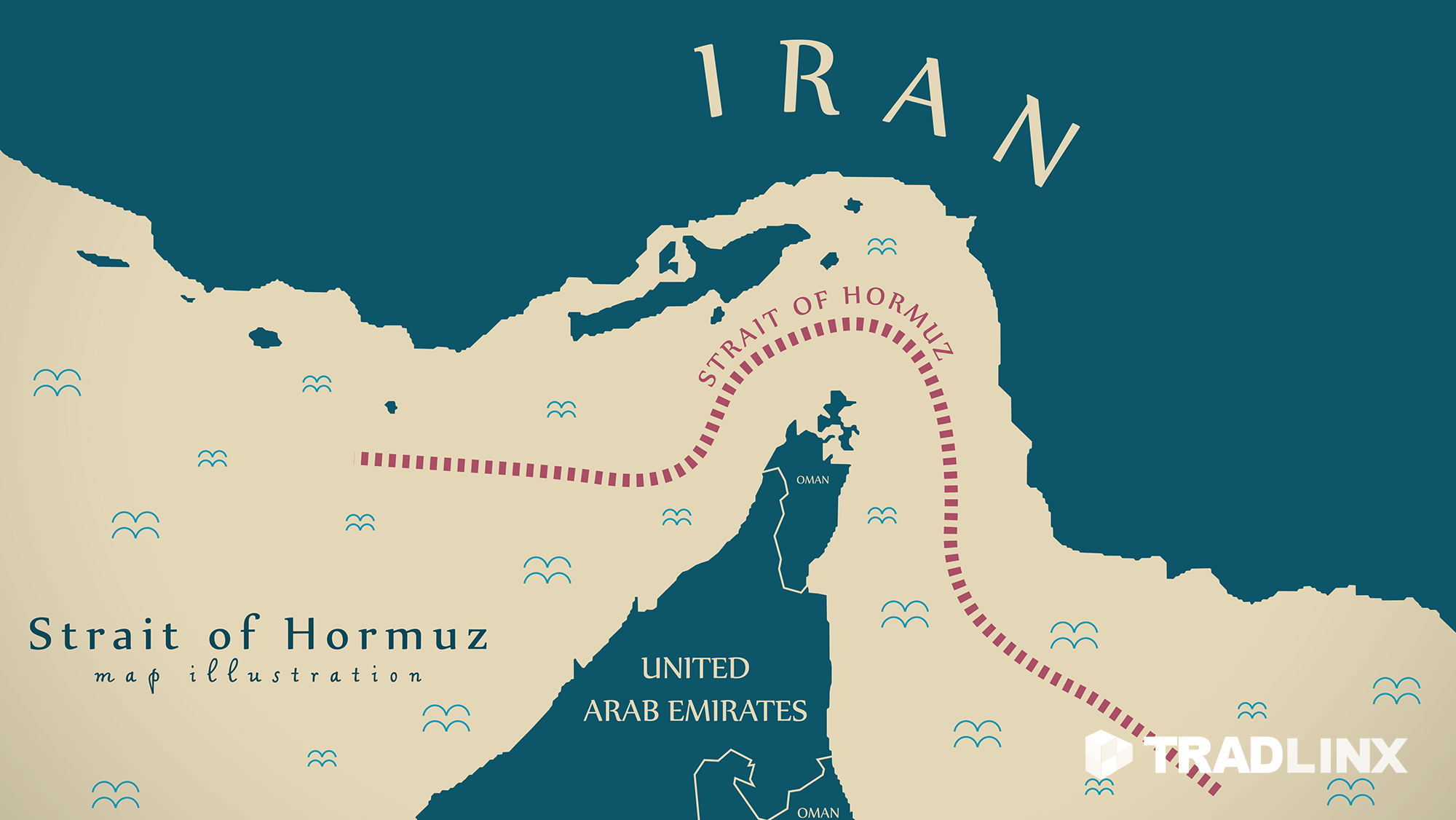
The bottleneck isn't the 21-mile-wide stretch of water between Oman and Iran. The bottleneck is the aging infrastructure of the global tanker fleet and the looming "insurance wall."
We are facing a massive shortage of new-build tankers. The current fleet is getting older, and the yards in South Korea and China are booked out for years with LNG carriers and container ships.
- Ageing Vessels: The average age of the tanker fleet is at a 20-year high.
- Regulatory Friction: New environmental regulations (EEXI and CII) are forcing older ships to slow down to save fuel and reduce emissions.
- Insurance Fragmentation: The split between "Western insured" and "Dark insured" fleets is creating a two-tier market that makes "normal" traffic impossible to calculate.
If you want to bet on something, bet on the fact that we will never see the 2019 version of the Strait of Hormuz again. Not because of war, but because the shipping industry has fundamentally fractured.
Stop Asking if Traffic Will Return to Normal
You are asking the wrong question. "Normal" is a ghost. It's a nostalgic term for a period of low-volatility globalization that ended in 2020.
Instead of asking when the traffic returns, ask who is profiting from the perception of the delay. The winners aren't the bettors on Kalshi; the winners are the operators who have already secured their hulls and are laughing at the "risk premiums" they get to charge for a route they’ve been sailing for thirty years.
The Strait is open. The oil is flowing. The only thing blocked is the vision of the people watching the wrong indicators.
Take your money off the table and look at the hull-level data. The "months-long recovery" is a fairytale told to justify high prices. The ships are already there. They just don't want you to know it.
Stop waiting for a "return" and start trading the reality of the fracture.