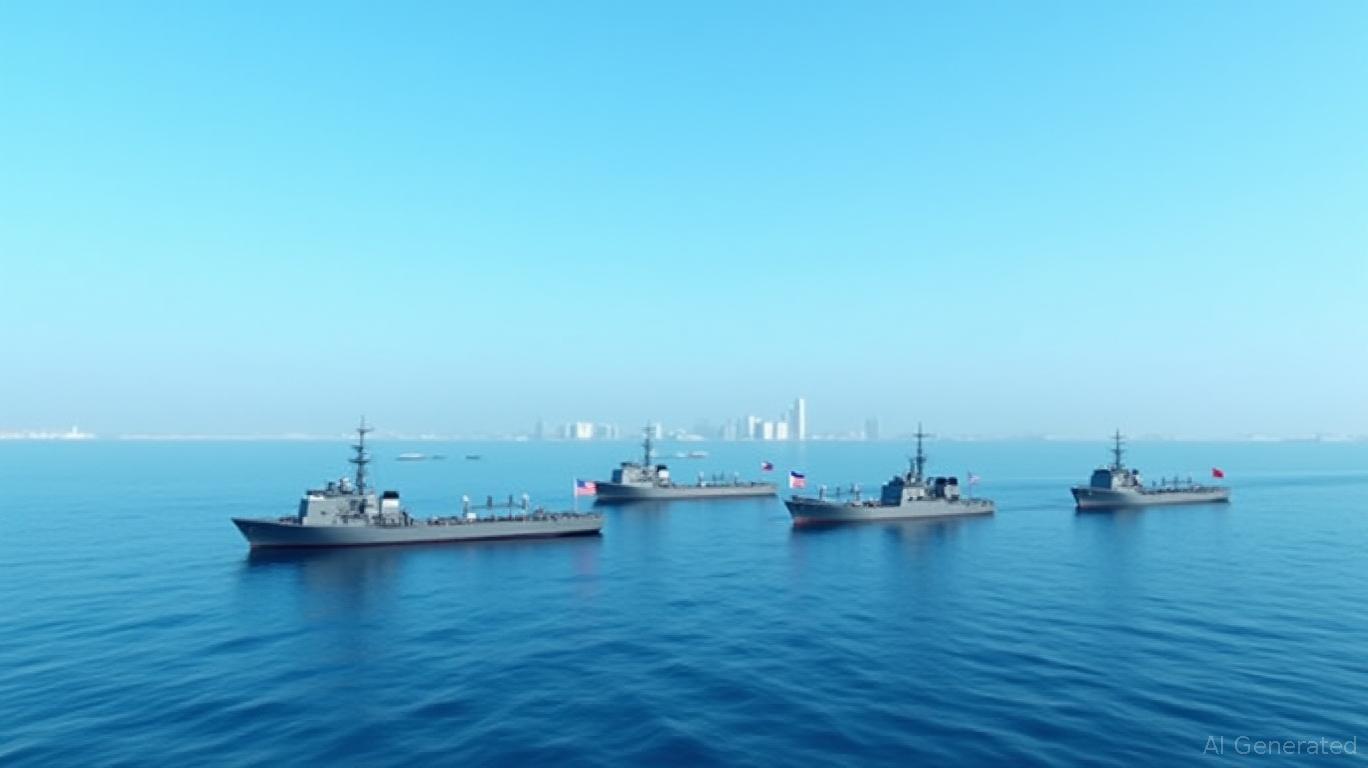
The Strait of Hormuz functions as a binary switch for global energy markets rather than a mere transit point. Approximately 20% of the world's liquid petroleum passes through this 21-mile-wide chink in the global supply chain. When Iran signals "alternative routes" for shipping amidst West Asian escalation, it is not suggesting a simple detour. It is announcing a fundamental shift in the regional logistics architecture designed to decouple its domestic economy from the physical vulnerability of the Strait. This strategic pivot rests on three operational pillars: the Jask Terminal expansion, the Goreh-Jask pipeline synchronization, and the integration of the International North-South Transport Corridor (INSTC).
The Goreh-Jask Bypass Functional Mechanics
The primary mechanism for bypassing the Strait of Hormuz is the 1,000-kilometer Goreh-Jask pipeline. To understand the strategic utility of this infrastructure, one must analyze the cost-benefit ratio of maritime transit versus terrestrial pumping. Ships entering the Persian Gulf to reach terminals like Kharg Island must navigate the narrowest points of the Strait, incurring high insurance premiums (War Risk Surcharges) during periods of kinetic conflict.
The Goreh-Jask pipeline shifts the point of embarkation from the interior of the Persian Gulf to the port of Jask on the Gulf of Oman. This location lies outside the immediate "kill zone" of a potential Strait closure.
- Throughput Capacity: The initial phase targets 300,000 barrels per day (bpd), with a terminal capacity designed for 1 million bpd.
- Storage Infrastructure: 20 tanks with a total capacity of 10 million barrels provide a buffer against supply shocks.
- Loading Logistics: Subsea pipelines and Single Point Mooring (SPM) systems allow Very Large Crude Carriers (VLCCs) to load without entering the congested and monitored waters of the Persian Gulf.
This bypass reduces the sailing distance for tankers by approximately 1,000 kilometers, effectively cutting round-trip times by several days. The reduction in fuel consumption and insurance risk creates a "security discount" that offsets the capital expenditure of the pipeline construction.
The INSTC as a Geopolitical Pressure Valve
Beyond oil, Iran’s strategy involves the International North-South Transport Corridor (INSTC), a 7,200-km multi-mode network of ship, rail, and road routes. While the Strait of Hormuz facilitates East-West trade, the INSTC creates a North-South axis connecting India to Russia and Europe via Iranian territory.
The logic here is one of "Interdependence as Defense." By positioning itself as the indispensable transit hub for Russian and Indian goods, Iran complicates the calculus for any Western-led blockade. A shutdown of Iranian transit routes would not just impact Tehran; it would disrupt the supply chains of emerging and established nuclear powers.
The transit time via the INSTC is estimated at 25–30 days, compared to 45–60 days via the Suez Canal. This 40% reduction in transit time serves as a powerful incentive for regional players to ignore sanctions regimes in favor of logistical efficiency. The primary bottleneck remains the "Missing Link" rail sections, such as the Rasht-Astara line, which require significant foreign direct investment to reach peak operational efficiency.
The Three Pillars of Maritime Insurgency and Defense
Iran’s announcement of alternative routes is a defensive maneuver, but it is inextricably linked to its offensive maritime doctrine. The IRGC Navy (IRGCN) utilizes a "Swarm and Mine" strategy to control the Strait, while the regular Navy (Artesh) focuses on "Blue Water" presence near the alternative Jask terminal.
- Asymmetric Denial: Small, fast-attack craft (FAC) equipped with short-range missiles can saturate the defenses of larger naval vessels.
- Subsurface Disruption: The use of midget submarines (Ghadir-class) and bottom mines makes clearing the Strait a time-intensive process that can take weeks, during which global oil prices would likely experience extreme volatility.
- The Jask Sanctuary: By moving its primary export point to Jask, Iran ensures its own revenue stream remains active even while it possesses the capability to halt the revenue streams of its neighbors who remain dependent on the Strait.
Economic Elasticity and the Crude Oil Risk Premium
The market reacts not to the physical closure of a strait, but to the perceived probability of closure. This is defined as the "Fear Premium." When Iran discusses alternative routes, it is attempting to manage this premium for its own buyers (primarily in Asia) while maintaining it for its competitors.
If the Strait were to be closed, the global supply deficit would be roughly 20 million bpd. No amount of spare capacity in the UAE or Saudi Arabia (via the East-West Pipeline) can fully compensate for this loss. The UAE’s Habshan-Fujairah pipeline and Saudi’s Petroline have a combined unused capacity of roughly 3.5 to 5 million bpd. This leaves a 15 million bpd hole in the global energy balance.
Iran’s Jask terminal creates a competitive advantage. If the Strait is contested, Saudi and Emirati oil trapped inside the Gulf becomes "stranded," while Iranian oil at Jask remains "liquid" in both the physical and financial sense.
Strategic Constraints and Execution Risks
The transition to alternative routes is not without significant friction. The Goreh-Jask project has faced delays due to the difficulty of sourcing high-quality, corrosion-resistant pipes and large-scale pump stations under heavy sanctions. Domestic manufacturing has filled some gaps, but the efficiency of these components under long-term high-pressure use remains unproven.
Furthermore, the Gulf of Oman is not entirely "safe" water. It is deeper and more open than the Persian Gulf, making it harder to mine but easier for high-end naval forces to patrol and interdict. A shift to Jask does not eliminate the risk of a naval blockade; it simply moves the theater of operations 300 miles to the southeast.
The Shift from Chokepoint to Hub
The traditional view of Iran as a "threat to the Strait" is evolving into Iran as a "trans-regional logistics provider." By developing the port of Chabahar (with Indian cooperation) and the terminal at Jask, Iran is attempting to transform its geography from a liability into a strategic asset.
The goal is to create a scenario where the cost of military intervention against Iran exceeds the cost of allowing it to function as a regional transit hub. This is "Logistical Deterrence." The West Asia crisis accelerates this transition, forcing Tehran to finalize infrastructure that might have otherwise taken a decade to complete.
As the Goreh-Jask pipeline reaches full operational status, the Strait of Hormuz will lose its status as Iran's "suicide vest." It will no longer be the only way for Iran to survive economically, which ironically makes the threat of Iran closing the Strait more credible. When a nation can survive the closure of a chokepoint it controls, it gains the ultimate leverage over those who cannot.
The strategic play for global energy observers is to monitor the loading frequency at Jask versus Kharg Island. A sustained shift in VLCC destination data toward the Gulf of Oman will signal that the Iranian decoupling from the Strait is complete, marking the end of the Persian Gulf's era as the sole energy artery of the world.