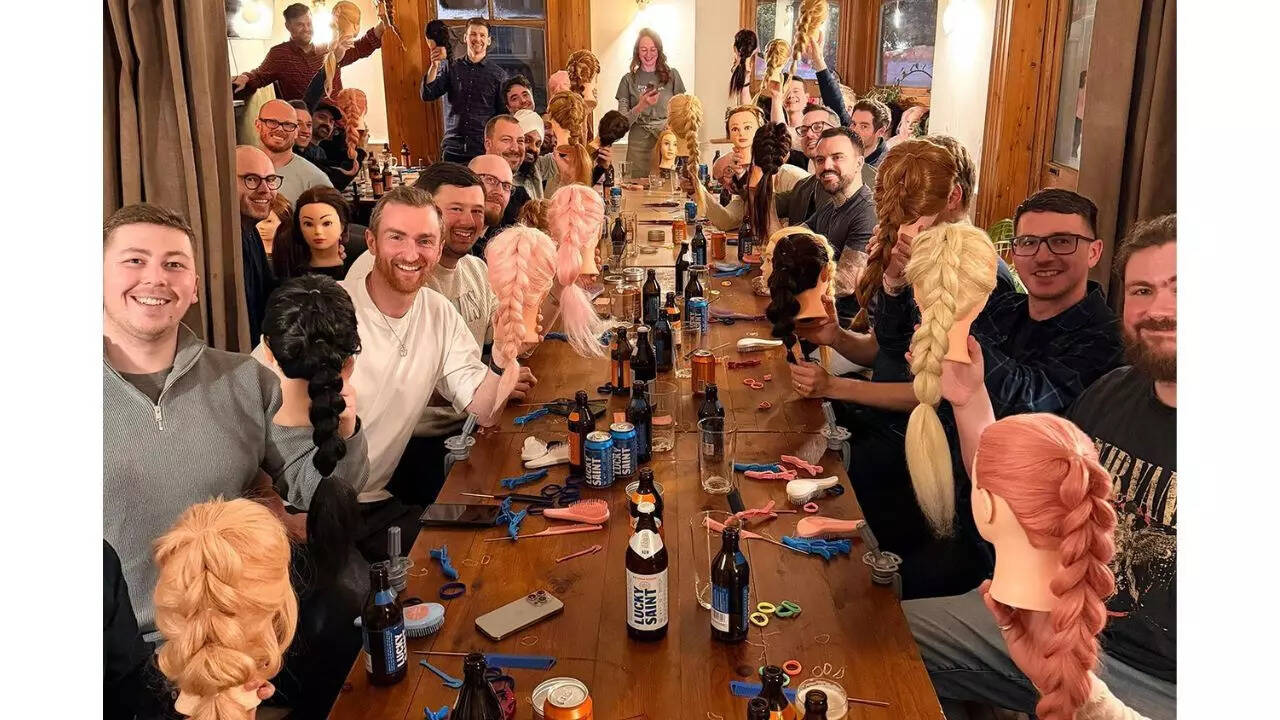
The viral "Pints & Ponytails" trend is a symptom of a deeper rot in how we view fatherhood. We are currently applauding men for performing basic biological and social duties as if they have just split the atom in a pub basement. The narrative is always the same: a group of well-meaning fathers gathers over IPAs to learn the "impossible" art of a three-strand braid. The media laps it up. The internet sighs in collective relief that men are finally "stepping up."
This isn't progress. It’s a performance of incompetence.
When we fetishize fathers doing hair, we reinforce the toxic idea that childcare is a secondary hobby for men—a quaint weekend activity they can opt into when the mood strikes and a pint is involved. If a mother struggled to brush her child’s hair, we wouldn't throw her a party at a winery; we’d question her competence.
The Soft Bigotry of Low Expectations
The "Pints & Ponytails" phenomenon relies on the "Incompetent Dad" trope. This is the same tired archetype seen in every sitcom since the 1950s: the father who can’t find the diapers, burns the toast, and treats a French braid like a multivariate calculus problem.
By framing basic grooming as an advanced skill set requiring a workshop and a beer, we are infantilizing men. We are saying, "We know this is hard for your simple, masculine brain, so here is a prize for trying."
I have spent fifteen years consulting on gender dynamics and family structures. I have seen how this "participation trophy" culture for fathers actually damages marriages and stunts children's development. When a father is treated as a "helpmate" rather than a primary stakeholder, the mental load stays firmly on the mother. She is still the manager; he is just the intern who needs a seminar to learn how to use the photocopier.
The Pub as a Crutch
Why the pub? Why must every "modern" fatherhood initiative be lubricated by alcohol and a masculine environment?
The subtext is clear: Parenting is so feminine/boring/scary that I need a 'safe space' to engage with it. - The Buffer Zone: The pub serves as a buffer between the man and the vulnerability of caregiving.
- The Social Shield: It tells the world, "I'm still a 'guy's guy,' even though I'm holding a scrunchie."
- The Transaction: It turns a moment of connection with a daughter into a social transaction with other men.
If you can only learn to bond with your child when there’s a Guinness on the table, you aren't learning to be a father. You’re learning to perform fatherhood for an audience. True intimacy isn't found in a workshop; it’s found in the quiet, unglamorous, sober repetition of daily life.
The Skill Gap is a Choice
Let’s be brutally honest about the "difficulty" of braiding hair. It is a mechanical task. It requires fine motor skills, which men use every day to tie fishing lures, fix car engines, or type code.
The idea that a braid is a "mysterious" or "feminine" art is a social construct designed to give men an out. It is a choice to remain ignorant. In any other sector of life—business, sports, hobbies—a man who claimed he "just couldn't figure out" a basic task would be laughed out of the room. Yet, in the realm of parenting, this weaponized incompetence is celebrated as a charming quirk.
I've seen fathers spend 40 hours a week mastering complex software but claim they "don't have the hands" for a ponytail. This isn't a lack of ability. It's a lack of respect for the labor involved.
The Economic Reality of the Braid
The "Pints & Ponytails" events often charge for attendance. They are monetizing the guilt of the uninvolved father.
Consider the "Mental Load" framework popularized by researchers like Allison Daminger. The labor of parenting isn't just the physical act of braiding; it's knowing when the hair needs to be washed, which elastics won't break the hair, and what time the kid needs to be ready for school. A one-hour workshop in a pub addresses the physical act but ignores the cognitive labor.
It creates a "Guest Star" father. He shows up, does the "cool" thing he learned at the pub, takes a photo for Instagram, and then hands the child back to the "Director" (the mother) for the actual work of raising a human.
Stop Asking "How Can We Get Dads Involved?"
The premise of the question is flawed. "Getting dads involved" implies that their involvement is optional or external to the system.
Instead, we should be asking: "Why are we still tolerating fatherly incompetence?"
If you want to be a better father to your daughter, don't go to a pub. Go to your bathroom. Pick up a comb. Watch a thirty-second YouTube video. Fail. Try again. Do it because it is your job, not because you get a social pat on the back for it.
The contrarian truth is that the more we celebrate these "cute" initiatives, the further we push back the timeline for true domestic equality. We are building a pedestal for men who are simply walking on flat ground.
The Cost of the Performance
When a daughter sees her father needing a special "men’s group" to learn how to interact with her, what message does she receive?
- She learns that her needs are an "extra" burden.
- She learns that her father's comfort is the priority.
- She learns that her world is so foreign to men that they need a map and a guide to enter it.
This isn't "wholesome." It's alienating.
True "Pints & Ponytails" would be the father staying home, doing the hair, the laundry, and the dishes while the mother goes to the pub. But that doesn't make for a viral headline. It doesn't get the "likes." It’s just parenting.
The Actionable Pivot
If you are a father who feels "clueless" about these tasks, stop looking for a workshop.
- Eradicate the "Help" Language: You aren't "helping" your partner. You are co-parenting. "Help" is for neighbors and strangers.
- Master the Basics Solo: Use the tools at your disposal. If you can use a smartphone, you can learn to braid.
- Value the Labor: Recognize that the time your partner spends on these tasks is time stolen from her rest, her career, or her hobbies.
- Ignore the Crowd: If you need a beer and a cheering section to take care of your kid, you’re doing it for yourself, not for her.
The next time you see a "Pints & Ponytails" event, don't share it with a heart emoji. Ask why we are still treating the basic requirements of fatherhood like a charity event.
Put down the pint. Pick up the brush. Do your job.