The olive oil sits on the mahogany counter of a kitchen in suburban Ohio. It is golden, viscous, and carries the faint scent of sun-drenched Andalusian hills. For Sarah, a mother of three, it is just an ingredient for tonight’s pasta. For Alejandro, a third-generation farmer in Jaén, it is the lifeblood of his family, the result of 400 trees that have survived wars, droughts, and the shifting whims of kings.
Between Sarah’s kitchen and Alejandro’s grove lies a vast, invisible web of treaties, maritime laws, and executive powers. We rarely think about this web until someone threatens to cut it.
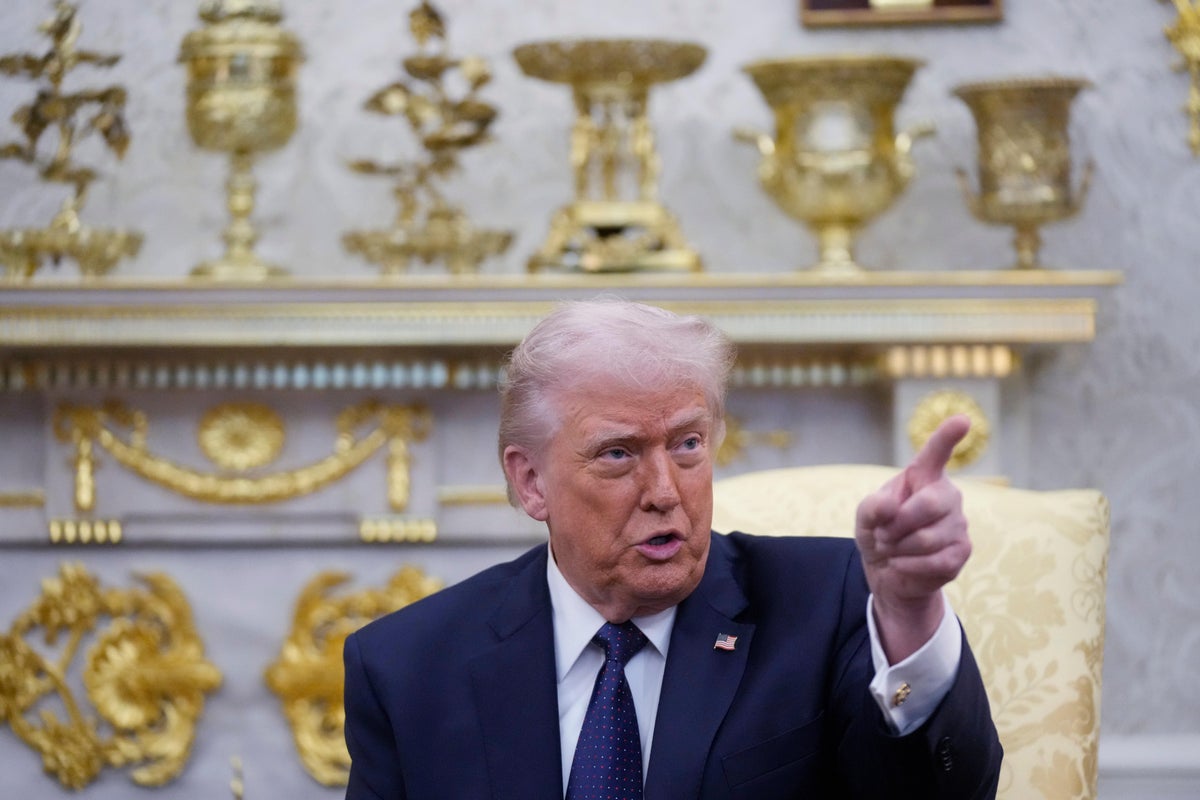
When the rhetoric of a "total trade cutoff" begins to circulate from the campaign trail or the Oval Office, it sounds like a simple flick of a switch. In the mind of a politician, trade is a faucet. You turn it left to open the flow of prosperity; you turn it right to starve an opponent. But the law, a stubborn and tangled thicket, suggests that the President of the United States does not hold a master key to every port.
To understand if a President can truly isolate a country like Spain, we have to look past the podium and into the dusty pages of the International Emergency Economic Powers Act (IEEPA).
The Law of the Lever
Passed in 1977, IEEPA is the most potent weapon in the commander-in-chief’s economic arsenal. It allows a President to declare a national emergency in response to an "unusual and extraordinary threat" originating outside the United States. Once that emergency is declared, the President can investigate, regulate, or prohibit any transactions in foreign exchange, transfers of credit, or the importing and exporting of currency and property.
It sounds absolute. If a President decides that Spanish olives or SEAT car components constitute a threat to the American soul or its balance sheet, they can, theoretically, lock the door.
But imagine the friction.
Spain is not a rogue state. It is a member of the European Union, a NATO ally, and a vital partner in Mediterranean security. To invoke IEEPA against Spain, a President would have to argue that the 14th largest economy in the world—a democratic monarchy—poses a threat equivalent to a nuclear-armed dictator or a global terrorist network.
The courts have historically given the executive branch wide berth on matters of national security. However, wide berth is not a blank check. If a President tries to choke off trade with a friendly nation without a credible, evidence-based "emergency," the legal challenges would be instantaneous. Major American corporations, from Costco to Boeing, would flood the courts with injunctions. Their argument would be simple: the President is acting "arbitrarily and capriciously," violating the Administrative Procedure Act.
The Collateral of a Broken Chain
Let’s step away from the courtroom and back into Sarah’s kitchen.
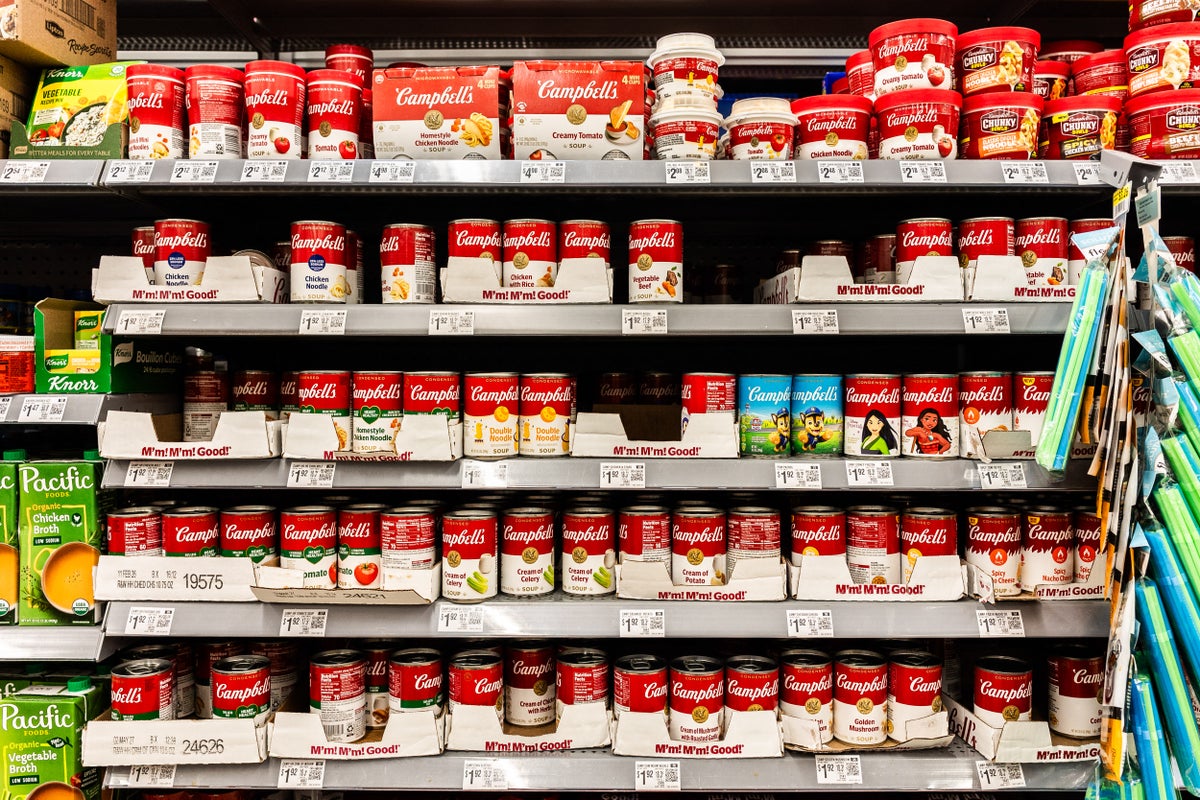
If the trade were to stop, the price of that olive oil doesn't just go up—it vanishes. But the impact is deeper. Consider the "Ghost of the Supply Chain." Spain is a global leader in renewable energy infrastructure and high-speed rail technology. When you flip a switch in a Texas town powered by a Spanish-owned wind farm, you are participating in a trans-Atlantic handshake.
A total trade cutoff would mean American companies could no longer pay for maintenance parts. It would mean Spanish architects working on New York skyscrapers would see their contracts voided overnight. It would mean the sudden, violent decoupling of thousands of small businesses that rely on "Just-in-Time" logistics.
In Jaén, Alejandro would watch his harvest rot. In Ohio, Sarah would see her grocery bill spike as the sudden vacuum in the market forced Italian and Greek suppliers to triple their prices.
This is the "Hidden Cost." Trade isn't just about moving boxes; it's about the stabilization of daily life.
The Section 232 Shadow
There is another tool in the box: Section 232 of the Trade Expansion Act of 1962. This allows a President to impose tariffs or quotas if an import "threatens to impair the national security." This was the mechanism used for steel and aluminum tariffs in recent years.
The beauty of Section 232, from a protectionist standpoint, is its vagueness. "National security" can be interpreted to include the economic health of a domestic industry. A President could argue that Spanish wine is depressing the American viticulture industry to the point of collapse, thereby weakening the rural economy and, by extension, national stability.
It is a stretch. A massive, Olympic-level stretch.
But the President doesn't need to win the legal battle to cause the damage. The mere announcement of an investigation creates "regime uncertainty." Investors pull back. Shipping companies reroute. The threat of the law is often as heavy as the law itself.
The European Shield
The President of the United States is powerful, but they are not the only giant in the room. If a "cutoff" were attempted, Spain would not stand alone. It would hide behind the massive, bureaucratic shield of the European Union.
The EU manages trade policy for all its members. An attack on Spanish trade is legally an attack on the entire Bloc. This triggers the "Blocking Statute," a piece of EU law designed to protect European companies from the extra-territorial effects of foreign sanctions.
More importantly, it triggers retaliation.
Imagine the American farmer in Iowa who suddenly finds that his soybeans are banned in Paris, Berlin, and Madrid. Imagine the tech giant in California finding that its digital services are taxed at 50% in retaliation for the olive oil ban.
Trade wars are not fought with infantry; they are fought with the livelihoods of people who have never met.
The Fragility of the Status Quo
We live in a world where we assume the things we want will always be where we expect them. We assume the law is a series of clear, unbreakable lines. But the law is actually a series of conversations—some polite, some screamed—between the Executive, the Legislative, and the Judicial branches.
Could a President legally cut off all trade with Spain?
Technically, under a broad and aggressive interpretation of IEEPA, they could attempt it. They could sign the order at 9:00 AM. By 9:05 AM, the global markets would be in a freefall. By 10:00 AM, the first of ten thousand lawsuits would be filed in the District Court for the District of Columbia. By noon, the European Commission would be drafting a list of American products to ban in response.
The President has the power to start the fire, but they do not have the power to control where the sparks land.
The reality of 21st-century trade is that it is no longer a collection of bilateral agreements. It is a nervous system. You cannot perform an amputation on one limb without the entire body going into shock.
Alejandro in his grove and Sarah in her kitchen are connected by more than just a bottle of oil. They are connected by a shared trust that the rules of the world won't change while they are sleeping. When that trust is used as a bargaining chip, the law becomes a secondary concern. The real casualty is the stability we’ve spent eighty years building.
The law provides the framework for the "cutoff," but the world provides the resistance. In the end, a President might find that while they can order the ports to close, they cannot force the world to stop turning, nor can they easily untangle the millions of human threads that tie a small farm in Spain to a dinner table in America.
The oil remains on the counter, for now, a golden reminder of a peace we too often take for granted.