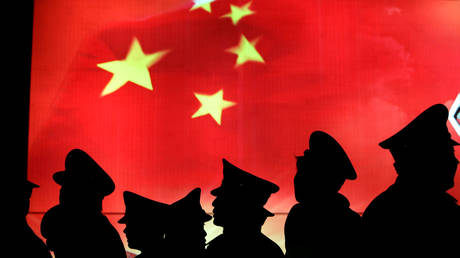
In a dimly lit room in Beijing, the air smells of stale coffee and the hum of high-end processors. A young analyst, let’s call him Chen, stares at a mosaic of screens. He isn't looking at stock tickers or social media trends. He is watching high-resolution satellite feeds and intercepted telemetry from a conflict half a world away. To the casual observer, the recent exchange of fire between the United States, Israel, and Iran is a terrifying headline. To Chen and the strategic architects of the People’s Liberation Army, it is the world’s most expensive laboratory.
War is no longer just about who has the biggest hammer. It is about who has the most resilient nervous system. As the dust settles over the Iranian desert and the interceptor batteries in Israel cool down, China has been busy taking notes. They aren't interested in the politics of the Levant. They are interested in the physics of survival. They have distilled the chaos of this confrontation into five brutal truths that will dictate the future of global power.
The Myth of the Iron Dome
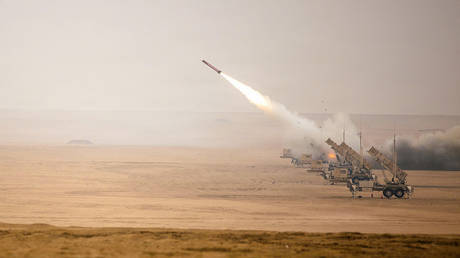
For years, we were told that missile defense was a solved problem. We watched videos of Iron Dome interceptors weaving through the night sky like glowing needles, stitching shut the holes in the atmosphere. But Chen saw something different in the data. He saw saturation.
The first lesson China burned into its manual is that even the most sophisticated shield has a "break point." When Iran launched its swarm of drones and missiles, they weren't just trying to hit targets; they were performing a stress test. China realized that if you throw enough metal into the sky, the math eventually flips in favor of the attacker. The cost of a single interceptor missile can be fifty times the cost of the cheap, "suicide" drone it is meant to destroy.
This isn't just a military problem. It's a ledger problem. If a superpower can be bankrupted by defending against plywood drones, the shield is a liability. China’s takeaway is clear: stop trying to build a perfect wall. Instead, build a faster, cheaper hammer.
The Ghost in the Machine
Consider a hypothetical pilot, "Sarah," flying a multi-million dollar jet over the Persian Gulf. Suddenly, her GPS flickers. The coordinates on her screen suggest she is fifty miles inland, over a mountain range that doesn't exist. She isn't being shot at with bullets; she is being drowned in noise.
Electronic warfare used to be a niche specialty. Now, it is the atmosphere. China watched as GPS spoofing and signal jamming became the primary weapons of the US-Israeli-Iranian theater. They saw drones lose their "minds" and drift aimlessly into the sea. They saw precision-guided munitions become remarkably imprecise because the invisible signals they rely on were hijacked.
The invisible stakes here are terrifying. We have built a world that functions on the assumption that the "cloud" and the "signal" are permanent fixtures of nature, like gravity. They are not. China’s second lesson is that the next great conflict will be fought in the spectrum. If you can’t protect your data’s integrity in a high-interference environment, your high-tech arsenal is just a collection of very expensive paperweights.
The Logistics of the Long Game
In a warehouse in an undisclosed location, a logistics officer realizes they are out of a specific microchip required for a thermal imaging sensor. The war doesn't stop, but the capability does.
The third lesson is perhaps the most sobering for a globalized economy. The recent conflict revealed that modern warfare consumes "smart" munitions at a rate that current manufacturing cannot sustain. The US and its allies burned through months of production in a single weekend of defense.
China, often called the world's factory, looked at this and saw an opportunity. They recognized that victory doesn't belong to the side with the best prototype, but to the side that can keep the assembly lines moving under fire. They are shifting their focus from "exquisite" technology—weapons that are perfect but rare—to "attrition-ready" systems. They want the ability to lose a thousand drones today and have a thousand more roll off the line tomorrow.
The Psychology of the Red Line
We often think of war as a binary: peace or conflict. The reality is a grey zone of "calibrated escalation."
China observed how Iran and Israel danced around the edge of a total collapse. Every strike was a message. Every pause was a paragraph. The fourth lesson is about the art of the bluff. China realized that the West’s greatest weakness might be its own internal polling.
In a democracy, every missile launch is debated on cable news and criticized in the streets. This creates a lag in response time. China’s analysts are studying how to exploit this "democratic friction." They want to know exactly how much pressure they can apply before the "red line" actually triggers a response. They saw that the US is increasingly hesitant to enter a direct kinetic conflict that could disrupt the global economy, and they are factoring that hesitation into their own territorial ambitions.
The End of the Lone Wolf
Finally, there is the human element. No nation, no matter how technologically advanced, can stand alone.
The fifth lesson China took away is the power of the "integrated coalition." During the Iranian strikes, it wasn't just Israel defending itself. It was a web of intelligence and hardware from the US, the UK, Jordan, and others. They worked as a single organism.
For a long time, China’s military philosophy was one of self-reliance. But watching the "defensive symphony" over the Middle East changed the tune. They are now looking at their own neighbors—nations that have traditionally been wary of Beijing—and realizing they need to build their own "neural network" of allies. They are learning that in the modern age, the winner isn't the one with the most soldiers, but the one with the most integrated sensors.
The Echoes in the Silent Room
Back in the room in Beijing, Chen shuts down his monitor. The data points have been filed. The lessons have been codified.
We often talk about the "lessons of history" as if they are dusty books on a shelf. But these lessons are living, breathing things. They are being programmed into the guidance systems of tomorrow’s missiles and the algorithms of tomorrow’s cyber-attacks.
The conflict between Israel and Iran was a tragedy for those on the ground, a terrifying moment of uncertainty for the world. But for those watching from the sidelines, it was a glimpse into a new reality. We are entering an era where the shield is cracking, the signal is failing, and the factory is as important as the front line.
The most dangerous thing about these lessons isn't that China learned them. It’s the assumption that we already knew them.
The air in the room remains still, but the world has shifted. The silent observers have seen enough. They aren't wondering if the next war will happen. They are simply deciding which of these five truths they will use to win it.
The lights go out, but the hum of the processors continues, calculating the cost of the next move in a game where the rules are rewritten every time a shadow crosses the desert.