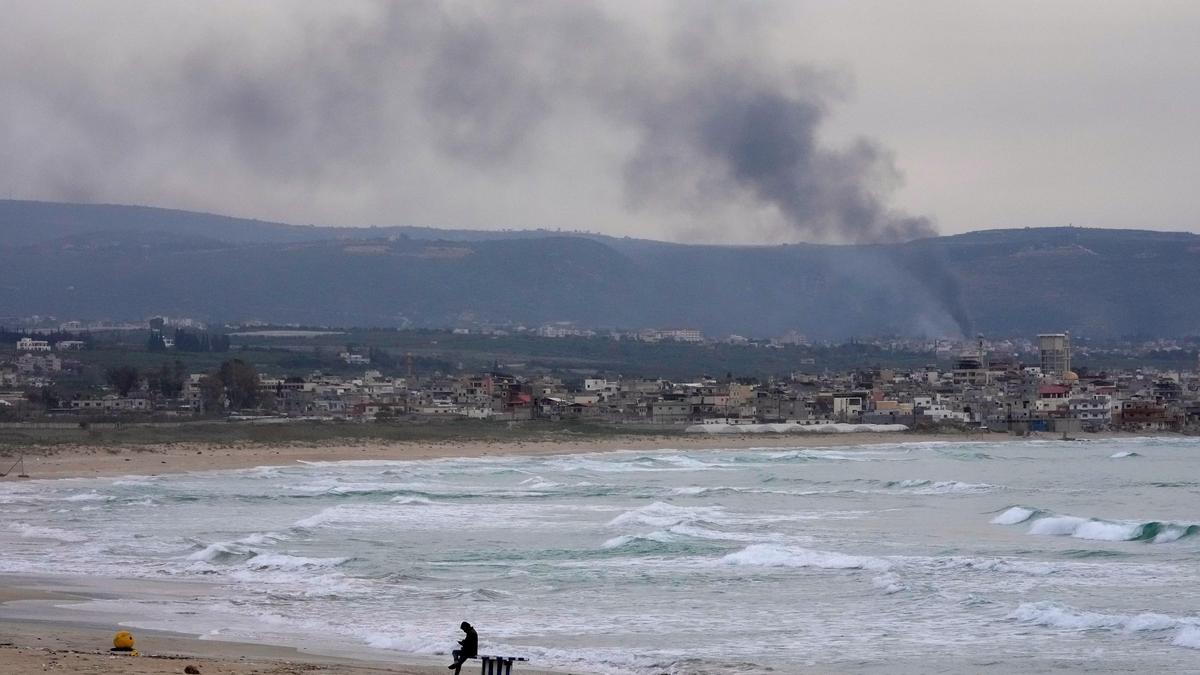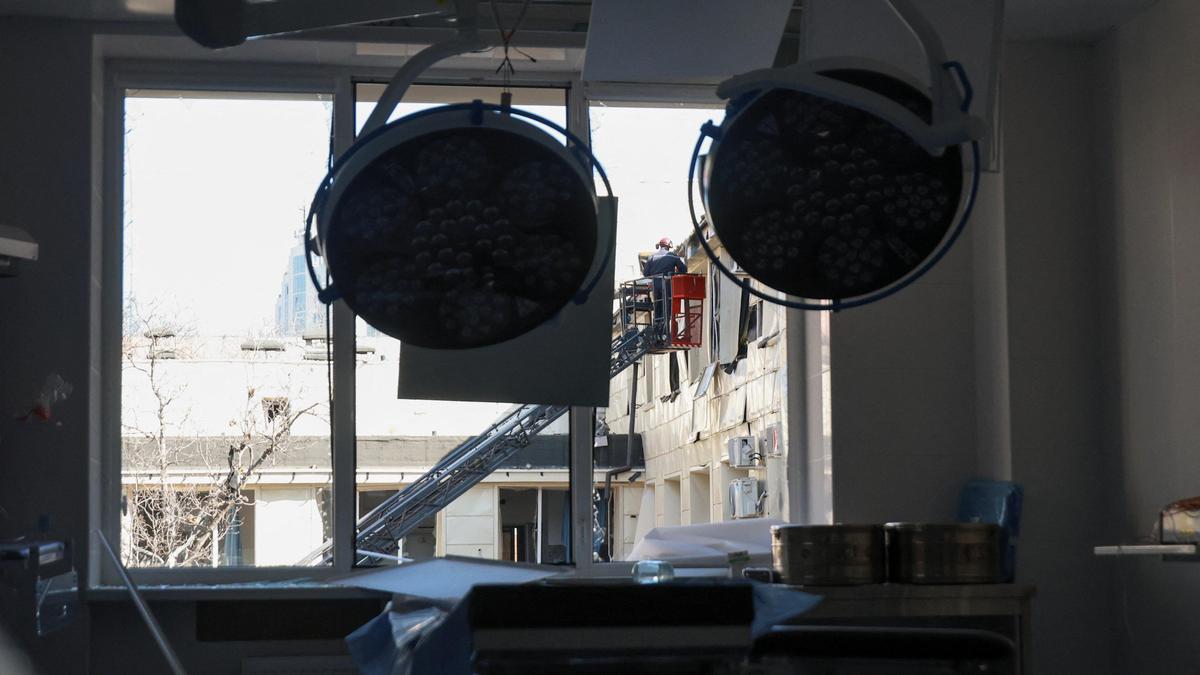
Russia just reminded the world that there are no red lines left in this conflict. Last night, a wave of Iranian-designed Shahed drones and cruise missiles tore through the Ukrainian sky, leaving four people dead and a trail of wreckage that includes a maternity hospital. We aren't just talking about "collateral damage" anymore. This is a deliberate, calculated squeeze on the civilian soul of a nation. When you aim for a place where life begins, you aren't fighting a military; you're trying to break a society.
The strike hit several regions, but the images coming out of the Dnipro area are particularly gut-wrenching. A maternity ward, a place that should be the safest square inch in any country, now sits with blown-out windows and charred walls. It’s a miracle the casualty count wasn't higher, but "it could have been worse" is a cold comfort to the families currently mourning four lost lives.
The Strategy of Darkness
This isn't a random act of violence. It's part of a broader, more cynical pattern. Russia's military leadership knows they can't easily win on the front lines right now. The mud, the trenches, and the sheer grit of the Ukrainian defense have turned the ground war into a grueling slog. So, they look upward. They use these cheap, buzzing drones to swarm air defenses and hit what matters most to the people living 500 miles from the trenches: heat, light, and healthcare.
By targeting energy infrastructure, Moscow wants to make the remaining weeks of cold weather unbearable. They want the average Ukrainian to wake up in a freezing apartment, unable to cook or charge a phone, and think that perhaps surrender is better than this. It’s a textbook psychological operation, only the "textbook" is written in blood and shrapnel.
The drones themselves, often referred to as "mopeds" because of their loud, sputtering engines, are designed to be a nuisance. They're slow. They're clunky. But they're cheap. Russia can launch thirty of them for the cost of one high-end Western interceptor missile. It’s an asymmetric math problem that Ukraine has to solve every single night.
Why the Maternity Hospital Matters More Than You Think
Hitting a hospital isn't just a PR nightmare for Russia; it’s a direct violation of the Geneva Convention. Specifically, Article 18 of the Fourth Geneva Convention states that civilian hospitals organized to give care to the wounded and sick, the infirm and maternity cases, may in no circumstances be the object of attack.
We’ve seen this before in Mariupol. We saw it in Gaza. We’re seeing it now in the heart of Ukraine. When a maternity hospital is hit, it sends a message to every pregnant woman in the country: "You are not safe. Your baby is not safe. Nowhere is off-limits."
I’ve talked to experts who follow these flight paths closely. These drones don't just "drift" off course into a massive, multi-story medical complex. They are programmed with GPS coordinates. While Russia often claims they were targeting "foreign mercenaries" or "ammunition depots" hidden in civilian basements, the physical evidence on the ground almost always tells a different story. It tells a story of broken glass in neonatal units and doctors performing surgeries by the light of a smartphone.
The State of Ukrainian Air Defense
Ukraine’s air defense is a patchwork quilt. They’ve got everything from old Soviet-era S-300s to the high-tech German IRIS-T and American Patriot systems. They’re good. Honestly, they’re better than anyone expected. On many nights, they intercept 80% or 90% of incoming threats.
But 90% isn't 100%.
If Russia launches 50 drones and 45 are shot down, five still get through. If those five hit an electrical substation or a hospital wing, the mission is a success for the Kremlin. The sheer volume of these attacks is meant to deplete Ukraine’s stockpile of expensive interceptor missiles. It’s a war of attrition where the "ammunition" is the safety of civilians.
Mobile fire groups are the unsung heroes here. These are guys in the back of pickup trucks with heavy machine guns and thermal optics. They chase these drones across dark fields, trying to knock them out of the air before they reach the city limits. It’s a low-tech solution to a high-tech terror campaign, and it’s the only reason the death toll from last night’s raid isn't in the dozens.
Western Hesitation and the Cost of Delay
Every time an apartment block or a clinic gets leveled, the conversation turns back to the West. Why aren't there more Patriots? Why is the ammunition taking so long? The reality is that the political gridlock in Washington and the slow industrial tail in Europe have real-world consequences.
The delay in military aid isn't just a line item in a budget. It’s the gap in the air defense bubble that let those drones through last night. Air defense isn't an offensive weapon; it doesn't "escalate" the war. It keeps babies in maternity wards from being killed by flying lawnmowers packed with explosives.
We need to stop viewing these strikes as isolated incidents. They are part of a singular, ongoing campaign to erase the Ukrainian identity by making the country unlivable. If the lights stay off and the hospitals are in ruins, the theory goes, the people will flee or fold.
What Actually Happens Next
Don't expect Russia to stop. They've ramped up domestic production of these drones in places like the Alabuga Special Economic Zone. They aren't running out. In fact, they’re getting better at painting them black to avoid spotlights and using carbon fiber to hide from radar.
Ukraine is fighting back with its own drone program, hitting Russian oil refineries and supply depots. It's a brutal cycle of "eye for an eye," but there's a massive moral difference between hitting a refinery that fuels a tank and hitting a ward that houses newborns.
If you want to help, stop looking at the maps and start looking at the people. Support organizations like United24 or the Come Back Alive Foundation. They aren't just buying gear; they're buying the sensors and the trucks that stop these drones before they hit their targets.
Keep your eyes on the energy sector as well. As spring approaches, the focus will shift from heating to the grid's general stability. If Ukraine can survive this winter's final push, they've won a major psychological victory. But for the four families in Dnipro burying their loved ones today, that victory feels very far away.
Demand that your representatives prioritize air defense. It is the most basic form of humanitarian aid. Without a closed sky, every other bit of help—the food, the medicine, the money—is just waiting to be turned into ash by a drone from above. Stop waiting for the next headline to feel outraged. The time to act on air defense was yesterday. The next best time is right now.