Cultural diplomacy is a comfortable lie. It’s the velvet glove over a rusted fist, a way for elites to pretend that a well-placed editorial or a prestigious appointment can stop the bleeding of a failing state.
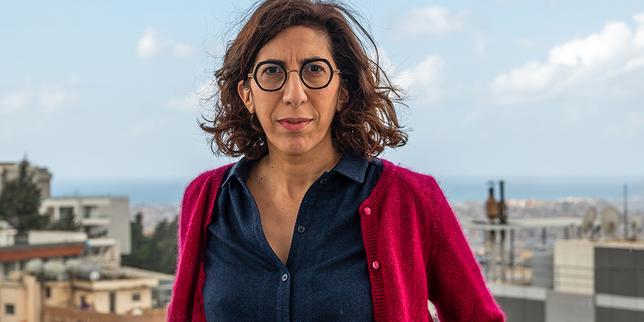
The recent move by former French Minister of Culture Rima Abdul Malak to lead L’Orient-Le Jour is being hailed as a heroic return—a bridge between the Quai d'Orsay and the Rue de la République in Beirut. The mainstream narrative is dripping with romanticism: the daughter of the Levant returning to protect the flame of Francophone truth while bombs fall.
It’s a beautiful story. It’s also a total misunderstanding of how power, media, and survival actually function in the Middle East.
The Myth of the "Savior" CEO
Journalism doesn't need a diplomat. It needs a scavenger.
When a high-profile political figure steps into the editor’s chair of a legacy publication in a crisis zone, they aren't bringing "leadership." They are bringing a Rolodex and a specific brand of Western-aligned prestige. This is the "Davos-ification" of the press. It assumes that if you can just get the right people in Paris and Washington to read your op-eds, the structural collapse of a nation might somehow pause.
It won't. I have watched legacy media brands in conflict zones burn through millions in "prestige funding" while their actual influence on the ground evaporated. They focus on the international gaze—the "informed" European reader—while the local population migrates to encrypted Telegram channels and decentralized news sources.
Abdul Malak’s appointment isn't a strategy for growth; it’s a strategy for preservation. In a region where the ground is shifting daily, preservation is just a slow-motion exit.
The Francophone Trap
Let’s talk about the linguistic elephant in the room. L’Orient-Le Jour is a French-language bastion in a country where the socio-economic divide is increasingly defined by language.
By doubling down on the "French connection" via a former French minister, the paper risks becoming a gated community for the intelligentsia. The "lazy consensus" is that Francophonie is a bridge to universal values and European support. The reality? It’s a shrinking island.
If your primary audience is the Lebanese diaspora in the 16th arrondissement and the local elite who haven't yet fled to Cyprus, you aren't "informing the public." You are curated entertainment for the displaced.
True disruption in Lebanese media wouldn't come from a minister. It would come from a data-driven, multilingual platform that breaks the sectarian ownership models. L’Orient-Le Jour remains tied to the very establishment it claims to critique. You cannot dismantle a house using the tools of the architect’s best friend.
War Is Not a PR Opportunity
The competitor's narrative focuses on "informing despite the bombs." This is a classic trope that prioritizes the bravery of the journalist over the utility of the information.
In a hot war, "information" is a survival commodity. People need to know which roads are open, which banks are liquid, and which supply chains are broken. They don't need high-concept editorials on the "spirit of Lebanon" written by someone who, until recently, was navigating the corridors of French power.
There is a fundamental friction between the "Official Narrative" of a former minister and the "Raw Reality" of a collapsing state.
- Official Narrative: Diplomacy, resilience, cultural heritage.
- Raw Reality: Hyperinflation, fuel smuggling, sectarian militia dominance.
When you bring in a political heavyweight, you aren't increasing objectivity; you are shifting the bias toward a specific brand of international liberalism that has already failed to provide a solution for Lebanon for the last thirty years.
The Economic Delusion
The biggest misconception is that "quality journalism" is enough to save a legacy brand in a failed economy.
Lebanon's banking sector is a ghost. The Lira is a memory. To run a media house in Beirut today, you don't need a Minister of Culture; you need a black-market currency specialist and a logistics expert.
I’ve seen this play out in Athens, in Caracas, and in Baghdad. The "prestige hire" acts as a magnet for short-term grants and NGO interest. But grants are not a business model. They are an addiction. They force the publication to pivot its coverage toward what donors want to hear—typically stories about "civil society" and "democratic resilience"—rather than the gritty, ugly economic truths that the local population actually faces.
Stop Asking if She Can Lead
The question isn't whether Rima Abdul Malak is competent. She is clearly brilliant. The question is whether the model she represents is obsolete.
We are obsessed with the idea that "important people" can save "important institutions." But institutions like L’Orient-Le Jour are often weighted down by their own history. They are too big to pivot and too proud to change.
If you want to disrupt the Lebanese media space, you don't go back to Beirut with a French government pedigree. You go back with a decentralized distribution network and a revenue model that doesn't rely on the goodwill of the very elites who bankrupted the country.
The Actionable Truth
If you are an investor or a stakeholder in the future of Levant media, stop looking at the masthead.
- Check the tech stack: Is the outlet ready for a total internet blackout? If they don't have a mesh-net or satellite-redundant distribution plan, they aren't serious about "informing despite the bombs."
- Audit the language: Is the content being translated into the vernacular of the street, or is it stuck in the salons?
- Follow the money: If the funding is tied to European soft-power initiatives, the editorial independence is a performance, not a fact.
Abdul Malak is a symbol of a Lebanon that exists in the minds of the Western elite—a sophisticated, Francophile beacon. But the Lebanon on the ground is a place of brutal pragmatism and digital-first survival.
Prestige is a luxury Lebanon can no longer afford.
The move isn't a homecoming. It's a high-stakes rebranding of a sinking ship. You can change the captain, and you can even polish the brass on the deck, but if the hull is made of 20th-century assumptions, the water is still coming in.
Stop looking for saviors in the halls of government. They are the ones who let the lights go out in the first place.
Go build something that doesn't need a minister's permission to exist.