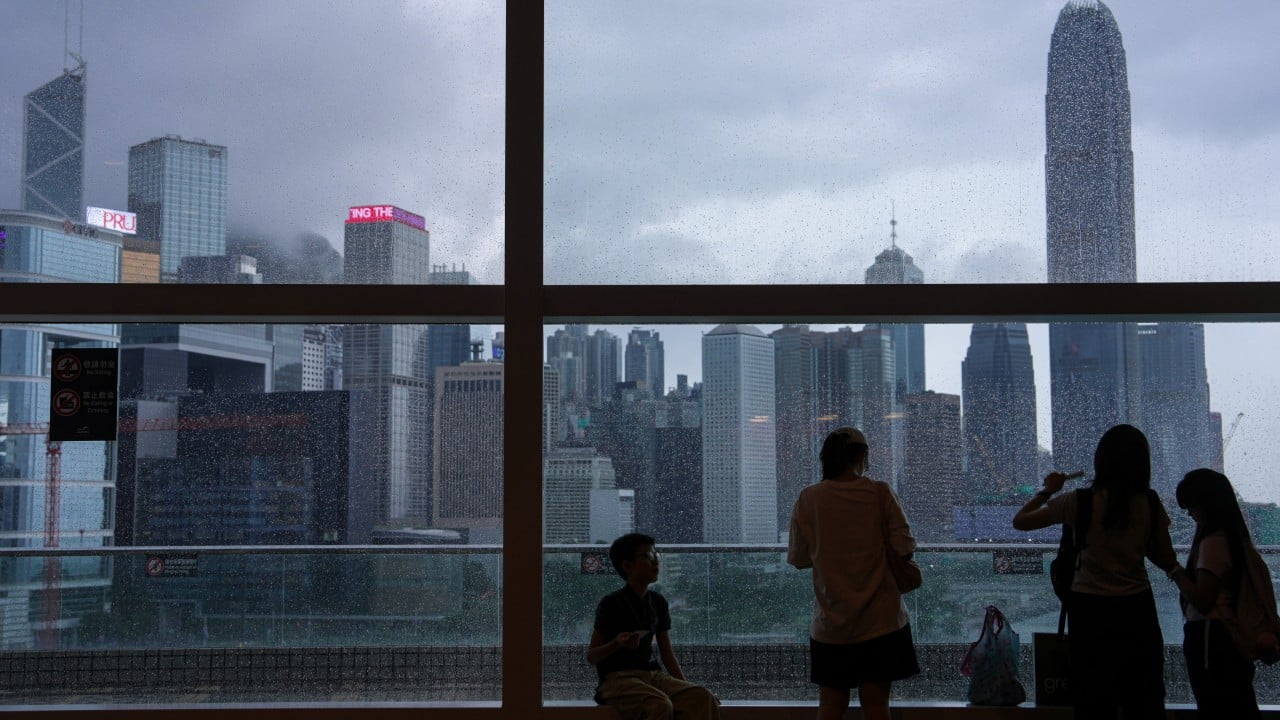
The humidity in Mong Kok clings to you like a second skin, but inside the tiny, second-floor bookstore, the air is thin and smells of decaying pulp.
Lau adjusts a stack of paperbacks on a wooden table made of reclaimed shipping pallets. He is twenty-eight, wears round-rimmed glasses that slide down his nose when he sweats, and speaks in the hushed, rapid-fire cadence of someone who has spent too much time rehearsing arguments in his own head. Outside the window, the double-decker buses roar down Nathan Road, their engines vibrating through the floorboards.
Here, in this cramped sanctuary of ink and adhesive, the noise of the metropolis fades into a fragile stillness.
But stillness in Hong Kong is no longer peaceful. It is tense. It is the silence of a breath being held.
For years, independent bookstores across the territory operated as the city's literary living rooms. They were places where you could buy a poetry chapbook, drink a lukewarm cup of barley tea, and argue about philosophy until the subways shut down. Today, they are combat zones of the mind. The weapons are not guns or batons, but cardboard boxes, inventory sheets, and the heavy tread of police boots on narrow stairwells.
When the news broke that police had raided a series of independent bookshops, arresting five people, the shockwave was both devastating and entirely expected. The charges, as they almost always are now, wound around the elastic concepts of sedition and national security.
To understand how a city of finance and skyscrapers ended up deploying plainclothes officers to confiscate boxes of printed paper, you have to look at what those pages actually represent.
The Geometry of the Second Floor
In Hong Kong, space is a luxury. When rent in the street-level shopping districts became too expensive for anyone who didn't sell luxury watches or powdered baby formula, the culture retreated upward.
They are called "second-floor bookstores." To find them, you must look for small, acrylic signs tucked between apartment buzzers. You climb flights of stairs smelling of dried seafood and industrial floor cleaner. When you open the door, you enter a different reality.
For a long time, these shops were the lungs of the city.
Lau’s shop—which we will call The Open Leaf for his safety—is a hypothetical composite of the dozen or so tiny venues that have tried to survive the freezing of Hong Kong’s civil society. His inventory is eclectic. You will find a translation of Gabriel García Márquez sitting next to a treatise on Cantonese grammar, which sits next to a photo book documenting the vanished walled city of Kowloon.
"We never thought we were doing something heroic," Lau says, tracing the spine of a local literary journal. "We just wanted to read what we wanted to read. That used to be the most normal thing in the world here."
It was a normality guaranteed by promises of "one country, two systems." But promises are made of paper, too, and paper burns easily.
The shift did not happen overnight. It was a slow, agonizing constriction. First came the quiet disappearances of specific mainland political exposes from the shelves of the big chain stores. Then came the sudden closure of the Causeway Bay Books shop, whose staff vanished into mainland custody years ago.
Now, the pressure has reached the smallest capillaries of the city’s intellectual life.
The Anatomy of a Raid
Consider the mechanics of a modern raid on a bookstore.
It does not look like an action movie. There are no shattered glass doors or theatrical shout-outs. Instead, it begins with a sudden influx of bodies into a space meant to hold no more than ten people at a time.
Officers in windbreakers carry plastic storage tubs. They do not look at the books as literature; they look at them as exhibits. They catalog titles with the dry efficiency of grocery store clerks scanning barcodes.
What are they looking for?
They look for words. Specifically, they look for words that evoke a memory the state would prefer to erase. A book containing photographs of the 2019 protests. A memoir written by a jailed activist. A calendar featuring illustrations that could be interpreted as showing a lack of respect for authority.
Under the sweeping definitions of local laws, owning or distributing "seditious publications" carries heavy prison sentences. The law does not require the prosecution to prove that the book caused a riot. It only requires them to show that the text had a "seditious intention."
This vagueness is the point.
When the rules of what is permissible change constantly, the safest option is to read nothing at all. Or, at least, nothing that makes you think.
During the recent operation, five people were led away, their heads covered in black cloths to obscure their faces from the waiting cameras. Their crime, stripped of the legal jargon, was keeping a space open where people could still ask questions.
The Cold Shadow of Self-Censorship
The true damage of these raids is not measured solely by the number of people in handcuffs. It is measured by the books that will never be written, the shops that will never open, and the private libraries currently being flushed down toilets or buried in trash bins.
In living rooms across Kowloon and Hong Kong Island, a quiet panic has played out over the last few years.
People look at their bookshelves with a sudden, icy fear. That history book they bought in 2014—is it safe? That independent zine about labor rights—could it be considered subversive?
"I spent an entire weekend shredding my university thesis notes," says Joanne, a former sociology student who asked to use a pseudonym. She sits in a cafe down the street from Lau's shop, constantly glancing at her phone. "It felt like I was erasing my own twenties. But my mother was crying. She was terrified that if the landlord or a repairman saw my books, they would report us."
This is the psychological victory of the state. They do not need to search every apartment if they can convince every citizen to become their own censor.
The five booksellers who were arrested tried to resist this internal surrender. They believed that a city without independent bookshops is not a city at all, but merely a corporate park. They paid for that belief with their freedom.
The Books That Remain
Lau walks over to his counter. He picks up a small, self-published book of poetry. The cover is plain, grey cardstock. The poems inside are about mundane things: the sound of rain on a tin roof, the taste of cold milk tea, the feeling of waiting for a train that is delayed.
There is nothing overtly political in its pages. Yet, in today’s Hong Kong, even this feels like an act of defiance. It is a assertion of a distinct local identity, written in Cantonese characters that are slowly being sidelined in favor of simplified mainland script.
"They want us to forget who we were," Lau says. His voice is barely louder than the hum of his ancient air conditioner. "They want us to believe that history started yesterday, and that it was written by the government."
He puts the poetry book back on the shelf, aligning its edge perfectly with the wood.
The future for places like The Open Leaf is bleak. Landlords are under pressure to evict tenants who draw the attention of the authorities. Banks are freezing accounts. The simple act of renewing a business license has become a bureaucratic minefield.
Yet, as long as there are stairs to climb, a few people will still make the journey up.
They will knock on the door, step inside, and lose themselves for an hour in the scent of ink and paper. They will buy a book, slide it into a canvas bag, and carry it home through the crowded, watchful streets, holding a small piece of the city's soul close to their chest, hoping the warmth of their hands can keep it alive.