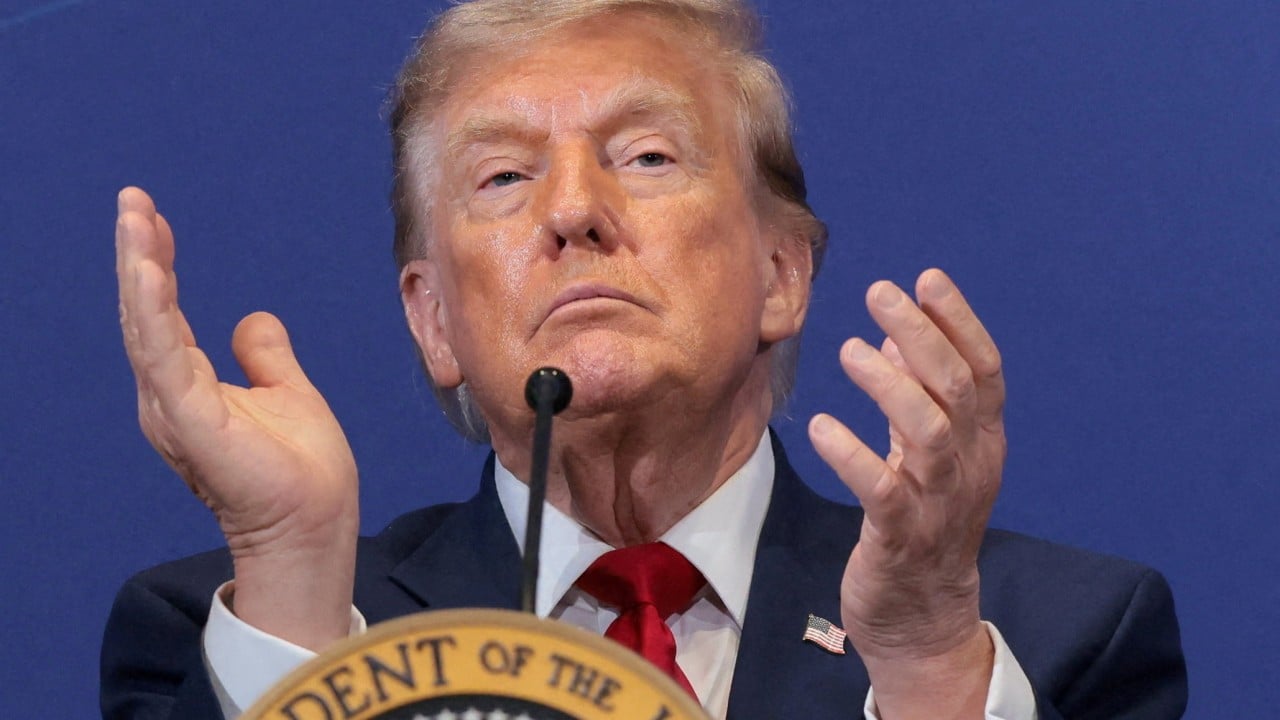
President Donald Trump has praised Iran’s sudden release of dual US-Iranian citizen Dena Karari, calling it a "gesture of goodwill." But behind the theatrical diplomacy lies a much darker reality. Karari, a nonprofit director trapped in Tehran under a coercive exit ban since December 2024, was allowed to fly out of the country just as US airstrikes hammered northern Iran and a fragile interim peace deal disintegrated. This is not an act of peace. It is a tactical valve used by a cornered regime to ease overwhelming military pressure without giving up its core geopolitical ambitions.
To understand why Karari was allowed to leave now, one must look past the carefully staged announcements on Truth Social. This is asymmetric warfare disguised as hostage diplomacy.
The Anatomy of an Exit Ban
Foreign nationals detained in Iran are usually thrown into the notorious Evin Prison. Karari’s ordeal was different, reflecting a quiet but highly effective method of state coercion.
She was never physically imprisoned or formally charged. Instead, Iranian authorities imposed an exit ban when she attempted to return to the United States after visiting family. Her passport was seized. She was forced to remain within the country under the constant threat of arrest. For more than eighteen months, Iranian intelligence officers subjected her to repeated, aggressive interrogations.
The focus of these sessions was the Children of Mehr Foundation, a nonprofit Karari runs to support disadvantaged children in Iran. To the clerical regime, any independent humanitarian work is suspect. They view charitable foundations as potential fronts for foreign intelligence networks. By keeping her in a state of legal limbo, Tehran maintained absolute control over her movements without incurring the diplomatic fallout that comes with a formal prison sentence.
This administrative capture is a deliberate strategy. It allows Iran to build a inventory of human bargaining chips. When the geopolitical temperature rises, these individuals can be traded away to buy diplomatic breathing room. It is low-cost hostage-taking. By keeping Karari out of a cell, Iran avoided the high-profile media campaigns that usually rally around imprisoned Westerners. Yet, they kept her close enough to use when the time was right.
Administrative Coercion on the Streets of Tehran
For the victim, an exit ban is a psychological war of attrition. There is no trial date. There is no sentence to serve out. The target simply waits for the phone to ring, knowing the next interrogation could easily end in a one-way trip to a high-security prison block.
By utilizing these non-custodial bans, Tehran achieves two objectives simultaneously. They neutralize domestic civil society figures by linking them to foreign "espionage" plots. At the same time, they preserve these citizens as assets for future negotiations. It is a highly calculated system of state-sponsored extortion.
The Burning Strait of Hormuz
The timing of Karari's release is directly tied to the escalating violence in the Persian Gulf. A highly anticipated US-Iran interim peace deal, signed only a month ago, has collapsed.
The region is now on the brink of an open war. American warships have reimposed a strict naval blockade, disabling an Iranian vessel attempting to force its way through the Strait of Hormuz. In response to Iranian retaliation, the US military launched heavy airstrikes targeting military positions and assets around Tehran and northern Iran.
Trump raised the stakes even further during a recent Fox News broadcast. He threatened to initiate devastating strikes against Iranian civilian infrastructure, specifically targeting power plants and bridges, if Tehran refused to return to the negotiating table. He bluntly warned that Iran would not "have anybody left" if they failed to make a deal.
Faced with the threat of immediate economic and military destruction, Iran chose to play its humanitarian card. Allowing Karari to leave is an attempt to alter the narrative. It is a tactical retreat designed to portray Tehran as a reasonable actor willing to engage in gestures of goodwill, even as its forces clash with US troops in the Gulf. By releasing a single dual citizen, the Iranian government hopes to slow the momentum of American military strikes and buy time to reinforce its positions.
Trump Tactics and the Politics of Hostage Diplomacy
For Trump, Karari’s release serves as a powerful domestic victory. He immediately took to social media to celebrate her freedom, while taking a direct swipe at his political rivals. He pointed out that she had been wrongfully detained under the previous administration, framing her rescue as a direct result of his administration's strength.
Karari's attorney, Jared Genser, echoed this sentiment, publicly thanking Trump for his relentless focus on the case. There is no denying that the threat of overwhelming force can compel hostile states to make concessions. However, this transactional approach to foreign policy carries significant long-term risks.
When a superpower signals that hostage releases can buy temporary relief from military pressure, it incentivizes the behavior. Iran has spent decades mastering this cycle. They seize a Western citizen, escalate a regional crisis, and then trade the hostage for financial or diplomatic concessions.
By treating Karari’s release as a genuine "gesture of goodwill," the US risks legitimizing a hostage-taking apparatus. It allows Tehran to escape the consequences of its aggressive regional maneuvers by offering up a victim they should never have detained in the first place.
A Coldly Calculated Tactical Valve
The hard truth is that Dena Karari was never a criminal. She was a political asset. Her release does not signal a change of heart in Tehran, nor does it mean the regime is ready to abandon its regional proxy wars or its nuclear ambitions.
It is a temporary pause. Iran realized that the current US administration was willing to hit high-value targets inside its borders. The exit ban on Karari was lifted because her value as a diplomatic shield exceeded her value as an intelligence target.
As Karari finally boards a flight back to the United States, the fundamental conflict remains unchanged. The warships in the Strait of Hormuz are still cleared for action. The smoke from the latest airstrikes has barely cleared. Celebrating her freedom is entirely justified, but mistaking a tactical retreat for a genuine step toward peace would be a catastrophic strategic error. The pressure must remain, because the regime in Tehran only negotiates when it truly fears what comes next.