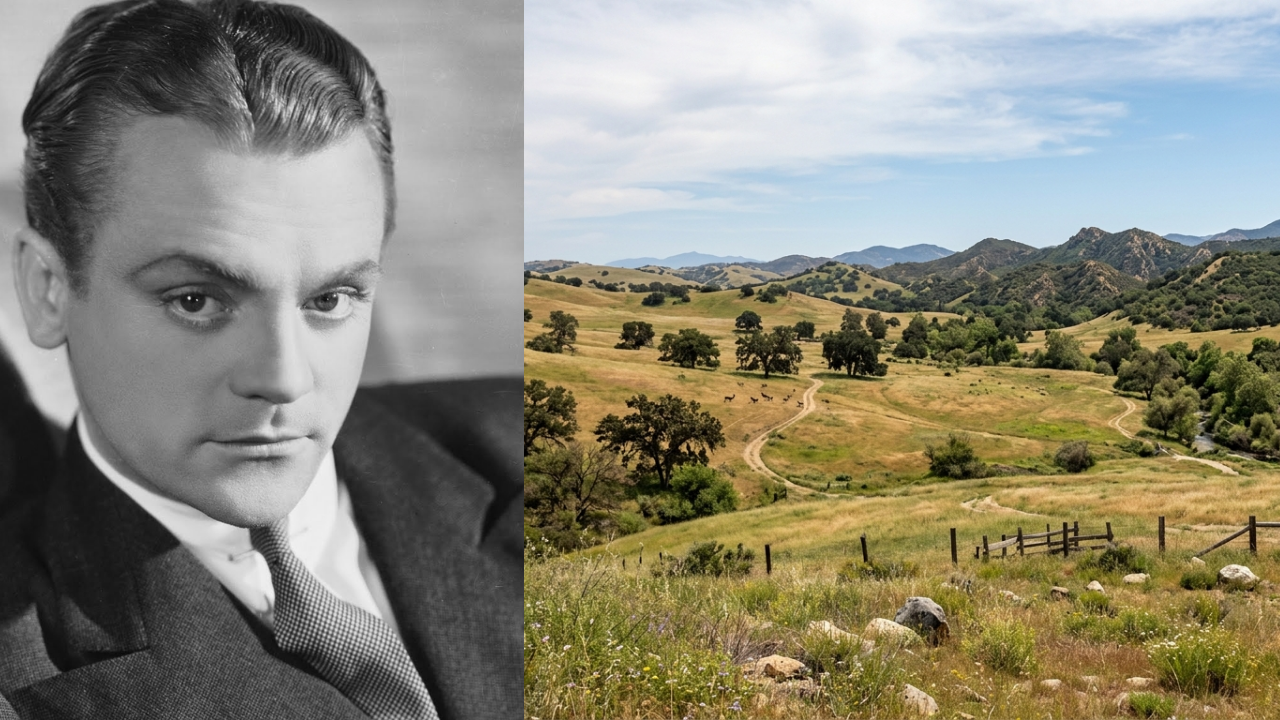
Spatial fragmentation presents the single greatest structural threat to regional biodiversity in coastal Southern California. When actor James Cagney initially acquired hundreds of acres of Ramona grassland in 1940, the transaction was executed as a private real estate holding. Decades later, the residual 417-acre parcel functioned as a critical geographic node in a fragmented ecosystem. The 2003 acquisition of this land by The Nature Conservancy for 2.7 million dollars offers a clear case study in how isolated real estate assets are converted into high-yield ecological corridors. Evaluating this transaction requires stripping away the biographical narrative to examine the underlying mechanics of land valuation, capital stacking, and ecological network theory.
The Structural Anatomy of Fragmented Ecosystems
Urban expansion operates through a process of edge-effect generation and habitat isolation. In coastal Southern California, flat valley floors face intense market pressure for commercial development, residential zoning, and infrastructure placement. This economic reality transforms continuous biological zones into isolated islands of vegetation.
When habitats undergo this degree of spatial division, three primary systemic failures emerge:
- Genetic isolation within resident populations, leading to reduced reproductive fitness over successive generations.
- Edge-to-interior area ratios that expose native species to invasive predators, agricultural runoff, and noise pollution.
- The disruption of seasonal migration paths required for foraging and breeding across elevation gradients.
The Ramona grasslands resisted this total conversion longer than surrounding districts due to historic agricultural uses, but by the late 20th century, the pressure to subdivide remaining large parcels was extreme. Within this matrix, the 417-acre Cagney property held disproportionate value. It did not operate as a standalone biological preserve; its strategic location bridged separate tracts of public and private open space. In network theory terms, the property acted as a high-centrality node. Removing it from the development market preserved the connective tissue of the broader San Diego County ecosystem.
The Economics of Conservation Real Estate
Acquiring 417 acres of high-potential real estate requires navigating complex capital markets, prolonged negotiation cycles, and multi-source public-private financing. The six-year transaction timeline between initial contact in 1997 and closing in 2003 illustrates the friction inherent in large-scale land conservation.
The financial architecture of the 2.7 million dollar purchase price relied on a stacked capital model rather than a single institutional balance sheet:
- Federal capital allocation: The US Fish and Wildlife Service contributed 660,000 dollars.
- State-level appropriations: California contributed 165,000 dollars.
- Bond-derived state funding: The Wildlife Conservation Board deployed 1.236 million dollars sourced from voter-approved statewide bonds.
- Private non-profit equity: The Nature Conservancy absorbed the remaining 639,000 dollars from internal funds.
This distribution reflects risk-mitigation strategies common in environmental acquisitions. By pooling capital across municipal, state, and federal entities, non-profit organizations limit balance-sheet exposure while leveraging public mandates for habitat preservation. However, this multi-agency structure introduces coordination overhead. Each funding source carries distinct compliance metrics, environmental impact assessments, and auditing requirements, which explains the multi-year duration required to move from letter of intent to escrow closure.
Hydrological and Biological Asset Allocation
The ecological yield of the Cagney parcel is tied to specific geomorphological features, most notably seasonal vernal pools and native perennial bunchgrasses. These features create specialized micro-habitats that cannot be artificially replicated or offset through mitigation banking elsewhere.
Vernal pools function as ephemeral aquatic systems. They fill during winter precipitation cycles and dry out completely through evaporation in the summer. This boom-and-bust hydrological cycle supports specialized endemic flora and fauna adapted to extreme environmental stress. The property's documented presence of the Stephens kangaroo rat, San Diego fairy shrimp, and arroyo southwestern toad transforms the parcel from standard grazing land into a critical sanctuary for endangered species.
From an ecological accounting perspective, protecting these species within a contiguous corridor reduces long-term intervention costs. When habitats remain intact, natural population dynamics regulate species health without requiring active management, supplemental feeding, or artificial translocation programs.
Strategic Deployment of Land Trust Capital
The transition of the Cagney ranch from private trust ownership to protected status offers a repeatable template for regional conservation finance. Organizations targeting high-value ecological nodes must evaluate targets through a strict metric of connectivity rather than raw acreage alone.
To maximize return on investment in land acquisition, conservation entities apply the following operational priorities:
- Target parcels that close gaps between existing public reserves to minimize total land acquisition costs while maximizing contiguous boundary lines.
- Prioritize properties containing irreplaceable hydrological features, such as vernal pools or headwater streams, which drive high biodiversity indices per square acre.
- Secure options agreements early in municipal planning cycles before suburban sprawl drives speculative land valuations beyond non-profit purchasing thresholds.
Deploying capital into connective corridors rather than isolated sanctuaries prevents the formation of biological dead ends. By securing the remaining fragments of the Ramona grasslands, regional planners ensured that landscape-scale ecological processes could continue to function despite intensifying urban pressures along the coastal Southern California corridor.