The air in Caracas tastes of old gasoline and dust that has settled on windowsills for a decade. Outside the ministries, the heat bears down with a physical weight, pressing people into the shadow of concrete overhangs. Inside, beneath the hum of overworked air conditioners, signatures are drying on parchment that will dictate the shape of mornings long after the current generation of leaders has exited the stage.
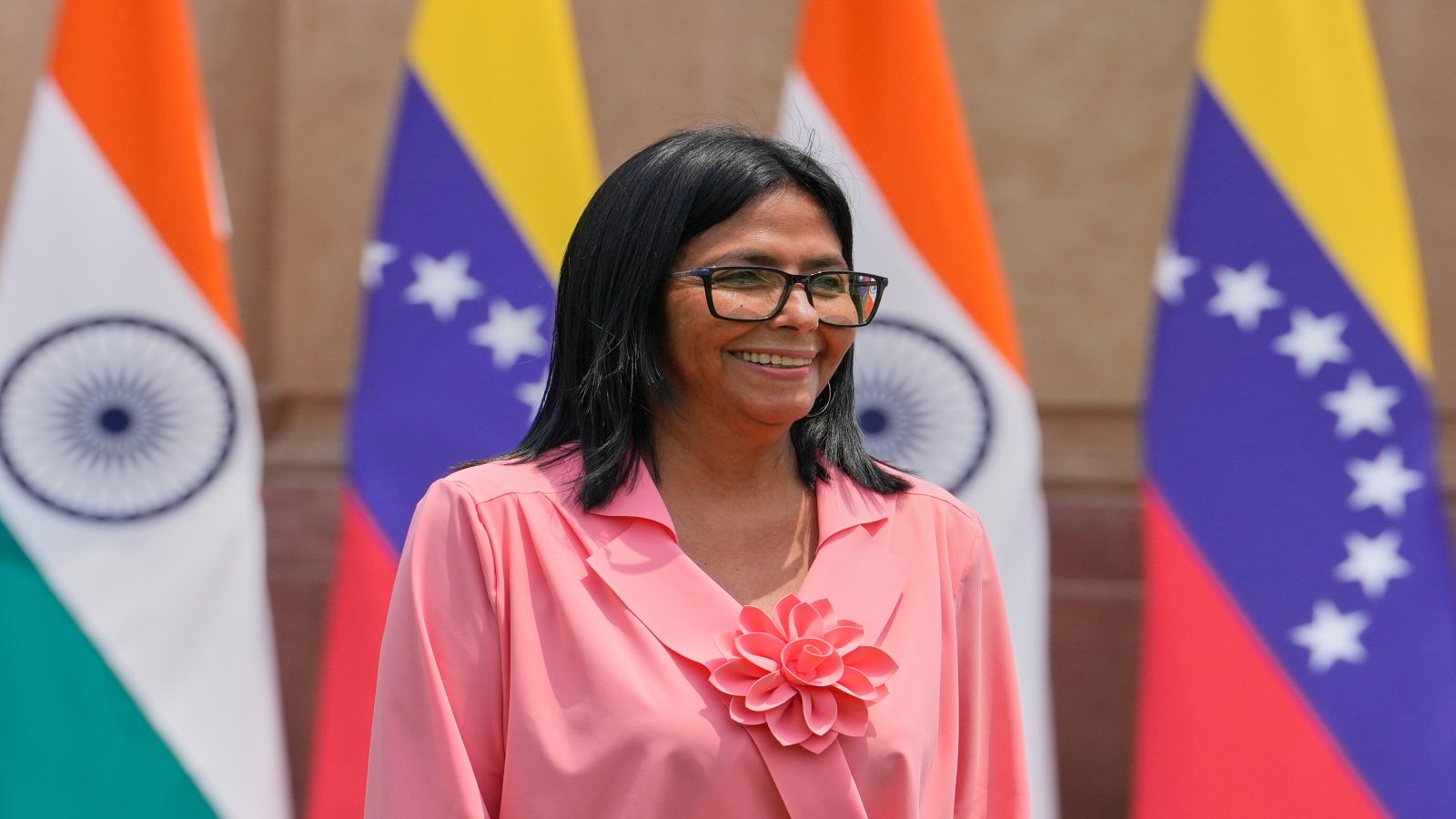
Delcy Rodriguez has locked the machinery of state into a trajectory that spans a quarter of a century. Twenty-five years. A generation born today will cast their first votes, fall in love, and build careers in a world entirely shaped by the ink of a single energy agreement with the United States.
It is a quiet pivot. There were no marching bands, no celebratory rallies echoing through the plazas. Just the cold, mechanical reality of barrels, tankers, and the slow turn of geopolitical gears.
Consider the ordinary worker standing at a bus stop in Maracaibo. For years, that worker has watched the life drain from the infrastructure around them. Pipelines that once pulsed with wealth rusted into monuments of mismanagement. Inflation turned paper currency into confetti. The daily struggle was not about politics; it was about calories, medicine, and the simple endurance of existence.
When an interim leader signs an accord promising a quarter-century of petroleum cooperation with Washington, the abstract language of diplomacy translates into something profoundly visceral for that worker. It means the possibility of a paycheck that survives the week. It means electricity that stays on through the night.
Yet, trust is a scarce commodity here. You cannot spend promises at the corner market.
To understand why this twenty-five-year horizon matters, we have to look past the spreadsheets and step into the control room of a drilling rig in the Orinoco Belt. (Note: The following scene is a hypothetical scenario designed to illustrate the mechanical reality of foreign investment). Imagine an engineer looking at a digital pressure gauge that has flatlined for months. The valves are seized. The casing is degraded. Without outside capital and heavy machinery, that oil remains locked beneath the earth, a theoretical treasure that cannot buy a single loaf of bread.
Decades of friction between Washington and Caracas left those fields choked. Sanctions acted like a tourniquet, meant to starve a regime but inadvertently freezing the veins of the entire society.
Now, the tourniquet is loosening.
The agreement brokered by Rodriguez does not erase the past. It does not heal the fractured families scattered across the diaspora from Miami to Madrid. What it does is offer a bridge over an abyss. Twenty-five years is an eternity in politics, but in the oil industry, it is merely the blink of an eye. Major energy extraction requires time to survey, drill, refine, and distribute. A short-term deal is useless when the machinery is rotting. A quarter-century commitment signals to multinational corporations that the ground rules might finally be stable enough to justify the billions required for resurrection.
Critics on both sides recoil. Hardliners in Washington see it as a compromise with authoritarianism, a betrayal of the democratic mandate. Hardliners in Caracas view it as a capitulation to the very empire they spent decades railing against.
Both factions miss the human pulse beneath the paperwork.
People do not eat ideology. They eat food bought with money earned from a functioning economy. When the oil flows, the hospitals get generators. When the refineries turn, the trucks move produce from the Andean valleys down to the coastal cities.
There is a profound vulnerability in this arrangement. By tying the nation's primary economic engine so tightly to the United States for a quarter of a century, Venezuela surrenders a degree of sovereignty to the whims of foreign markets and shifting administrations in the White House. What happens when a new president takes office in Washington ten years from now? What happens if global energy demands shift toward renewables faster than anticipated, leaving these heavy crudes stranded in the ground?
These are the ghosts that haunt the Ministry of Petroleum tonight.
Walk through the streets of downtown Caracas as dusk falls and the streetlights flicker on with a fragile, yellow glow. The city feels suspended between what it was and what it desperately hopes to become. The twenty-five-year deal is not a magic wand. It is a heavy anchor dropped into deep water. It will hold the ship steady against the storm, or it will drag the hull into the reef.
The ink is dry. The pumps are waiting. And somewhere in the dark, a generation is already waking up to a future they did not choose, but must somehow inhabit.
The horizon does not care about our arguments. It simply arrives, dawn after dawn, painting the crumbling facades of the capital in shades of gold and rust, waiting to see what we will build with the time we have left.