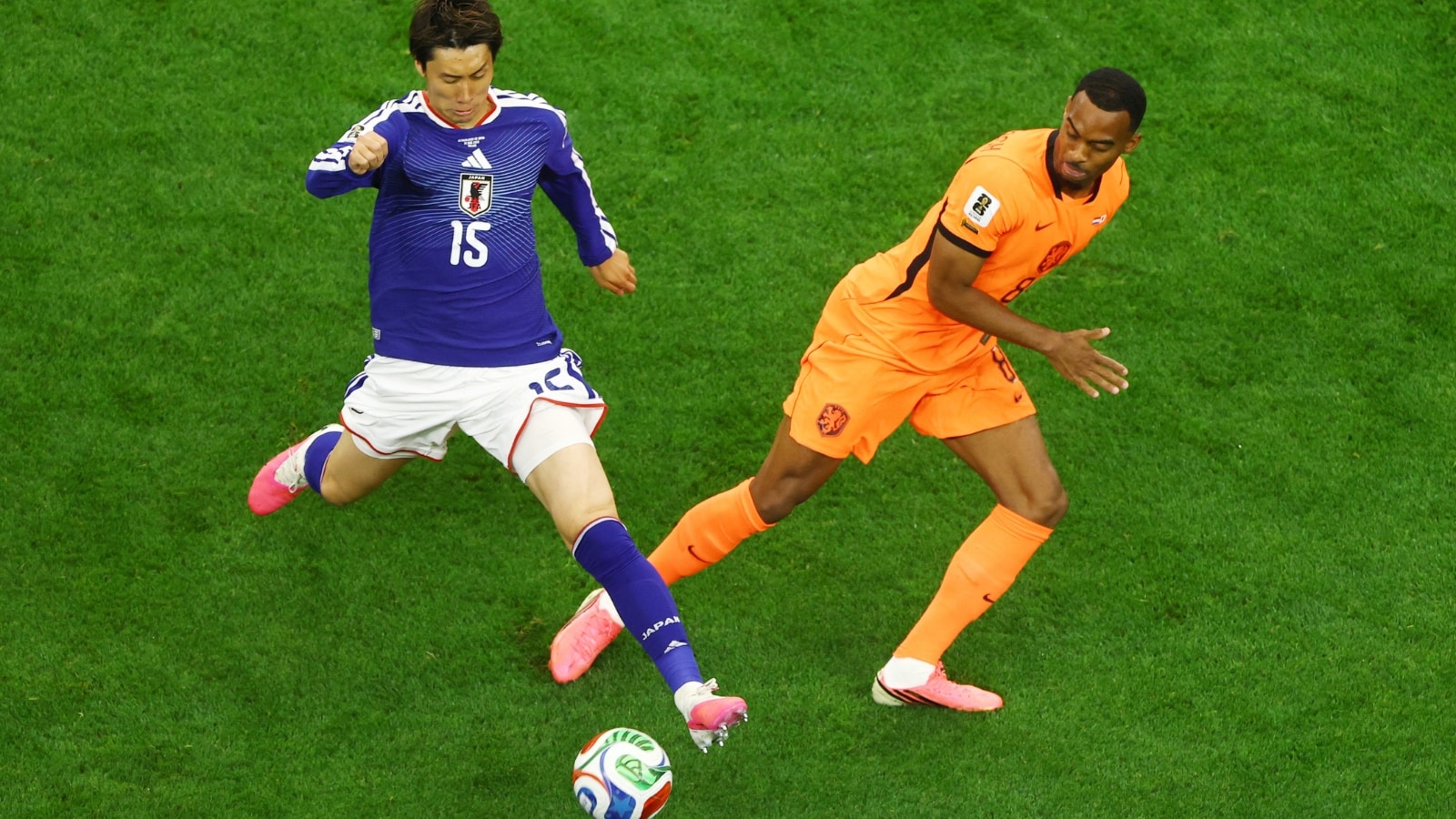
Yasin Ayari scored a goal. Then, he stood there.
The media went into its predictable, synchronized meltdown. The Brighton midfielder, playing on the international stage, found the back of the net and chose to offer the crowd a blank stare instead of a knee slide. Instantly, the punditry machine spun a narrative of "respect," "maturity," and "class."
What a load of nonsense.
The modern obsession with the "non-celebration" is one of the most hypocritical, manufactured dramas in contemporary sports journalism. We have bred a culture that values performative humility over raw athletic reality. When a player like Ayari refuses to celebrate against a former club, a country of heritage, or whatever emotional anchor the press hooks onto that week, we are told it is a beautiful display of honor.
It isn't. It is an empty marketing gesture wrapped in PR cowardice, driven by a desperate fear of fan backlash on social media.
Let's dissect the lazy consensus surrounding this phenomenon and look at the financial, psychological, and tribal realities that the mainstream sports press completely ignores.
The False Narrative of "Respect"
The current sports media ecosystem thrives on melodramatic narratives. When a player scores and puts their hands up in an apologetic gesture, commentators purr about "loyalty."
Let's bring some economic reality into this logic.
A professional football club is an employer. They pay wages—often astronomical ones—for a specific output: performance. When a player transfers to a new club, their legal, financial, and professional allegiance shifts entirely.
To suggest that scoring a goal—the literal pinnacle of a footballer's job description—is an act of disrespect to a former employer is absurd. Do software engineers apologize to their old tech firm when they launch a superior product for a competitor? Does a chef offer a moment of silence when their new restaurant wins a Michelin star over their old one?
Of course not.
The non-celebration implies that the act of doing your job well is inherently damaging to your past associates. It internalizes a toxic fan expectation: that players must perform emotional labor to soothe the fragile egos of supporters who would turn on them the second their form drops.
I have spent years analyzing the commercial structures of top-tier sports organizations. Clubs do not buy sentiment; they buy assets. When Brighton installs a asset like Ayari into a system, they expect maximum return on investment. Suppressing the natural neurological high of scoring a goal to appease a fanbase that no longer funds your paycheck is a bizarre distortion of professional duty.
The Neurological Cost of Suppressed Emotion
Let's look at the actual science of performance, a dimension completely missed by reporters sitting in the press box eating free sandwiches.
Scoring a goal in high-stakes football triggers a massive, instantaneous surge of dopamine, adrenaline, and cortisol. The human body is hardwired to release this tension through physical exertion—screaming, running, embracing teammates. This is not just vanity; it is biological regulation.
[Trigger: Goal Scored]
       │
       ▼
[Massive Surge: Dopamine & Adrenaline]
       │
 ┌─────┴────────────────────────┐
 │                              │
 ▼                              ▼
[Natural Release]       [Suppressed Emotion]
• Knee slides           • Neurological cognitive load
• Screaming             • Increased muscle tension
• Cortisol reduction    • Disconnection from team dynamic
When a player forces themselves to suppress this response, they are introducing a sudden, artificial cognitive load mid-match. They are telling their nervous system to abruptly halt a survival-level high.
I have spoken with sports psychologists who work with elite Premier League athletes. They will tell you privately what they cannot say on camera: forcing a player to manage their public relations image in the exact millisecond of athletic triumph causes a momentary disconnect from the flow state. It creates a state of hyper-awareness regarding the cameras, the fans, and the inevitable tweets.
You are asking an athlete to stop being an instinctive competitor and start acting as a brand manager while their heart rate is at 180 beats per minute. It is unhealthy, it is unnatural, and it actively detracts from the raw intensity that makes live sports worth watching in the first place.
Dismantling the "People Also Ask" Fallacies
The internet is flooded with predictable queries whenever a player pulls an Ayari. Let's answer them with the blunt honesty the establishment avoids.
Why do players not celebrate against their old teams?
They do it because they are terrified of death threats on Instagram. Let's stop pretending it is about chivalry. In the 1980s and 1990s, players celebrated. They acknowledged the goal because that was the objective of the game. The rise of the non-celebration directly correlates with the rise of hyper-accessible social media abuse. Players know that if they slide on their knees in front of their former supporters, their direct messages will be flooded with vitriol for a fortnight. The non-celebration is a defensive shield against cyberbullying, rebranded as "class" by a gullible media.
Does a non-celebration actually prove loyalty?
Absolutely not. Real loyalty in football is defined by contract fulfillment, training intensity, and giving 100% on the pitch while under contract. Standing still after scoring a goal does nothing to erase the fact that the player chose to leave the previous club for more money, better prospects, or higher prestige. It is a cosmetic apology for a structural reality. If a player truly felt a level of loyalty that precluded celebration, they wouldn't have signed the transfer paperwork in first place.
Should clubs fine players for celebrating against them?
This is the pinnacle of entitlement. A club has no ownership over an individual's emotional state once the registration papers are transferred. To suggest a player owes emotional subservience to an entity that replaced them the moment they walked out the door is a form of corporate delusion.
The Hypocrisy of the Modern Supporter
The ultimate joke of the non-celebration is that it never actually works.
Consider the dynamic. A player scores against his former club. He holds up his hands, looks appropriately miserable, and walks back to the halfway line. Do the opposing fans applaud his restraint? Do they sing his name in appreciation of his deep structural respect for their institution?
No. They boo him anyway. They call him a mercenary for scoring the goal in the first place.
The fans do not want your respect; they want your failure. They want you to miss the shot. Offering them a muted reaction is like apologizing to a firing squad for the quality of the wall behind you. It pleases absolutely no one.
Meanwhile, the player’s current fans—the ones who actually paid for tickets to the away end, the ones who buy the shirts, the ones whose weekend depends on the three points—are denied the shared catharsis of celebration. You are actively insulting the people who support your present by pandering to the people who resent your past. It is a complete inversion of tribal loyalty.
The Commercial Optimization of Emotion
We live in an era where football clubs are no longer just sports teams; they are entertainment brands vying for global eyeballs. In this landscape, emotion is a highly monetizable commodity.
Think about the iconic images that define the history of football.
- Marco Tardelli screaming at the 1982 World Cup.
- Thierry Henry standing imperiously at Highbury.
- Eric Cantona turning slowly to survey the crowd after a sublime chip.
None of those moments happen in a world governed by the sanitised, risk-averse logic of the non-celebration. By policing how players react to moments of supreme achievement, we are actively draining the color out of the sport. We are replacing genuine human drama with sanitized corporate behavior.
The media loves the non-celebration because it provides an easy, low-effort narrative arc for a Tuesday morning column. It requires no tactical analysis, no understanding of data, and no insight into pressing structures. It is soap opera material for a sport that should be judged on athletic execution.
Start Celebrating Again
The cult of the non-celebration is a symptom of a larger disease in modern football: the sanitization of the character. We have asked players to become corporate mouthpieces who speak in platitudes during post-match interviews and act like robots on the pitch to avoid offending corporate sponsors or sensitive fanbases.
Yasin Ayari, and every other player who finds themselves in that position, should run to the corner flag, jump into the air, and scream at the top of their lungs.
You scored a goal at the highest level of human competition. You defeated an elite defensive structure through skill, timing, and power. That is an achievement worth validating, regardless of who happened to be wearing the shirts you ran past to do it.
Stop apologizing for winning. Stop pretending that professional mobility is a moral failing. Next time the ball hits the back of the net, give us the chaos, give us the joy, or give us the arrogance. But stop giving us the corporate-approved, PR-managed shrug. Football is too fast, too brutal, and too beautiful for fake contrition. Let the purists whine on Twitter; the rest of us came to see the fire.