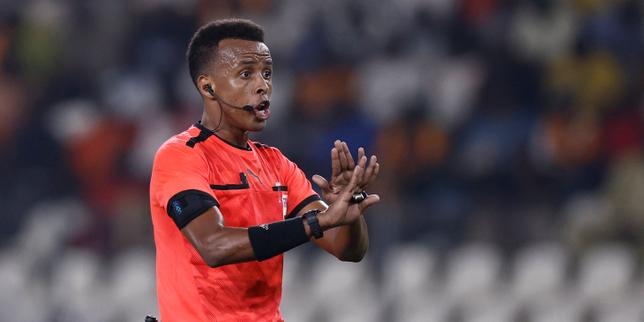
Imagine spending a lifetime perfecting your craft, climbing to the absolute peak of your profession, and earning a historic selection to represent your nation on the biggest stage on earth. You board a flight with a valid visa in your passport, authorized by a global governing body. Then you land, and border agents turn you away like a common criminal.
That's exactly what happened to Omar Abdulkadir Artan. Learn more on a connected topic: this related article.
The 34-year-old official, widely recognized as the top African referee of 2025, made history by becoming the first Somali referee ever selected to officiate a World Cup. Instead of taking the pitch, he found himself trapped in a security checkpoint at Miami International Airport after a long flight from Istanbul. US Customs and Border Protection officials ran a routine secondary screening and deemed him inadmissible due to background check issues.
Just like that, his tournament ended before kicking off. Additional journalism by The Athletic delves into similar views on this issue.
This isn't just a devastating personal blow for Artan or a heartbreak for Somali football fans. It exposes a massive systemic flaw in how global sports tournaments are hosted. When a host nation overrides the credentials of an international sporting body, it sets a scary precedent. With the Los Angeles Olympics looming in 2028, we need to talk about what this means for the concept of neutral global sport.
The Shocking Treatment of an Elite Official
Let's look at the facts. Artan wasn't trying to sneak into the country. According to Ciise Aden Abshir, a top adviser to the Somali Ministry of Youth and Sports, the referee possessed a completely valid visa. The US government had already vetted and approved him before he boarded his flight.
Yet, when he touched down in Miami, federal agents pulled him aside. The border patrol claimed that background verification issues made him inadmissible. They sent him back.
What makes this sting is the total lack of protection from FIFA. The organization quickly put out a blunt statement essentially washing its hands of the situation. They confirmed Artan can't train or work during the 2026 World Cup, adding that they don't interfere with host country immigration laws.
Honestly, it feels like a total betrayal of the values these mega-events supposedly stand for. FIFA pitches the World Cup as a festival of unity that bridges borders. But when push comes to shove, they won't even stand up for their own top-tier officials against domestic political shifts.
The Trump Travel Ban Backstory
You can't separate this incident from the current political climate in Washington. The decision to bar Artan happens under a strict migration crackdown by the US administration. A presidential decree limits entry for citizens from a dozen countries, with Somalia right at the top of the list.
The administration has previously described Somalia in highly derogatory terms and made moves to strip protections for Somali nationals. While border patrol called Artan's rejection a routine background issue, nobody is buying that. The reality is that an elite world-class referee became collateral damage in a domestic political immigration fight.
If a valid visa and official FIFA credentials can't guarantee safe entry for a high-profile referee, what does this mean for regular fans? Supporters from targeted nations who spent thousands on tickets and flights are now facing the exact same risk. A major tournament should never be held hostage by the shifting immigration policies of a single host nation.
A Dark Shadow Over Los Angeles 2028
The fallout from this extends way beyond football. This mess sets a dangerous precedent for the Los Angeles 2028 Olympic Games.
The Olympics are supposed to be the ultimate celebration of international diplomacy through sports. Historically, host nations must guarantee that all qualified athletes, coaches, and officials can enter the country safely, regardless of geopolitics. Even during the Cold War, Western nations and the Soviet bloc managed to find ways to let competitors cross borders.
If the US government can casually reject a top official over arbitrary background checks, what stops them from barring athletes from nations they don't get along with politically?
Think about it. We could see situations where elite runners, swimmers, or gymnasts from specific African or Middle Eastern nations get turned away at the border. International sports federations are watching this closely, and they are rightly terrified. The fundamental concept of an open, global athletic competition is falling apart.
How Mega Tournaments Must Adapt
We can't keep pretending that sports exist in an isolated bubble separate from real-world politics. If countries want the prestige and economic boost of hosting massive events like the World Cup or the Olympics, they have to play by the rules of international sport.
Moving forward, international governing bodies like FIFA and the International Olympic Committee must change their selection process. They need to demand legally binding, ironclad immigration guarantees before awarding hosting rights.
If a country refuses to guarantee safe, fair entry for every single qualified participant, athlete, and official, they shouldn't get to host. Period.
Right now, the power dynamic is totally skewed. Nations get the tournament, pocket the cash, and then enforce harsh domestic policies that compromise the integrity of the games. FIFA's weak response shows they are unwilling to fight for their people.
If you are planning to travel for a major sporting event in the next few years, don't take your entry for granted. Double-check your documentation, track your destination's diplomatic relationships, and ensure your paperwork is flawless. The era of hassle-free international sports travel is officially over, and Omar Artan's ruined dream is the proof.