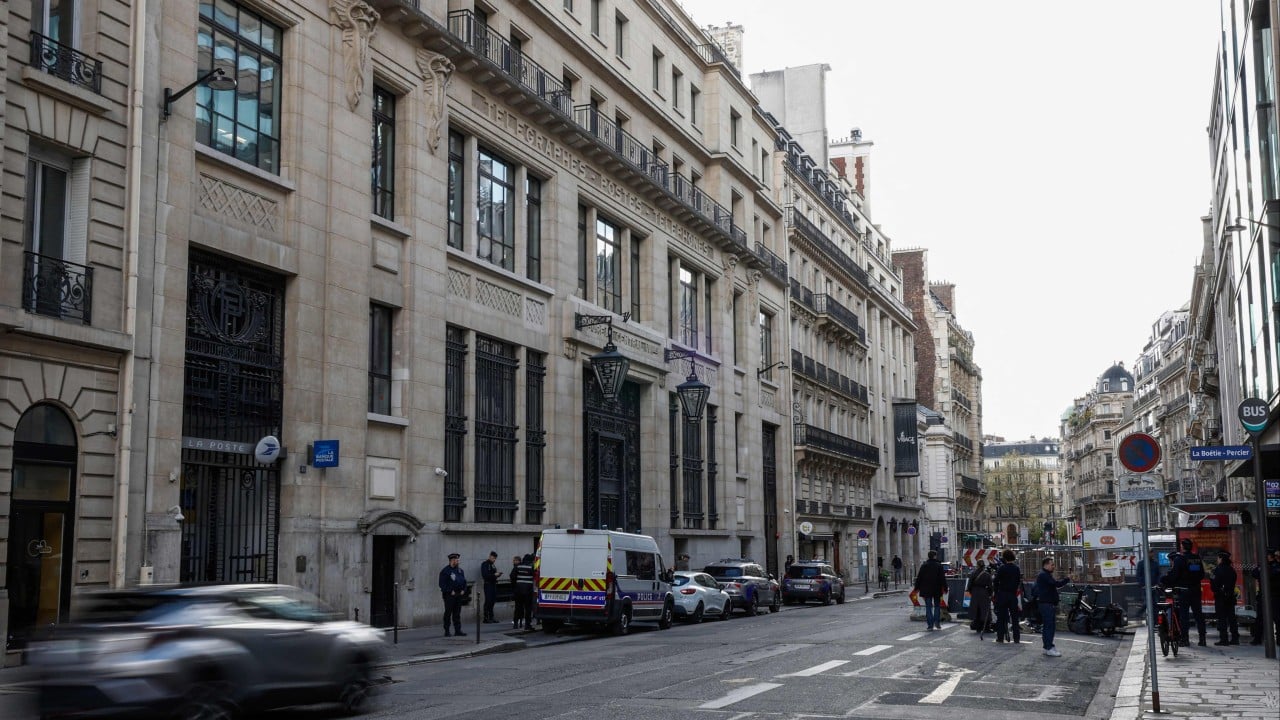
The pre-dawn air in the 8th Arrondissement of Paris carries a specific scent. It is the smell of fresh yeast from the boulangeries beginning their first bake, mixed with the damp, metallic tang of the Seine and the faint exhaust of a city that never truly sleeps. It is the time of day when the Grand Palais looks like a ghost ship in the mist, and the Rue d’Anjou is usually a silent corridor of Haussmannian stone and high-stakes finance.
At 4:30 AM, the world is supposed to be quiet.
But silence in a city like Paris is a fragile thing. On a Tuesday morning that should have been defined by the mundane rituals of a workday, that silence was nearly shattered by enough high explosives to turn a corner of the city into a crater. It wasn’t a Hollywood countdown. There were no red and blue wires to snip. Instead, there was a nondescript vehicle, a bank with American flags out front, and a series of gas canisters rigged to a detonator that didn't care about the history of the cobblestones beneath it.
The Anatomy of a Shadow
Security is often a performance. We see the guards at the Louvre, the gendarmes patrolling the Eiffel Tower with their submachine guns, and the metal detectors at the entrance of every department store. We accept these as the tax we pay for living in a modern world. But the real security—the kind that actually keeps the pulse of a city beating—happens in the shadows, where the stakes are invisible until they are inches from catastrophe.
On this particular morning, the target was an American bank. To a casual passerby, it’s just a facade of glass and prestige. To those who seek to make a statement through fire, it is a symbol of globalism, of capital, and of a power they wish to dismantle.
Imagine a young woman named Elise. She’s a hypothetical night-shift cleaner, someone who has walked these streets for twenty years. She knows every crack in the pavement on the Rue d’Anjou. She is finishing her shift, thinking about the espresso she’ll have before heading home to the suburbs. She walks past a parked car. She doesn't notice the smell of fuel. She doesn't see the wires.
Elise represents the thousands of people who would have been in the blast radius had the plan succeeded. The secretaries, the couriers, the tourists looking for an early breakfast. Their lives were held in the balance by a fuse that, for reasons of technical failure or divine intervention, failed to spark.
The Mechanics of Malice
When the French police arrived, they didn't find a sophisticated military operation. They found the crude, terrifying hallmarks of improvised terror. Three gas canisters. A primitive ignition system. A stolen car.
There is a specific kind of dread that comes from realizing how easily the mundane can be weaponized. We live surrounded by the materials of our own destruction. Propane tanks for grilling, gasoline for commuting, nails for building. In the hands of someone fueled by an ideology of wreckage, these items are transformed.
The police cordoned off the area with a speed that spoke of deep, practiced trauma. Paris has learned how to bleed, and more importantly, it has learned how to stop the bleeding. The memories of the Bataclan and the Charlie Hebdo offices are not historical footnotes here; they are open wounds that have scarred over into a state of permanent vigilance.
As the bomb squad moved in—robotic arms whirring in the silence, technicians in heavy, bulbous suits moving like deep-sea divers—the city began to wake up.
Think about the transition. One moment, a street is a potential graveyard. An hour later, after the canisters are neutralized and the car is towed, it is just a street again. The bread continues to bake. The buses start their routes. The bankers arrive in their tailored suits, complaining about the traffic or the rain, completely unaware that the ground they are walking on was nearly incinerated before their alarm clocks went off.
The Weight of the Unseen
We are terrible at measuring the value of things that don’t happen.
When a bomb goes off, we have metrics. We have casualty counts, structural damage reports, and insurance claims. We have a narrative of tragedy. But when a bomb doesn’t go off, the story often evaporates within twenty-four hours. It becomes a small headline on the third page, a "foiled plot," a "near miss."
But the "near miss" is where the real human story lives.
It lives in the relief of a police officer who gets to go home to his kids that night. It lives in the continued existence of a landmark that wasn't reduced to rubble. It lives in the psyche of a population that is being told, once again, that their normalcy is a target.
The French intelligence services operate in a realm where success is silence. If they do their job perfectly, you never hear their names. You never see the faces of the people who intercepted the chatter or tracked the stolen vehicle. Their expertise is a shield that is only noticed when it cracks.
On the Rue d’Anjou, the shield held.
But it held by a thread. The investigation revealed that the suspects—men already known to the authorities—weren't part of a vast, coordinated cell. They were the "unaligned," the radicalized fringes who find inspiration in the digital ether. This is the new reality of urban safety. It isn't about stopping an invading army; it’s about stopping a neighbor who has decided the world needs to burn.
The Fragility of the Morning
The morning after the news broke, the American bank was open for business. The glass was polished. The brass handles gleamed.
If you stood on the corner and closed your eyes, you could almost hear the echo of what might have been. The roar of the blast, the rain of shattered glass, the screams. Instead, you heard the chime of a bicycle bell and the distant murmur of the Metro.
This is the hidden cost of our modern existence. We trade a certain amount of peace of mind for the privilege of living in these dense, beautiful, complicated hubs of humanity. We walk past the shadows, trusting that someone else is watching them.
The police foiled the attack. They found the canisters. They made the arrests. They wiped the sweat from their brows and moved on to the next threat, the one we won't hear about until it, too, is a memory of a disaster that never arrived.
The sun climbed higher, hitting the gold on the dome of the Invalides. The city didn't feel like a fortress. It felt like a home.
In the end, the greatest victory isn't the arrest or the prosecution. It is the fact that Elise got her espresso. It is the fact that the street remained a street. It is the quiet, stubborn persistence of the ordinary in the face of the extraordinary.
A man in a trench coat stopped in front of the bank, checked his watch, and walked inside to deposit a check, his shoes clicking rhythmically against the stone, marking time in a city that refused to stop ticking.