The suits in Kathmandu never saw him coming. For years, the Nepalese political elite operated like a closed club, passing power back and forth between the same aging faces while the streets grew more frustrated. Then came Balendra "Balen" Shah. At 35, the structural engineer and former underground rapper didn't just join the system. He broke the door down.
When he first announced his candidacy for Mayor of Kathmandu, the establishment laughed. They called him a social media fad. When he won that race as an independent, the laughter stopped. Now, his rise to the role of Prime Minister marks the most significant shift in Himalayan politics since the monarchy fell. This isn't just about a young guy in dark sunglasses taking office. It's about a total rejection of the "Old Guard" and a move toward technocratic, performance-based governance.
The Engineer Who Rapped His Way to Power
Most politicians spend their twenties shaking hands and joining party youth wings. Balen Shah spent his twenties studying structural engineering and building a massive following in Nepal's rap scene. He wasn't just some kid with a microphone. He was an artist who understood how to talk to a generation that felt completely ignored by the political veterans in their 70s.
That dual background—engineer and artist—is exactly why he's so dangerous to the old system. He's got the technical mind to look at a city's drainage or a nation's energy grid as a math problem, but he's also got the charisma to explain that problem to a million people on TikTok. Most Nepalese politicians can't even open their own emails. Balen knows how to go viral.
When he won the mayoral race, it was a earthquake. He beat the heavyweights of the Nepali Congress and the CPN-UML without a party machine. He did it with volunteers, social media, and a broom. Literally. His campaign symbol was a broom, and he promised to clean up the literal and metaphorical filth of Kathmandu.
Why the Old Guard Failed
Nepal's politics for the last twenty years has been a merry-go-round. Pushpa Kamal Dahal (Prachanda), Sher Bahadur Deuba, and KP Sharma Oli have swapped the Prime Minister's office back and forth like a family heirloom. To the average 20-year-old in Kathmandu or Pokhara, these men represent a stagnant past.
They're the generation of the civil war. While they've been busy arguing about ideological purity and power-sharing deals, the youth have been leaving. Thousands of Nepalese people fly out of Kathmandu airport every single day to work in the Gulf or Malaysia because there are no jobs at home. Balen Shah spoke directly to that desperation. He didn't talk about Maoism or democratic socialism. He talked about garbage collection, digital transparency, and building schools that actually function.
How He Actually Governs
The biggest criticism against Balen was that he'd be all talk. "He's just a rapper," they said. "He doesn't understand the bureaucracy."
They were wrong. As Mayor, he proved he was willing to get his hands dirty. He started clearing illegal structures that had stood for decades because the owners had political connections. He pushed for better waste management in a city that often smells like a landfill. He didn't care about making friends in high places; he cared about the data.
That's the engineer in him. He treats policy like a blueprint. If a wall is built incorrectly, you tear it down and start over. That's a terrifying prospect for the corrupt middle-men who have profited from Nepal's messy development for decades.
His move to the Prime Minister's office is the natural evolution of that "results-first" mindset. The nation is currently facing a massive debt crisis and a brain drain that's hollowing out its middle class. People don't want another speech about the revolution of 2006. They want to know why the roads are still full of potholes and why it takes three weeks to get a passport.
The Sunglasses and the Persona
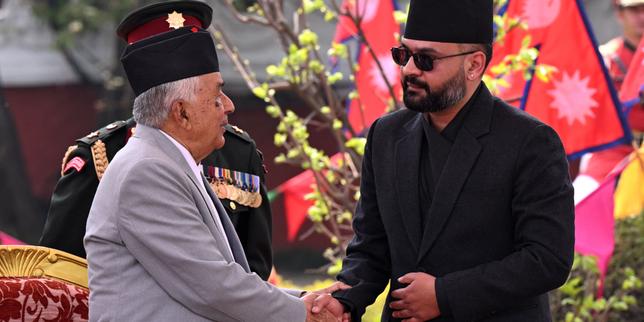
You'll almost never see Balen Shah without his signature dark sunglasses. To some, it's a gimmick. To his supporters, it's a shield. It makes him look like a man who isn't there to play the "eye-contact and fake smiles" game of traditional politics. It's a brand, sure, but it's a brand built on being an outsider.
During his rise, he's faced massive pushback. The courts have blocked some of his more aggressive urban renewal projects. The established parties have tried to starve his administration of funds. Each time they do, he goes to the people. He posts a screenshot of the obstacle on Facebook, explains who's blocking the progress, and lets his millions of followers do the rest. It's a new kind of "Digital Populism" that's incredibly hard for 75-year-old bureaucrats to fight.
The Risks of the Balen Era
It's not all sunshine and viral videos. Critics argue that Balen can be authoritarian in his methods. His "bulldoze first, ask questions later" approach to urban management in Kathmandu drew criticism from human rights groups who said he wasn't looking out for the city's poorest residents.
Transitioning from Mayor of a city to Prime Minister of a complex, landlocked nation sandwiched between India and China is a massive leap. It's one thing to fix a sewage line; it's another to navigate the "Great Power" rivalry between New Delhi and Beijing.
Nepal has historically survived by playing both sides. India is the primary trade partner and shares a deep cultural bond, but China's "Belt and Road" money is a constant temptation. The Old Guard knew how to walk this tightrope. Balen is an unknown quantity in foreign policy. Will he be too blunt? Can an engineer's logic survive the murky world of international diplomacy?
Breaking the Party Monopoly
The most important thing to watch now is how he handles the parliament. In Nepal, the Prime Minister needs a majority. Since Balen rose as an independent-minded leader, he has to build a coalition or rely on a wave of other young, independent candidates who followed his lead.
This is the "Balen Effect." His success in Kathmandu inspired dozens of young professionals—doctors, lawyers, and teachers—to quit their jobs and run for office. They're called the Rastriya Swatantra Party (RSP), and they've become the kingmakers of Nepalese politics. Together, they're dismantling the idea that you need to be a career politician to lead.
The Reality of 2026
The Nepal of 2026 is vastly different from the Nepal of 2006. The internet isn't just a tool; it's the primary political battleground. Balen Shah understands this better than anyone. He's transformed from a rapper with a niche following into the most powerful man in the country because he realized that the old rules don't apply when the audience has changed.
People are tired of waiting. They're tired of the "transition period" that has seemingly lasted forever. Balen represents the end of that transition. He represents a Nepal that wants to be modern, efficient, and respected on the global stage, not just seen as a source of cheap labor or a trekking destination.
If you're watching Nepal, don't focus on the protests or the party mergers. Focus on the data. Look at whether the new administration can actually lower the cost of living and stop the exodus of youth to foreign countries. That's the only metric that matters now.
The establishment is still trying to figure out how to handle him. They're waiting for him to fail, hoping he'll make a rookie mistake that they can exploit. But Balen isn't playing their game. He's building a new one.
Keep an eye on the upcoming legislative reforms. The first big test will be the national budget. If Balen can push through a budget that prioritizes infrastructure and tech over political patronage, the Old Guard is officially finished.
If you want to understand where Nepal is headed, stop looking at the history books and start looking at what's happening on the streets of Kathmandu. The era of the "Eternal Prime Ministers" is over. The era of the Engineer-Rapper has begun.