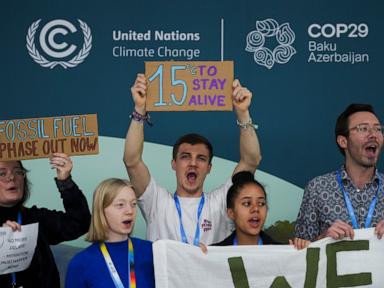
Every six months, another panel of somber bureaucrats stands in front of a microphone to announce that we are officially missing our climate targets. The headlines scream about thresholds breached, tipping points crossed, and deadlines missed. The global warming limit is dead. Panic is the mandatory emotion.
We are told that failing to keep warming beneath an arbitrary threshold means immediate planetary collapse. This is not just lazy journalism; it is a dangerous institutional narrative designed to paralyze action through despair.
I have spent the last fifteen years watching capital allocation decisions get paralyzed by this exact brand of apocalyptic fatalism. When you tell corporate boards and regional planners that the apocalypse is mathematically locked in because we missed a carbon budget, they stop investing in adaptation and start hoarding canned goods. Or worse, they buy green PR while business continues as usual.
The obsession with hitting an exact temperature ceiling is an administrative distraction. It treats the climate as a thermostat rather than a complex, chaotic, multi-variable fluid system.
The Fallacy of the Magic Number
The entire panic rests on a misunderstanding of how thresholds work in atmospheric science. When scientists model a warming limit, they are not talking about a hard cliff where the earth turns into Venus overnight. They are talking about probabilities of risk distribution.
Yet, public discourse treats the limit like a speed limit. Cross it by one-tenth of a degree and the planetary police write you a ticket for extinction.
This is a terrible framing for decision-making. By tying our entire moral and economic validity to a single numerical target, we invite complete nihilism the moment that target slips out of reach. If the game is already lost, why bother changing the lightbulbs or taxing carbon?
We need to abandon the target-fixation model. Missing the ceiling forces us to stop pretending we can prevent every ounce of warming through bureaucratic targets and forces us to deal with physical reality.
Adaptation is the Adult Conversation We Refuse to Have
For decades, mitigation was treated as the only pure path. If you talked about adaptation—building sea walls, breeding heat-resistant crops, redesigning urban drainage, or moving populations away from floodplains—you were accused of giving up on emissions reductions.
This was always a false choice born of academic purity rather than engineering reality.
Imagine a scenario where every government body stops spending billions trying to negotiate fractional emissions reductions that other nations routinely ignore, and instead redirects that capital entirely toward hardening infrastructure against extreme weather.
That is not surrender. That is pragmatism.
When you accept that warming will exceed the safety limit, the economic calculus flips. The return on investment for building resilient power grids and decentralized water supplies instantly eclipses the return on another round of diplomatic hand-wringing in a convention center.
The Innovation Paradox of Lowered Stakes
Fear is a terrible motivator for complex, long-term engineering problems. When panic dictates policy, we default to expensive, politically palatable half-measures like carbon offsets that buy trees nobody monitors.
When you strip away the illusion that we can control the exact temperature of the globe by 2050, the mandate shifts from prevention to capability. We stop asking how to stop the weather and start asking how to thrive despite it.
This unlocks genuine market forces. Insurance companies are already leading this charge, long before governments caught up. They are repricing risk, walking away from uninsurable properties, and forcing developers to build differently. That is how real behavioral change happens—not through international treaties, but through balance sheets adjusting to physical truths.
We do not need another emergency summit. We need a systematic pivot toward aggressive, unapologetic engineering, geo-engineering research, and mass infrastructure overhaul.
Stop mourning the broken target. It was never a magic shield anyway. Build the walls, cool the cities, engineer the crops, and let the doomsayers keep crying over numbers they never understood.