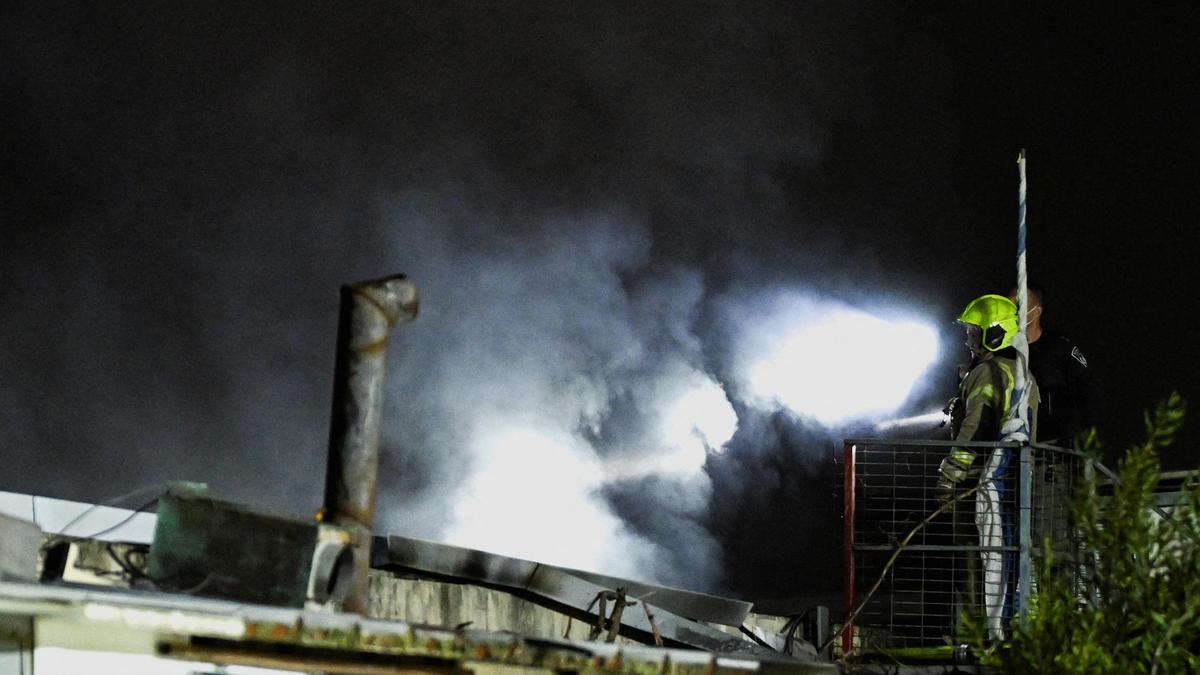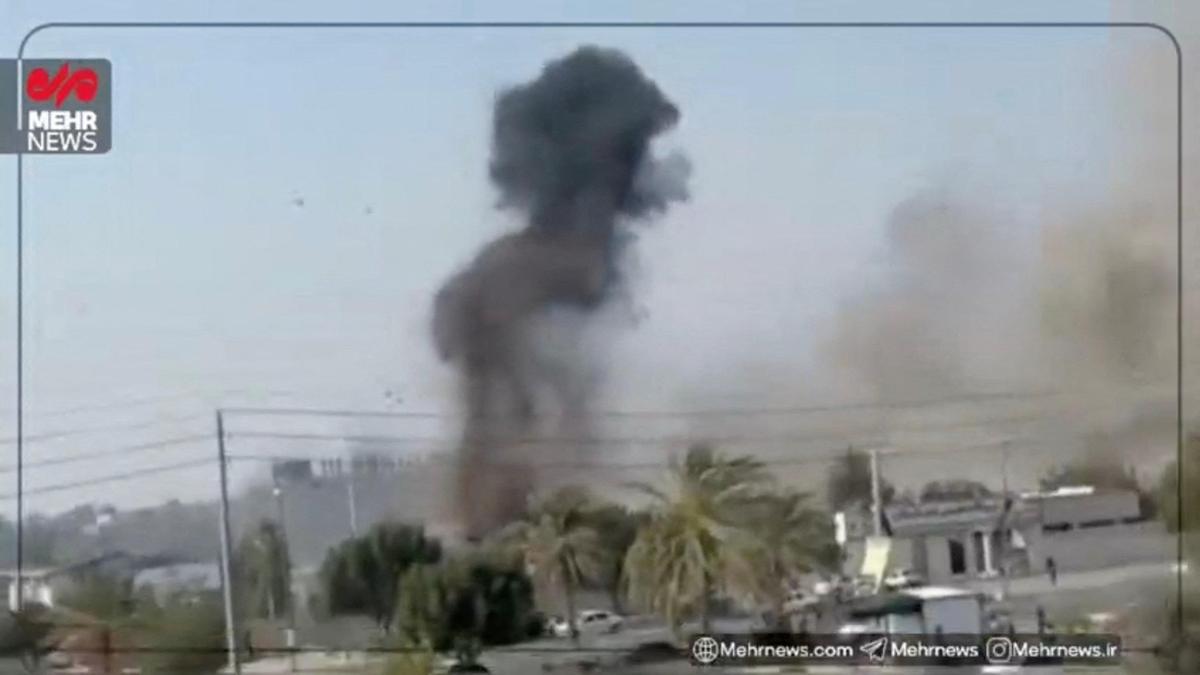
The mainstream media is stuck in a loop of moral outrage and "investigation" regarding the February 28 strike on the Shajareh Tayyebeh girls' school in Minab. They are hunting for a smoking gun that has already been fired, geolocated, and uploaded to the internet in 4K. While reporters obsess over whether a Tomahawk missile can "accidentally" hit a primary school, they are ignoring the cold, hard mechanics of modern urban warfare and the brutal reality of kinetic targeting in a high-density environment.
The "lazy consensus" suggests this was either a malicious war crime or a freak technical glitch. It was neither. It was the predictable outcome of a targeting doctrine that prioritizes the destruction of high-value assets over the structural integrity of the "buffer zones" those assets hide behind.
The Myth of the Precision Vacuum
The Shajareh Tayyebeh school was not an isolated building in a field. It sat less than 300 meters from the Seyed al-Shohada IRGC cultural complex and the Shahid Absalan clinic—both of which function as nodes for the IRGC Navy near the Strait of Hormuz. When the U.S. military deploys a RGM-109E Tactical Tomahawk, they aren't just sending a "smart bomb." They are sending a 1,000-pound high-explosive blast-fragmentation warhead.
Imagine a scenario where you are trying to take out a specific laptop in a crowded apartment building without cracking the windows of the unit next door. That is the "precision" lie the Pentagon sells. In reality, the circular error probable (CEP) of a Tomahawk might be small, but the blast radius is indifferent to property lines.
The school was hit because it was effectively part of the IRGC’s logistical nervous system. Whether the students were there or not, the proximity made the "collateral" inevitable. To call it a "mistake" is to fundamentally misunderstand how these weapons work. The U.S. military "investigates" not to find out if they did it—the telemetry data from the USS Abraham Lincoln already confirmed that—but to determine if the political cost of the dead schoolgirls outweighs the tactical gain of hitting the IRGC naval barracks next door.
Why the Human Shield Argument is a Cop-Out
Critics are quick to point out that the school had been walled off for eight years. They use the colorful murals and sports fields as proof of its "civilian-only" status. This is naive. In a conflict of this scale, the IRGC doesn't need to put a missile launcher on the playground to turn a school into a shield; they just need to exist next to it.
The IRGC knows the U.S. Rules of Engagement (ROE). They know that placing a high-value naval command center 238 meters from a girls' elementary school creates a "no-win" targeting scenario for the adversary. If the U.S. strikes, they get a PR nightmare and UN condemnation. If they don't, the IRGC operates with impunity.
- The Proximity Trap: The school was less than a quarter-mile from the target.
- The Timing Window: Strikes occurred between 10:00 and 10:45 AM—peak school hours.
- The Munition Choice: Using a Tomahawk for a "precision" strike in a residential zone is like using a sledgehammer to kill a fly on a glass table.
The U.S. chose to swing the sledgehammer. The result wasn't a "glitch." It was a choice.
Trump and the "Inaccuracy" Narrative
Donald Trump’s claim that "Iran did it because they are inaccurate" is a masterclass in gaslighting, but it contains a kernel of technical truth that the media missed. Iran’s Soumar missiles are notorious for being less reliable than Western equivalents. However, the debris found in Minab doesn't match the Soumar's rear-mounted external engine.
The forensic evidence provided by Bellingcat and munitions experts like N.R. Jenzen-Jones is undeniable: the weapon was a Tomahawk. When Trump says he is "willing to live with" the report, he is signaling that the administration has already calculated the geopolitical price of these lives and found it acceptable.
The Logistics of a Massacre
We need to stop asking "who" did it and start asking "how" we expected anything else. The 2026 Iran war began with a "shock-and-awe" volume nearly double that of the 2003 Iraq invasion. When you cycle through 2,000 targets in 24 hours, "precision" becomes a relative term.
Why Conventional Investigations Fail
- State Obstruction: Iran will not allow independent investigators into Minab without a government handler.
- Information Blackouts: The internet shutdown in Hormozgan province prevents real-time data from reaching the UN.
- Weaponry Overlap: While only the U.S. uses Tomahawks, the secondary explosions from nearby IRGC munitions caches can mask the original strike's signature.
The "Dr. Hafez Khomeyni School" hit in Khomeyn on March 10 follows the same pattern. Same excuses, different city. The U.S. is targeting "educational facilities" because these buildings are being used—rightly or wrongly—as urban anchors for Iranian military infrastructure.
The Hard Truth Nobody Wants to Admit
If you want to stop schools from being bombed, you have to stop pretending that modern "precision" warfare is clean. It is a messy, kinetic business of probabilities. The Shajareh Tayyebeh massacre was a mathematical certainty the moment the target list was finalized.
The school was not an accidental victim; it was a structural casualty of a war designed to be fought in the cracks of civilian life. Every "investigation" launched by the Pentagon is a stalling tactic designed to let the news cycle move on to the next atrocity.
Stop asking for "impartial probes." Start acknowledging that in 2026, the "collateral" is the point. It is a message sent in high explosives: no wall, no mural, and no playground is high enough to protect an asset the U.S. wants gone.
Would you like me to analyze the specific satellite imagery coordinates of the Minab IRGC compound to show the exact overlap with the school's structural footprint?