The facade of regional stability in the Persian Gulf has been systematically dismantled over the last eleven days. While the world focuses on the massive exchange of fire between the United States, Israel, and the Iranian heartland, a quieter and arguably more dangerous strategy is unfolding across the Arabian Peninsula. Tehran is no longer just lashing out; it is executing a calculated campaign to distribute the economic and psychological costs of war to its neighbors. By turning neutral business hubs into active combat zones, Iran aims to force a global ultimatum: end the strikes on our regime or watch the world’s energy and logistics arteries bleed out.
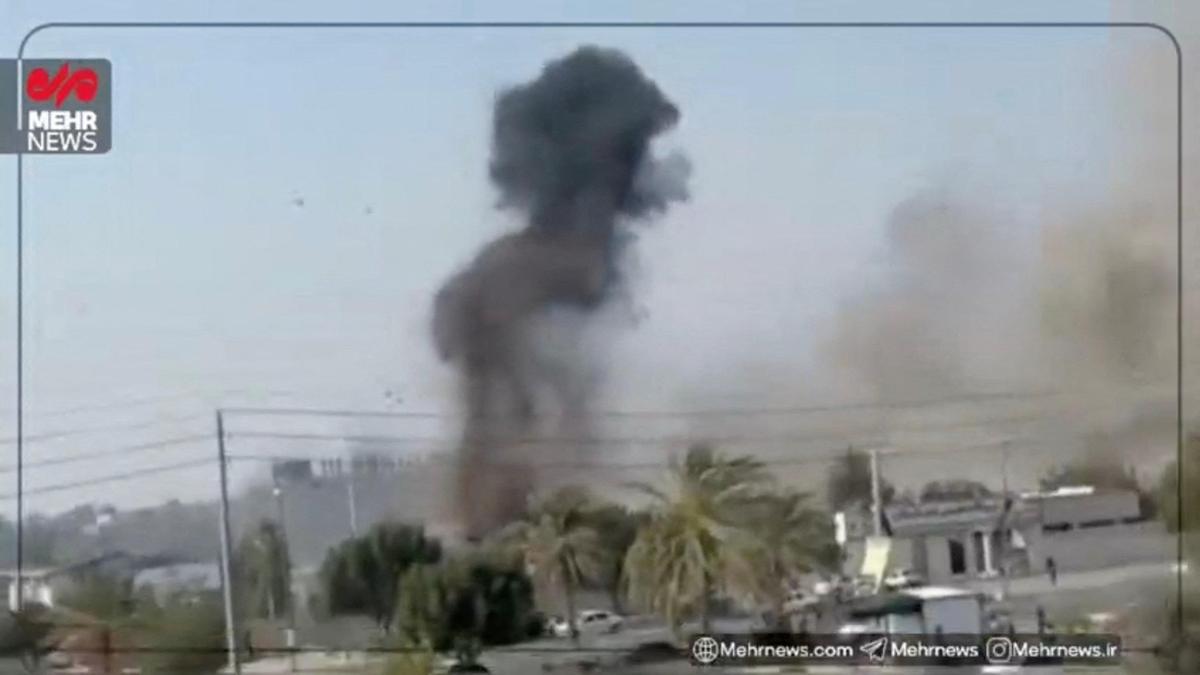
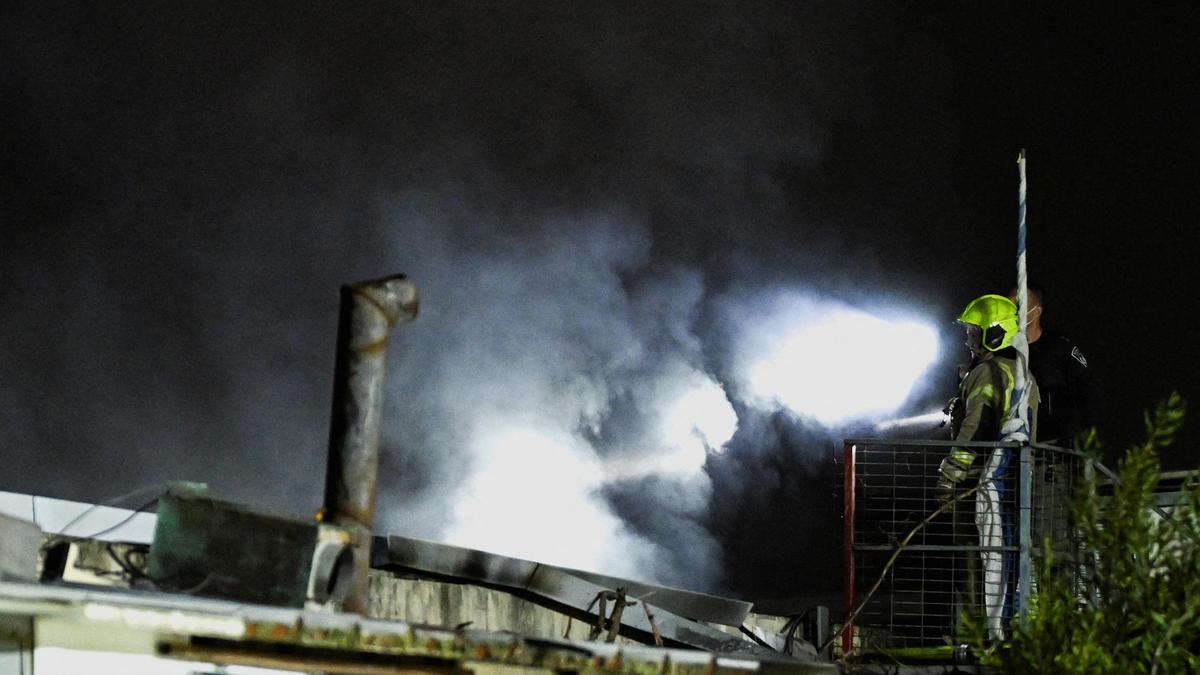
On March 10, 2026, the reality of this strategy hit home in Dubai and Manama. Sirens pierced the early morning silence in the UAE’s commercial center as air defenses engaged a swarm of 35 drones and nine ballistic missiles. In Bahrain, the cost was measured in lives, not just interceptions, as a missile strike on a residential building in the capital killed a 29-year-old woman and wounded eight others. These are not accidental deviations or "spillover" from the main theater of war. They are the primary tools of a regime that has realized its only leverage against a high-tech Western coalition is the deliberate disruption of global commerce.
The Logic of Dispersed Attrition
Tehran’s current military doctrine is a departure from the "all-out" barrages seen in previous decades. Instead, we are witnessing a doctrine of dispersed attrition. The Iranian leadership, currently in a state of flux following the assassination of Supreme Leader Ali Khamenei on February 28, has pivoted toward a strategy of making the conflict "everyone’s problem."
By targeting desalination plants in Kuwait, airports in the UAE, and oil infrastructure in Saudi Arabia’s eastern province, Iran is testing the limits of the Gulf’s multi-layered missile defense systems. While the UAE reports a high interception rate—claiming to have neutralized over 90% of incoming threats since the war began—the sheer volume of attempts is designed to deplete expensive interceptor stockpiles. It costs roughly $2 million to fire a single Patriot interceptor; it costs Iran less than $30,000 to launch a Shahed-series drone. This asymmetry is the core of Iran's survival plan.
The strategic goal is clear: convince the Gulf Cooperation Council (GCC) states that their partnership with the United States is a net liability. Tehran’s message to Riyadh, Abu Dhabi, and Doha is blunt. If American bases on your soil are used for "Operation Epic Fury," your skyscrapers and refineries will pay the price.
Weaponizing the Strait of Hormuz 2.0
The closure of the Strait of Hormuz has moved from a theoretical threat to a punishing reality. As of early March, the Iranian Revolutionary Guard Corps (IRGC) has effectively halted commercial traffic through the waterway, which handles 20% of the world’s oil supply. This isn't just a blockade; it is the implementation of "security duties"—a euphemism for a maritime protection racket.
Tehran has begun demanding levies from vessels associated with countries it deems "hostile." Those who refuse to pay or belong to the U.S.-led coalition face kinetic strikes. The numbers are staggering:
- Brent Crude: Spiked to $120 per barrel before settling near $90.
- Maritime Impact: Over 150 tankers are currently anchored in open waters, unable to transit.
- Casualties: At least seven merchant sailors have been killed in drone and USV (unmanned surface vehicle) attacks since the conflict erupted.
This maritime strangulation is intended to bypass the U.S. military’s technological superiority by attacking the one thing Washington cannot easily protect: the global price of gas. Even if the U.S. Navy successfully escorts a few tankers, the insurance premiums for the rest have become prohibitive, effectively neutering the Gulf’s "hub model" of frictionless trade.
The Infrastructure Trap
For decades, the Gulf monarchies have sold themselves to the world as safe havens—islands of "Vision 2030" and "Giga-projects" in a volatile region. Iran is now systematically attacking that brand. By targeting Jebel Ali Port and cloud data centers in the UAE, they are hitting the "hub premium" that attracts multinational corporations.
When a drone hits a recreational area in a major port, the damage isn't just to the concrete. It's to the confidence of the thousands of expatriate workers and Western CEOs who power these economies. The "weary confidence" that once defined the GCC’s rise is being replaced by "emotional vigilance." For the first time, the conflict isn't something that happens "over there" in Iraq or Yemen; it is happening over the rooftops of Dubai and the residential blocks of Manama.
The Missile Math Problem
The technical reality of this war is a nightmare for regional planners.
$$\text{Interception Success} = \frac{\text{Interceptors Fired}}{\text{Incoming Targets}} \times \text{Kill Probability}$$
As the denominator (incoming targets) increases across multiple fronts—Bahrain, Saudi Arabia, Kuwait, and Qatar—the probability of a "leaking" missile hitting a high-value civilian target becomes a statistical certainty. Iran is betting that even a 5% failure rate in Gulf air defenses will eventually cause enough chaos to trigger a mass exodus of foreign capital.
A Precarious Balance of Power
The United States is currently attempting to de-escalate through overwhelming force, a paradox that is not lost on regional analysts. Defense Secretary Pete Hegseth has promised the "most intense day of strikes" yet inside Iran, aiming to degrade the IRGC’s ability to coordinate these regional attacks. However, the more the U.S. squeezes the Iranian center, the more the Iranian periphery—its "Axis of Resistance" and its remaining missile cells—lashes out at the nearest available targets.
The Gulf states are caught in a pincer. On one side is a vengeful, wounded Iranian regime that views its neighbors as accomplices. On the other is a U.S. administration that has shown it is willing to pursue regime change regardless of the collateral damage to regional economies.
The brutal truth is that there is no "off-ramp" that doesn't involve a fundamental restructuring of Middle Eastern security. The Gulf's reliance on Western protection has, in this specific crisis, become the very thing that makes them a target. Until the missile launch sites in Kermanshah and the drone factories in Isfahan are truly neutralized—or a new political order is established in Tehran—the cities of the Gulf will remain on the front lines of a war they never asked for.
The coming days will determine if the GCC’s "cautious and calibrated" response can survive the mounting pressure of a neighbor that has nothing left to lose.
Would you like me to analyze the specific economic impact of the Strait of Hormuz closure on Asian energy markets?