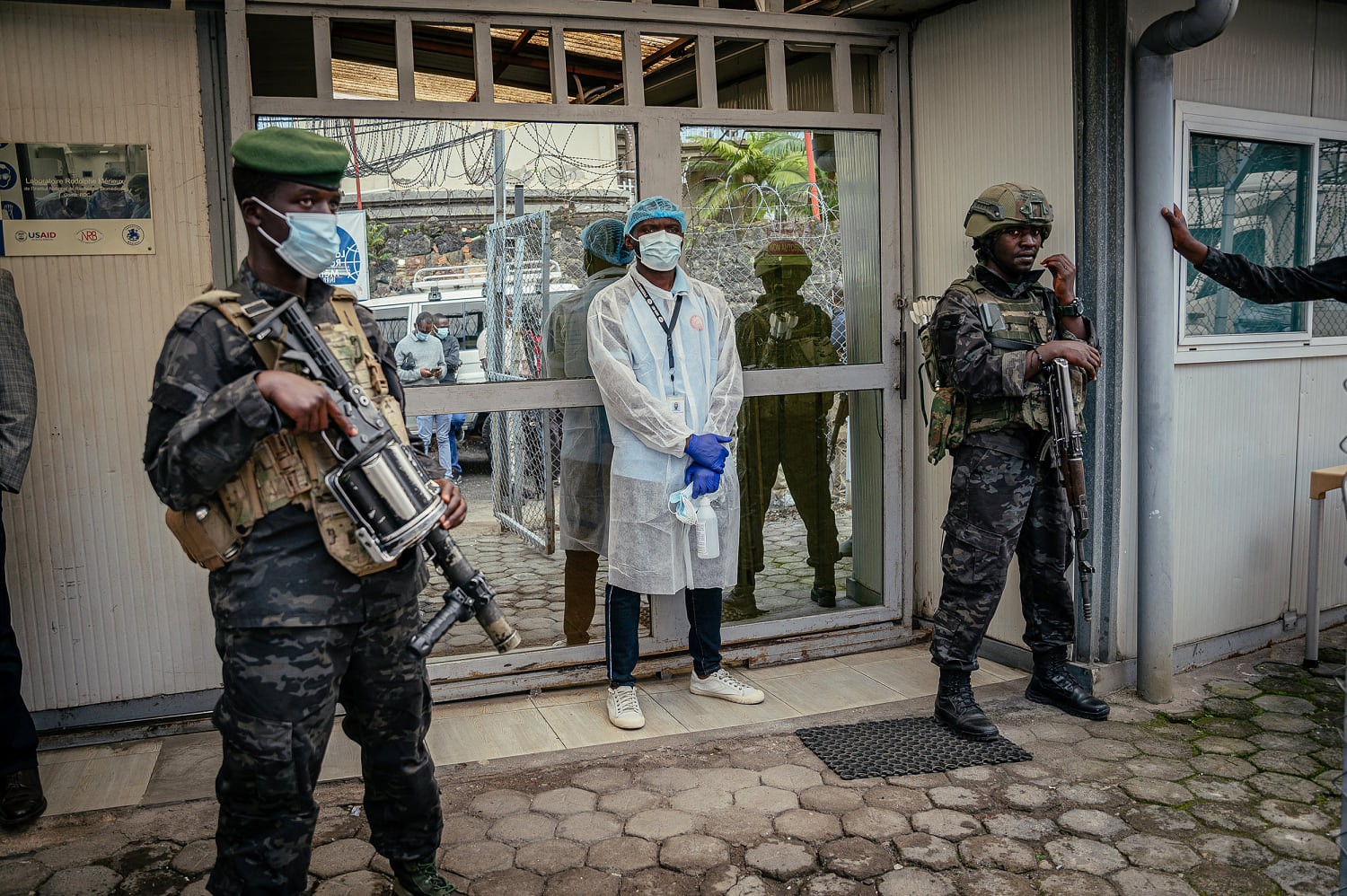
The media has a predictable playbook for outbreaks. A deadly pathogen flares up in a developing nation. The death toll climbs. Then, a couple of Western aid workers contract the virus, and the narrative instantly shifts from localized crisis to high-stakes international rescue. The headline is always the same, tracking the dramatic airlift of patients to specialized biocontainment units in Europe or the United States.
The public consumes this as a triumph of modern medicine and humanitarian duty. It is neither.
Flying highly infectious patients across continents is a fundamentally flawed strategy that undermines the entire architecture of global health security. The lazy consensus suggests that moving a patient to a high-resource setting is the most ethical, logical way to save a life while containing a threat. In reality, these high-profile medical evacuations siphon critical resources away from the epicenter, trigger unnecessary panic, and perpetuate a savior complex that actively harms local healthcare infrastructure.
We need to stop treating global outbreaks like Hollywood rescue missions.
The Mirage of Safe Biocontainment Air Travel
The logistics of an airborne medical evacuation for a viral hemorrhagic fever like Ebola are dizzying. It requires custom-built Aeromedical Biological Containment Systems, specialized charter flights, and teams of heavily suited personnel tracking every breath the patient takes.
The argument for these flights relies on the assumption of absolute containment. But any seasoned epidemiologist knows that risk is a numbers game. Every handoff, every turbulent flight path, and every refueling stop introduces a fresh variable for human error.
When you strip away the optics, you are flying a biological hazard over thousands of miles of civilian airspace to land in a densely populated metropolitan area. Why? To provide supportive care that could—and should—be replicated on the ground.
The standard protocol for Ebola treatment has evolved significantly. The cornerstone of survival is aggressive supportive care: early intravenous fluid resuscitation, electrolyte correction, and targeted therapeutics like monoclonal antibodies. None of these interventions require a multi-million-dollar flight to London or Frankfurt. They require a functional isolation ward, reliable supply chains, and trained staff at the source of the outbreak.
The Colonial Legacy of Epidemic Response
I have spent years watching international agencies manage outbreaks, and the pattern is maddening. When a crisis hits, the reflex is to install an external, top-down structure rather than fortifying the people who live there.
Extracting Western patients while the local population faces systemic shortages creates a stark, indefensible double standard. It signals to the host country that their facilities are merely holding pens until the "important" patients can be rescued.
This completely destroys public trust.
During major West African outbreaks, public resistance was the single greatest barrier to containing transmission. When communities see foreign workers whisked away in specialized jets while their own family members are isolated in underfunded local wards, rumors spread. Trust fractures. People stop reporting symptoms, hide their sick relatives, and avoid treatment centers entirely. The airlift does not just extract a patient; it extracts the credibility of the entire response network.
The data proves that localized, community-led containment is what actually stops a virus. Citing historical outbreaks from the World Health Organization and Médecins Sans Frontières, the turning point in every major epidemic occurs when local health workers are trusted, properly equipped, and empowered to manage the triage and treatment within their own borders.
The Opportunity Cost of a Single Airlift
Let us talk about the economics. A single international medical evacuation for a patient with a high-consequence pathogen can easily cost hundreds of thousands of dollars, sometimes pushing past the million-dollar mark when accounting for aircraft leasing, specialized crews, decontamination, and hospital biocontainment unit readiness.
That capital is completely burned in transit. It buys zero long-term capacity.
Imagine a scenario where that same budget is redirected into the local healthcare ecosystem. For the cost of one transatlantic flight for a single patient, an international relief agency could fund:
- Thousands of personal protective equipment suits for local nurses.
- Reliable, solar-powered refrigeration units for field clinics to store diagnostics and vaccines.
- Months of hazard pay for hundreds of local community health workers who perform the critical work of contact tracing.
By spending exorbitant sums on the optics of rescue, the global health apparatus starves the front line. It is the definition of a bad investment. We are spending fortune-level sums to treat the symptom of a broken local healthcare system rather than investing fractions of that amount to fix the root cause.
Dismantling the Counterarguments
The most common defense of these evacuations is the moral obligation to protect aid workers. The logic goes: if doctors and nurses know they will not be rescued if they fall ill, they will refuse to volunteer, leading to a shortage of personnel in the crisis zone.
This argument insults the professionalism of humanitarian workers and misdiagnoses the risk calculus.
Medical professionals do not volunteer for outbreak zones on the condition of an emergency exit ticket; they volunteer under the assumption that they will be given the tools to do their jobs safely. If you want to protect aid workers, you do not build a better evacuation plan. You build a better field hospital. You ensure they never get infected in the first place by providing flawless infection prevention and control protocols, adequate staffing ratios to prevent exhaustion-induced errors, and immediate access to post-exposure prophylactics on-site.
The secondary defense is that bringing patients to Western biocontainment units allows researchers to study the disease clinical progression in a controlled environment, yielding insights that help everyone.
This is an outdated excuse. The clinical trials for major Ebola therapeutics were successfully conducted in field environments across the Democratic Republic of Congo and Sierra Leone. Modern clinical research does not require a sterile laboratory in Europe; it requires robust, ethical trial infrastructure embedded directly within the affected communities. Studying a disease in a vacuum thousands of miles away from the environment where it spreads yields narrow, clinical data that ignores the social, structural, and cultural realities of transmission.
The Hard Truth About Decentralized Care
Admitting the failure of the evacuation model means accepting a harsh reality: we must stop using airlifts as a safety blanket.
The alternative requires a massive, uncomfortable shift in funding priorities. It means international donors must hand over control of resources to local ministries of health and regional organizations like the Africa Centres for Disease Control and Prevention. It means acknowledging that a well-equipped, permanent field hospital in a vulnerable region is infinitely more valuable than a specialized isolation ward in a Western capital that sits empty 99% of the time.
This approach has downsides. It lacks the dramatic, heroic narrative that looks good on evening news broadcasts. It requires long-term, unglamorous investments in plumbing, supply chains, and basic medical training. It means accepting that international agencies should play a supporting role rather than taking center stage.
But the current trajectory is unsustainable. As urbanization expands and climate factors alter the habitats of viral reservoirs, the frequency of spillover events will increase. We cannot manage the future of global infectious disease by running an elite, international ambulance service for a select few.
The next time an outbreak occurs, the metric of success should not be how fast we can fly patients out. The metric of success must be how effectively we can build a wall of defense right where the virus landed. Stop the flights. Build the infrastructure. Treat patients where they are.