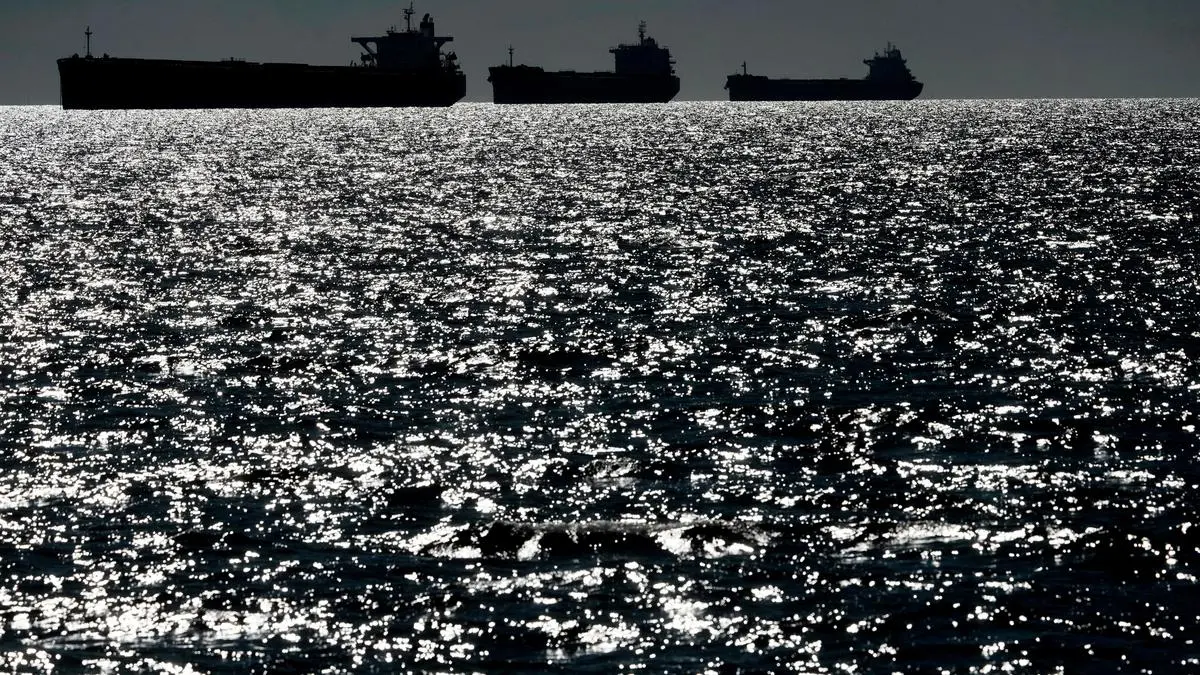
The mainstream media loves a high-seas drama. When the US government coordinates the seizure of an Iran-linked "shadow fleet" tanker in the Indian Ocean, the headlines write themselves. They paint a picture of geopolitical dominance, a triumphant enforcement of international law, and a crippling blow to rogue regimes.
It is a comforting narrative. It is also completely wrong.
Sensationalist reporting treats these maritime interdictions as definitive victories. They echo Washington’s tough talk and frame the seizure as a strategic masterstroke that will starve adversaries of oil revenue. This view misunderstands the fundamental mechanics of global energy logistics, maritime law, and modern sanctions evasion.
The reality is far less cinematic. The seizure of a single hull is not a strategic victory. It is an expensive, performative exercise in whack-a-mole that changes absolutely nothing about the global flow of illicit oil.
The Myth of the Crippled Fleet
Mainstream analysts look at a captured tanker and see a supply chain in ruins. They assume that because a vessel has been boarded and diverted, the underlying network is fractured.
This assumption ignores how the shadow fleet actually operates. These networks do not run like commercial giants such as Maersk or Frontline. They do not rely on a fixed, irreplaceable fleet of pristine vessels. Instead, the shadow fleet is a highly fluid, atomized ecosystem designed from inception to absorb losses.
When a ship is seized, the network does not break. It routes around the damage.
The vessel in question is almost always a decrepit, vintage Very Large Crude Carrier (VLCC) or Suezmax tanker nearing the end of its operational life. These ships are frequently bought at scrap-value prices through layers of anonymous shell companies registered in jurisdictions like Panama, Liberia, or the Marshall Islands. The cost of the hull is often fully amortized after just one or two successful voyages.
To the syndicates running these operations, a seized ship is not a catastrophic loss. It is a pre-calculated cost of doing business.
The Math Behind Illicit Crude
Let us look at the actual numbers, free from political rhetoric.
Consider a standard VLCC capable of carrying two million barrels of crude oil. Even when trading at a steep discount due to sanctions—say, $20 below the Brent benchmark—a single successful cargo can yield upwards of $100 million in gross revenue.
The capital expenditure required to acquire an aging, twenty-year-old tanker ready for the scrap yard is a fraction of that amount, often hovering between $20 million and $35 million.
- Vessel Acquisition: $30,000,000
- Operational Costs and Bribes: $5,000,000
- Cargo Value (Discounted): $120,000,000
- Net Profit on Voyage One: $85,000,000
If that ship completes a single run before being seized on its second voyage, the operator is still tens of millions of dollars ahead. The syndicates do not panic when a ship is taken into custody; they simply open a new laptop, spin up another Delaware or Marshall Islands LLC, and buy another aging hull from a Greek scrapper.
The Western legal apparatus moves at the speed of bureaucracy. The shadow fleet moves at the speed of a wire transfer.
The Shell Game of Flag Hopping and AIS Spoofing
The public reads about "Iran-linked" ships as if these vessels fly the Iranian flag and report directly to Tehran. In practice, the operational tradecraft relies on total obfuscation.
The primary weapon of the shadow fleet is not speed or weaponry; it is administrative friction.
Flags of Convenience
A ship will change its registration—its flag—multiple times a year. It might start the month under a Comoros flag, switch to Gabon by week two, and operate under a Cook Islands registry by the time it reaches international waters. When maritime authorities attempt to track the vessel, they are met with a wall of sovereign regulatory silos that refuse to communicate with one another.
AIS Manipulation
Automatic Identification System (AIS) transponders are legally required to prevent collisions. Shadow tankers have turned these safety devices into tools of deception. They do not just turn them off—which invites immediate scrutiny. They spoof them.
Using sophisticated software, a tanker anchored off the coast of Iran can transmit coordinates showing it sitting peacefully in the South China Sea. By the time Western intelligence agencies reconcile the satellite imagery with the radio data, the cargo has already been transferred via ship-to-ship (STS) operations in the middle of the ocean.
Why Sovereign Threats Fall Flat
The latest round of headlines leaned heavily on the political theater of strike threats and aggressive rhetoric. The implication is that military posture will deter these illicit operators.
This completely misreads the risk tolerance of the actors involved. The captains and crews sailing these vessels are not state actors or ideological zealots. They are mercenary mariners, often from developing nations, drawing hyper-inflated wages to compensate for the legal risk. The corporate entities behind them are ghosts.
You cannot deter an entity that has no physical headquarters, no public shareholders, and no permanent assets.
Furthermore, aggressive posturing ignores the complicity of the buyers. The shadow fleet exists because there is a insatiable, structural demand for discounted energy. Independent refineries in major importing nations rely on this cheap feedstock to maintain their margins.
Seizing a tanker does not diminish the demand. It merely squeezes the supply momentarily, driving up the premium for the remaining shadow operators and making the next successful run even more lucrative.
The Collateral Damage of High-Seas Interdiction
While politicians collect headlines, the actual execution of these seizures introduces massive liabilities that the state rarely acknowledges.
When the US or an ally seizes a tanker carrying millions of barrels of sour crude, they inherit a logistical nightmare. These are aging, poorly maintained vessels. The risk of a catastrophic environmental disaster during an adversarial boarding or a forced diversion is exceptionally high.
Moreover, once a ship is seized, it enters a legal limbo that can drag on for years.
The state must pay for port fees, maintenance, crew repatriation, and the secure storage of a volatile cargo. The legal battles over ownership turn into morasses where commercial banks, insurance syndicates, and sovereign entities litigate every frame of the maritime logbook. In many cases, the cost of litigating and maintaining the seized asset eats up a massive portion of the eventual liquidation value.
The Hard Truth About Sanctions Enforcement
If the goal of maritime seizures is truly to halt the financing of adversarial regimes, the current strategy is a demonstrable failure.
True disruption would require targeting the financial nodes that clear the transactions, the classification societies that certify the vessels, and the Western insurers who provide the maritime liability coverage through complex reinsurance loops.
But doing that thoroughly would trigger a massive shock to the global shipping sector, driving up freight rates and inflation globally. The political appetite for true enforcement does not exist because the economic pain would be felt at home, not just abroad.
Therefore, the system settles for the illusion of enforcement. A tanker is seized, the cameras roll, the politicians issue a press release, and the shadow fleet purchases five more ships to replace it.
The house always wins, and the shadow fleet is the house.