The proclamation by Iran’s judiciary chief that Tehran has "not backed down one iota" regarding its external demands is not a rhetorical flourish; it is a signal of structural lock-in within the Iranian political hierarchy. To understand the current friction in international negotiations with Iran, one must move past the surface-level analysis of "hardline" versus "moderate" factions. Instead, the situation must be viewed through the lens of Institutional Path Dependency and the Internal Cost-Benefit Matrix of the Islamic Republic’s ruling elite. When an executive or judicial official claims zero concessions, they are describing a state where the domestic political cost of compromise has surpassed the perceived economic utility of sanctions relief.
The Triad of Iranian Strategic Persistence
The current stance of the Iranian judiciary and the broader clerical establishment rests on three structural pillars that dictate their negotiation floor. These pillars are not ideological whims; they are survival mechanisms designed to prevent regime decoupling from its core identity.
- Sovereign Legitimacy as a Non-Negotiable Asset: Within the Iranian framework, the judiciary acts as the guardian of the 1979 revolutionary mandate. Any perceived retreat on international demands—specifically those touching on nuclear development or regional influence—is viewed through the prism of "Revolutionary Erosion." If the state admits to backing down, it risks delegitimizing the foundational narrative that it is a singular, resistant entity against Western hegemony.
- The Sunk Cost of Resistance: Decades of sanctions have forced Iran to develop a "Resistance Economy." While this has suppressed GDP growth and fueled inflation, it has also created a specialized domestic industrial and financial infrastructure. The elite who manage this infrastructure benefit from the status quo of isolation. For these stakeholders, a return to global norms represents a competitive threat. Therefore, the "iota" mentioned by the judiciary chief represents the protection of these internal monopolies.
- Verification Asymmetry: Tehran’s refusal to move reflects a fundamental lack of trust in the durability of Western diplomatic commitments. The logic is simple: the risk of dismantling nuclear or military infrastructure in exchange for temporary sanctions relief (which can be reversed by a change in a foreign administration) is a net negative in their strategic calculus.
The Zero-Sum Logic of the Judiciary in Foreign Policy
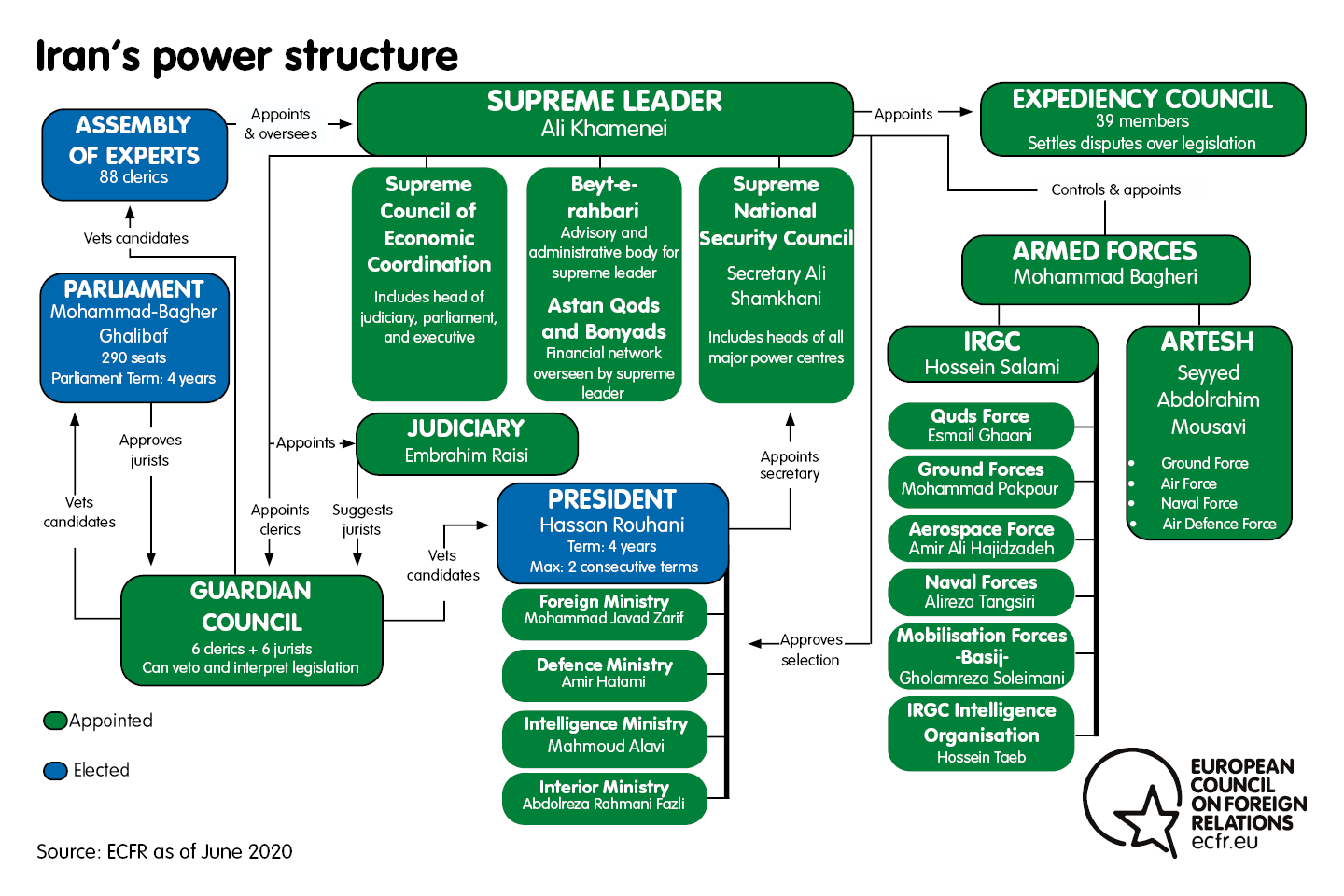
In many Westphalian states, the judiciary remains distinct from foreign policy execution. In Iran, the judiciary chief is a direct appointee of the Supreme Leader, making the office a primary articulator of the state’s strategic intent. When this office intervenes in diplomatic discourse, it serves to tighten the "Internal Constraint."
By publicly stating that no concessions have been made, the judiciary effectively binds the hands of the diplomatic corps. This creates a Credible Commitment Problem. If the negotiators in Vienna or Geneva attempt to offer a compromise, they face the immediate threat of domestic prosecution or political purging back in Tehran. The judiciary provides the legal and coercive "floor" below which the executive branch cannot descend without risking institutional collapse.
Evaluating the Economic Pressure-Threshold
A common misconception in Western analysis is that increasing economic pressure linearly increases the likelihood of diplomatic concessions. This ignores the Threshold of Diminishing Returns in sanctioning autocracies.
Iran has reached a state where the marginal pain of additional sanctions is lower than the political risk of perceived capitulation. The state has recalibrated its operations to function at a baseline of restricted trade. As the judiciary chief signals defiance, he is implicitly stating that the Iranian state has calculated its "Survival Minimum" and believes it can sustain its current position indefinitely.
The economic data supports this pivot. Iran has diversified its oil export destinations and expanded its non-oil trade with regional neighbors and Eurasian partners. This "pivot to the East" reduces the leverage of Western financial systems, thereby validating the judiciary's claim that they need not move an iota from their starting positions.
The Bottleneck of Multilateral Compliance
The stalemate is further complicated by the technical requirements of modern international law. The Iranian judiciary views international compliance—such as the Financial Action Task Force (FATF) guidelines—as a Trojan horse for intelligence penetration.
- Transparency vs. Security: The judiciary argues that adopting global anti-money laundering standards would expose the networks used to bypass sanctions.
- Legal Sovereignty: There is a profound refusal to subordinate Iranian domestic law to international oversight bodies, which is seen as a direct challenge to the authority of the Guardian Council.
This creates a structural impasse. The West requires FATF compliance for full economic reintegration; the Iranian judiciary views FATF compliance as an existential threat to the state’s covert financial operations. Logic dictates that as long as these two positions remain static, no "iota" of movement is possible.
The Risk of Miscalculating Rhetorical Signaling
Western observers often dismiss the judiciary’s statements as "playing to the base." This is a dangerous simplification. In the Iranian context, these statements serve as Directional Directives for the security apparatus. When the judiciary chief announces a zero-concession policy, he is authorizing the Islamic Revolutionary Guard Corps (IRGC) and the intelligence services to continue their current trajectories without fear of a sudden diplomatic pivot.
This eliminates the "Reformist Variable" from the immediate strategic horizon. By hardening the rhetoric, the judiciary ensures that any future negotiation will not be a return to the 2015 framework, but must start from a baseline that recognizes Iran's current regional and technical advancements.
Strategic Recommendation for Analysts and Negotiators
The reality of the Iranian position is that the "iota" is not a unit of measurement; it is a symbol of institutional rigidity. To break the deadlock, the focus must shift from "Maximum Pressure" to "Incentive Re-alignment."
- De-escalate the Rhetorical Floor: Recognizing that the judiciary uses these statements to maintain internal order suggests that public demands for "capitulation" only strengthen the hardline position.
- Targeted Institutional Carve-outs: If the goal is movement, negotiations must address the specific fears of the judiciary regarding legal sovereignty and intelligence exposure. This requires a level of technical granularity that current broad-spectrum sanctions do not allow.
- Accepting the Persistence of the Resistance Economy: Strategies built on the assumption of an Iranian economic collapse have consistently failed. The more viable path involves integrating Iran into regional security and economic architectures where the "cost of non-compliance" is managed by regional peers rather than Western adversaries.
The Iranian judiciary's defiance is a calculated expression of a state that has weighed the costs of global integration and found them, for now, to be more dangerous than the costs of isolation. Until the external offer fundamentally alters the internal power dynamics of Tehran’s institutions, the "iota" will remain unmoved.