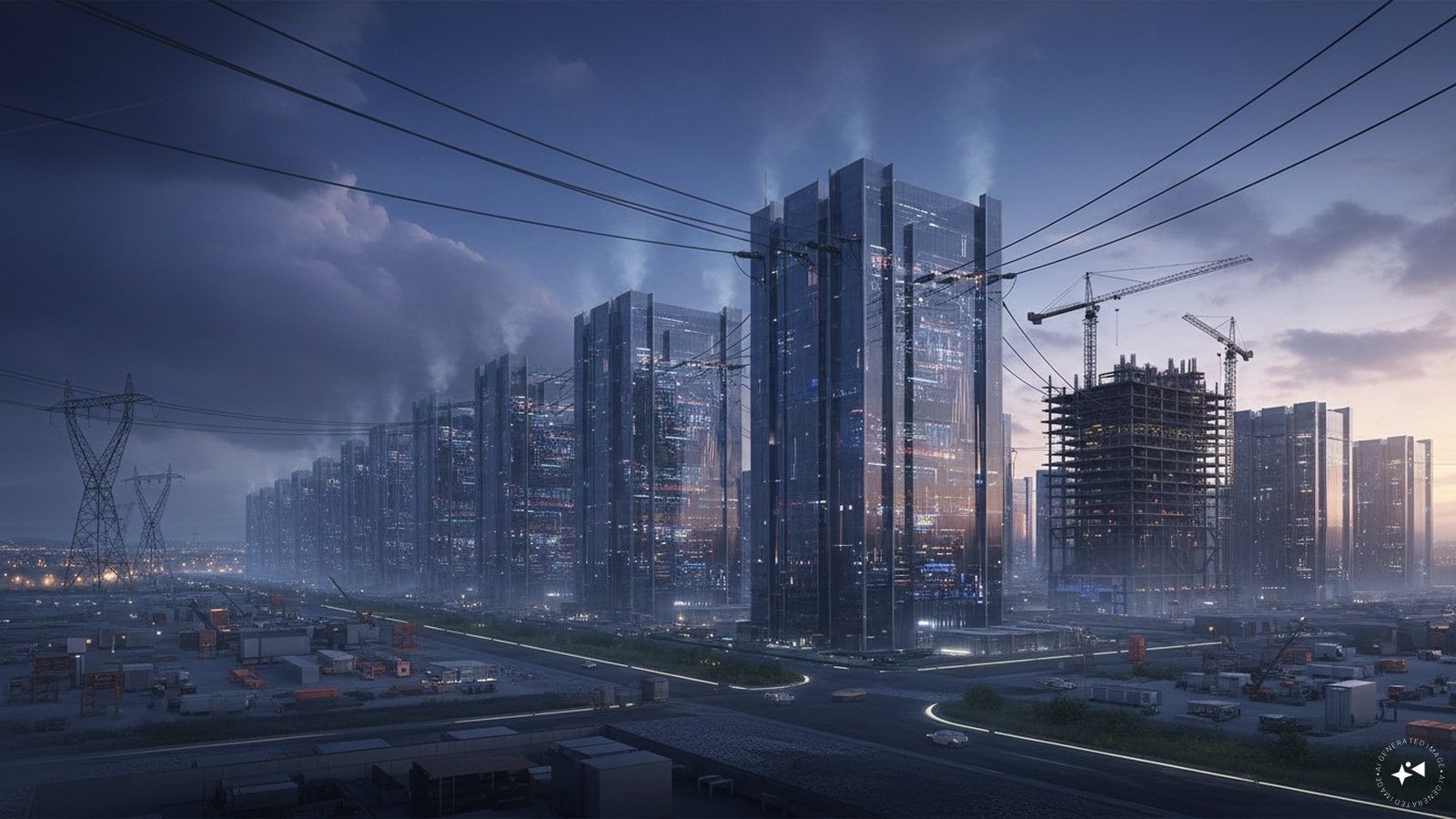
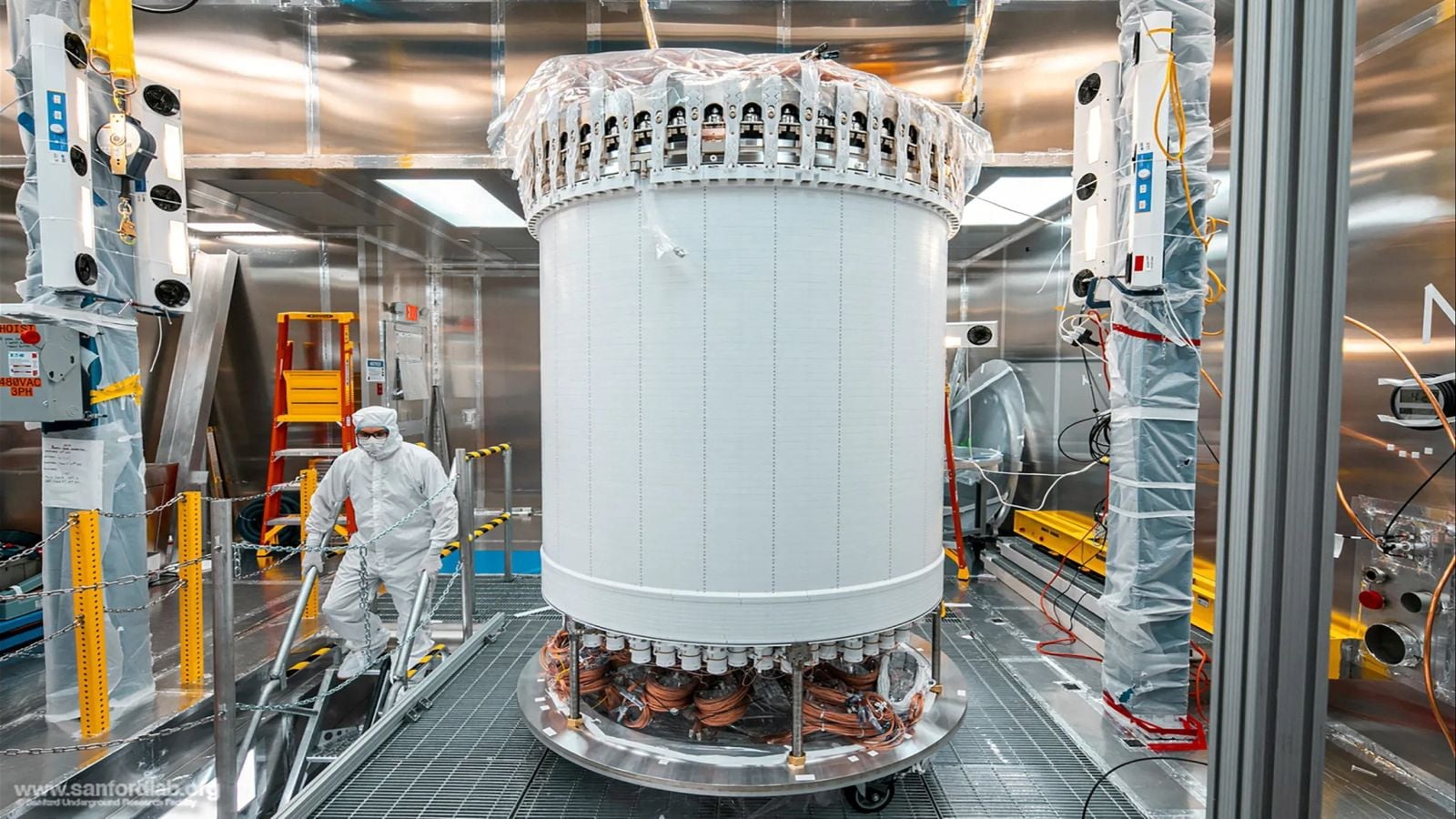
The global race for artificial intelligence supremacy isn't won in quiet research laboratories or on whiteboards. It is forged in massive, power-hungry industrial parks filled with millions of specialized chips. While software algorithms grab headlines, physical infrastructure dictates who actually wins. National data center projects are consolidating America's AI lead, but the physical reality of building these mega-facilities creates intense economic and political friction across the country.
If you look past the corporate press releases, you see a high-stakes scramble for electricity, land, and water. The United States currently hosts roughly 70% of the world's most compute-intensive AI models, a dominance driven almost entirely by heavy capital investments from tech giants. Alphabet, Amazon, Microsoft, and Meta are pouring hundreds of billions of dollars into specialized infrastructure. They aren't doing this for fun. They know that whoever controls the largest computing clusters controls the economic and geopolitical future.
The Scale of the Compute Arms Race
The fundamental unit of AI has shifted dramatically over the last few years. We used to talk about individual graphics processing units. Now, we talk about massive campus-scale clusters that span multiple buildings and require gigawatts of continuous power.
Consider the raw numbers shaping the market right now. U.S. spending on data center construction has tripled over a three-year window, yet occupancy rates remain near record highs. Analysts project that total U.S. power capacity dedicated to these facilities will jump from roughly 30 gigawatts to 90 gigawatts or more by 2030.
To put that in perspective, a single modern AI-focused hyperscale campus can consume as much electricity as 100,000 homes, while upcoming mega-projects will demand exponentially more. These aren't standard server warehouses hosting corporate email backups. They are high-density AI factories designed to turn raw electricity into valuable inference tokens at an unprecedented scale.
The Power Wall and Behind-The-Meter Solutions
You can't build an AI super-cluster without confronting the grid. The single biggest bottleneck for American tech expansion isn't a shortage of advanced silicon or software engineering talent. It is raw electricity.
Power generation in the United States is forecasted to grow at a fraction of the rate required by exploding data demands. Traditional utility grids simply cannot absorb multi-gigawatt loads overnight without causing severe strain or pushing up consumer electricity bills. In regions managed by major grid operators like PJM, data center demand has already triggered massive capacity price increases, sparking legitimate pushback from local residents and state regulators who are tired of footing the bill for grid upgrades.
This reality has forced a radical shift in strategy. Tech firms and energy developers are increasingly bypassing traditional public utility queues by opting for "behind-the-meter" power solutions. We are seeing massive private energy partnerships emerge, such as joint ventures aiming to couple sprawling data centers directly with dedicated power generation sources, including nuclear and natural gas plants.
Without these direct energy arrangements, the physical expansion required to keep American tech companies at the absolute frontier of model training and inference would grind to a halt.
The Local Backlash and Economic Trade-offs
National strategic advantage comes with heavy local friction. Walk into town hall meetings across rural Texas, Ohio, Nebraska, or New Mexico, and you will find an unlikely alliance of residents, environmental advocates, and local officials pushing back against incoming tech developments.
The complaints are concrete:
- Strained local water supplies used for cooling loop systems.
- Soaring utility bills for everyday homeowners.
- Industrial noise pollution and heavy construction traffic in quiet communities.
At the same time, local and state governments face a powerful counter-incentive. Data centers pump billions of dollars into local construction economies, create thousands of well-paying trade and operations jobs, and generate massive long-term tax revenues. State leaders are constantly trying to balance these windfalls against the risk of alienating voters who feel squeezed by rapid industrialization.
Organized labor has largely thrown its weight behind the expansion, viewing these massive projects as a generational employment engine for skilled construction workers and technical operators. Meanwhile, state legislators are rolling out specialized large-load tariffs and mandatory efficiency requirements to ensure that tech companies pay their fair share of infrastructure wear and tear.
What This Means for the Global Tech Landscape
The aggressive buildout of domestic compute infrastructure is ultimately a defensive and offensive maneuver in global competition. If the United States wants to retain its monopoly on foundational model development, it must secure the physical foundation underneath it.
Companies are adapting quickly to these supply constraints. They are shifting capital toward advanced liquid cooling technologies, optimizing software to require less inference overhead, and spreading regional footprints beyond primary legacy markets into secondary tech hubs.
If you are an investor, enterprise leader, or policy strategist navigating this environment, stop treating infrastructure as an afterthought. Evaluate your technology roadmap based on energy availability, proximity to robust fiber backbones, and local political viability. The winners of the next decade won't just have the best algorithms; they will own the power contracts and the physical footprint required to run them at scale.