The dust does not settle in the South Hebron Hills. It hangs. It coats the olive leaves in a pale, chalky shroud, choking the green life out of trees that have stood for generations. When the wind blows from the east, it brings the smell of dry earth and old stone, but lately, it brings something else: the heavy, metallic tang of fear.
For seven days, the world outside kept moving. Stocks rose and fell. Airports hummed with summer travelers. Coffee cups were filled and emptied in cities thousands of miles away, where the word "siege" is something you read about in a history book or watch through the blue light of a screen. But here, siege is not a concept. It is the sound of a rusted iron gate chained shut from the outside. It is the dry click of a rifle bolt echoing across a stony ravine. It is the agonizing calculation of how many drops of tepid water remain in the plastic tank on the roof.
Consider what happens when a community is quietly erased from the daily feeds.
Let us step inside a hypothetical stone courtyard in a hamlet like Khirbet al-Rakhim or Wadi al-Ayn—names that rarely make the evening broadcast, yet carry the weight of entire universes. Imagine Fatima. She is sixty-two, her hands permanently stained with the deep purple of wild za'atar and the dark earth of her garden. For a week, she has not walked down the dirt track to the main road. She has not bought fresh flour. She has not heard the laughter of her grandchildren echoing from the village school, because the school doors are bolted, and the road is watched.
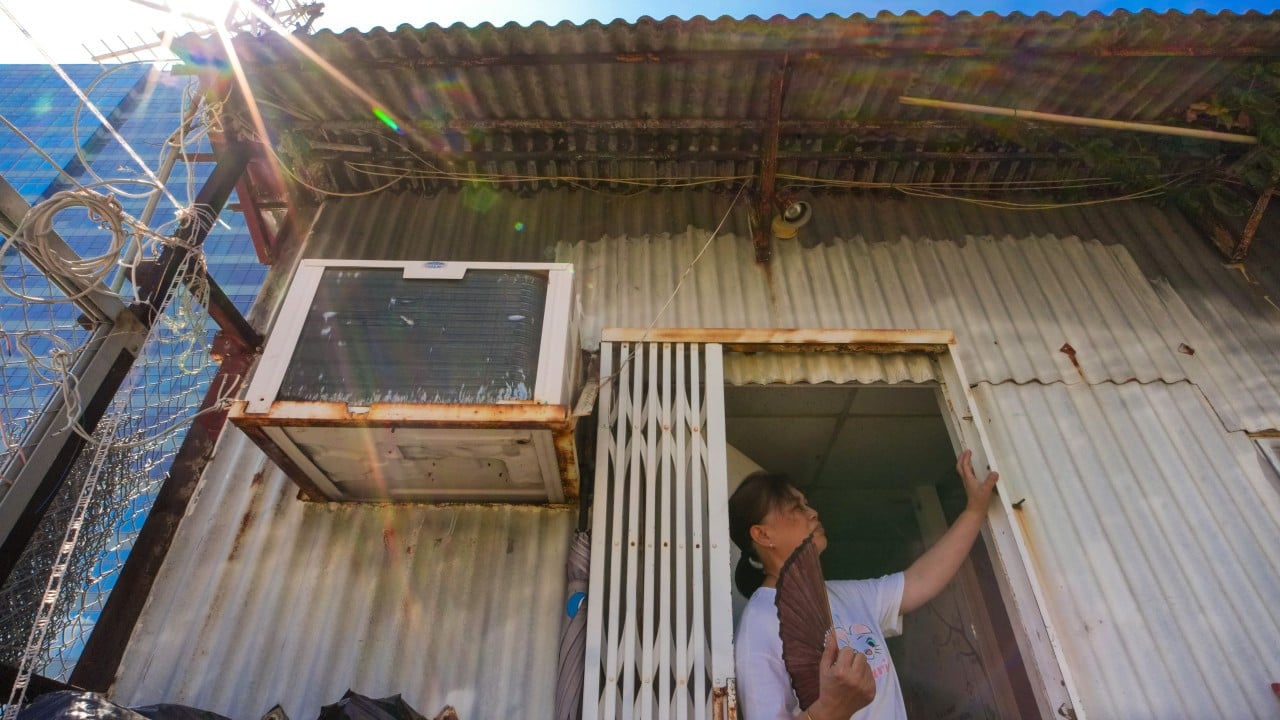
Outside those stone walls, the landscape shifts. It does not happen overnight with grand declarations. It happens through inches. A tent appears on the opposing ridge. Then a corrugated metal shack. Then a flock of sheep driven deliberately across newly planted barley, chewing the fragile shoots down to the bare dirt. The message is silent, efficient, and unmistakable. Leave.
This is the anatomy of modern displacement. It is rarely a single, cinematic explosion. More often, it is a slow tightening of the chest. It is a week of blocked wells, slashed water pipes, and men in tactical vests standing silently on the skyline as the sun dips below the horizon. The statistics will eventually record the dry metrics: X number of families affected, Y days of restriction, Z acres rendered inaccessible. But numbers do not capture the sound of a terrified child asking why the electricity has stopped, or the heavy silence of a grandfather who remembers when the hills were wide and open, unscarred by barbed wire and unspoken boundaries.
We talk about geopolitical conflict as if it were a chess board, clean and abstract, played by men in suits in distant capitals. But the board is made of flesh and bone.
Let us look closely at the mechanics of this pressure. When movement is choked off for a week, the invisible machinery of daily survival begins to grind to a halt. Insulin needs refrigeration. Newborns need formula. Schoolchildren need chalk and blackboards, not the sudden, sharp crack of a stun grenade splitting the morning air. The settlers who descend from the nearby unauthorized outpost do not need to break down doors to achieve their goal. The siege itself does the heavy lifting. Isolation breeds panic. Panic breeds exhaustion. And exhaustion, eventually, breeds surrender.
That is the quiet objective. Make staying harder than leaving.
I remember standing near a similar ridge years ago, watching the light catch the corrugated roofs of an isolated hamlet as the heat shimmered off the limestone. A local shepherd pointed to a dry stone wall built by his grandfather. "They want the stone," he told me simply. "They don't care about the people who laid it." That sentence has stayed with me through every diplomatic summit, every broken ceasefire agreement, and every dry news bulletin that reduces human catastrophe to a footnote on page four.
The human element is always the first casualty of prolonged conflict, long before the first shot is fired or the last home is demolished. We become inured to the rhythm of distress. A week of siege becomes two weeks. Two weeks become a permanent baseline of misery. The world adjusts its gaze elsewhere, finding newer tragedies to consume, leaving the families behind the hills to ration their water in the dark.
Yet, inside those besieged stone houses, something stubborn persists. It is not necessarily political ideology. Often, it is something much simpler and much more dangerous to those who wish them gone: stubborn, unyielding attachment to place. Fatima sweeps her dirt floor even when there is no bread to bake. She waters her single potted geranium with the dregs of her tea cup. She tells stories to her youngest granddaughter about the days when the hills belonged only to the shepherds and the stars.
The sun sinks lower behind the ridge, casting long, dark shadows across the valley floor. The generator hums, sputters, and dies. Inside the courtyard, the darkness settles like a heavy wool blanket, but the lantern stays lit.