Brake lights bleed crimson through the November drizzle on the interstate. It is 5:42 PM. Two miles ahead, a jackknifed semi has turned four lanes of asphalt into a parking lot of idling steel and quiet exhaustion.
You tap the center screen. Your hands rest on a steering wheel that feels less like a mechanical lever and more like a promissory note from a company that wants you to trust its software with your pulse. Somewhere in the back of your mind, a childhood memory flickers—a silver bubble hovering above a crowded boulevard, blades humming softly, traffic parting beneath a machine that didn't care about bottlenecks. If you found value in this piece, you might want to check out: this related article.
Stuck.
That is the word that defines daily commuting for millions of people. Stuck behind taillights. Stuck in zoning codes written for horses and Model Ts. Stuck waiting for a billionaire or an aerospace engineer to hand us a shortcut out of gridlock. For another angle on this event, refer to the latest update from Wired.
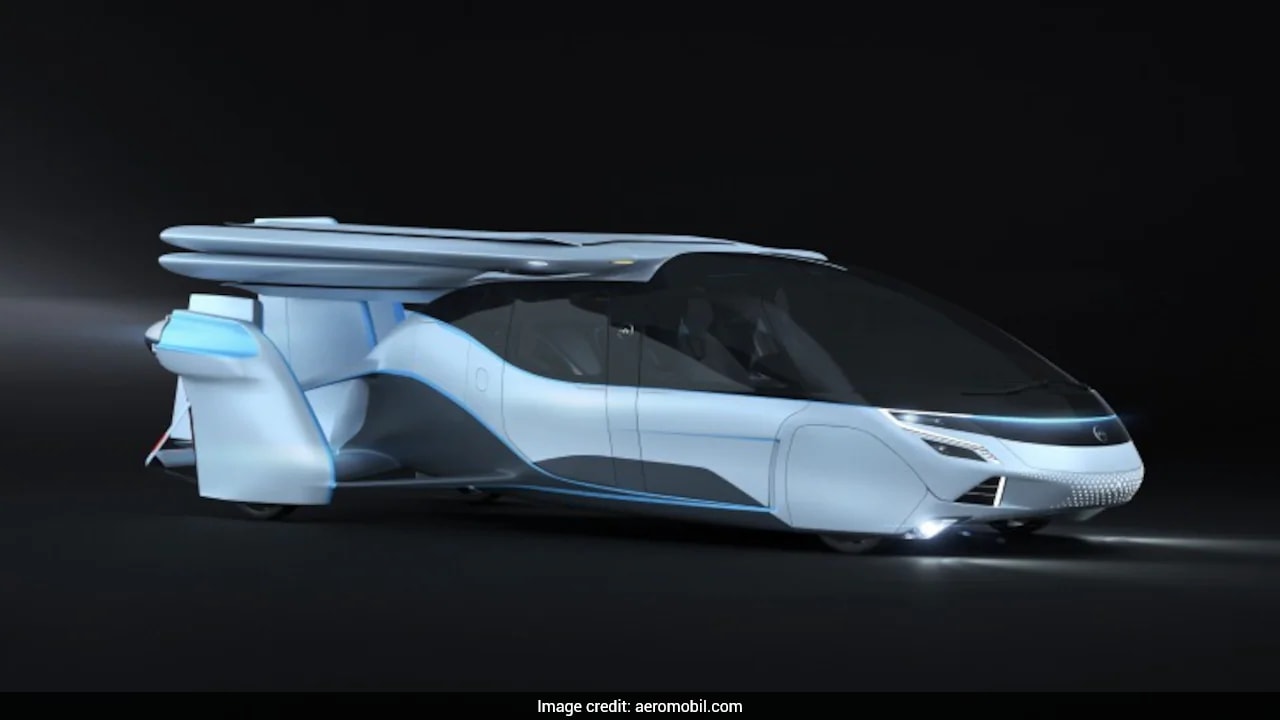
When people hear about a Tesla flying car, they rarely hear the engineering caveats first. They hear permission to hope. They picture a sleek electric coupe sprouting ducted fans or tilt-rotors at the press of a button, rising smoothly above the gridlock like a scene from a sci-fi fever dream.
Tesla has not built a consumer flying car. What exists on the road today is a lineup of ground-bound electric vehicles—models focused on battery range, autopilot driver assistance, torque, and software updates—while actual flying cars and electric vertical takeoff and landing aircraft remain separate machines built by other companies under strict aviation rules.
To understand why that gap matters—and what you can actually buy right now if you want off the ground—we have to stop treating the sky like an empty highway and start looking at what flying really demands.
The Myth of the Skyward Shortcut
Traffic feels personal when you are late for a recital or watching the clock tick past a hospital visiting hour. Asphalt feels like a trap. Looking up feels like freedom.
Consider a hypothetical scenario. Picture Maya, a structural engineer in Seattle who spends ninety minutes each way crossing water and bridge approaches just to reach a site office thirty miles south. On paper, a straight line over the sound takes less than twenty minutes. In reality, weather rolls in low over the evergreens, fog thickens along the shoreline, and every mile of open air comes with weight penalties that cars never face.
I have stood on small regional airstrips on damp mornings where the air smells like jet fuel, wet grass, and cold aluminum. A light aircraft is not a sedan with wings bolted to the doors. Every ounce matters. Batteries are heavy. Wings catch gusts. A fender bender on an interstate dents a bumper and ruins a Tuesday; an engine failure or sudden wind shear at three hundred feet turns physics into an immediate, unforgiving judge.
Metaphorically speaking, a road car is built like a tank that glides on rubber, while an aircraft is built like a kite that refuses to break. Trying to force both personalities into one machine usually leaves you with something that drives poorly on pavement and flies with compromises in the sky.
That tension is why Elon Musk and Tesla have historically stayed focused on ground vehicles, batteries, autonomous driving software, and rockets rather than a mass-market flying car. SpaceX already builds spacecraft that fly vertically and land on booster towers, yet even there, orbital flight and suburban commuting live on different planets of cost, noise, regulation, and safety margin.
What You Can Actually Buy Today
If you want to buy something real right now instead of waiting on a Tesla flying car that does not exist, your options split into two distinct worlds: roadable aircraft that try to bridge both domains, and electric vertical takeoff and landing craft—often called eVTOLs—that skip the road altogether.
Neither category is a bargain basement toy. Both come with price tags that rival luxury homes or supercars, plus training requirements that go far beyond a standard driver's license.
Roadable Aircraft That Drive and Fly
A true flying car—legally a roadable aircraft—has to satisfy two rulebooks written by people who rarely talk to each other. On the street, it needs turn signals, tires, crashworthiness or street legality, and insurance. In the air, it needs airworthiness certification, weight-and-balance discipline, flight controls, and a pilot who knows airspace rules.
Machines like the Samson Switchblade or Terrafugia-style concepts have spent years chasing that dual identity. A folding-wing vehicle or a three-wheeled drive-and-fly craft tries to solve the "last-mile problem" once you land at a small airport. You touch down, fold the wings or retract flight surfaces, drive onto local roads, and head to your destination without renting a car.
Sounds clever. In practice, every compromise shows up somewhere.
Wings take up space and add weight. Folding mechanisms add mechanical complexity and maintenance hours. Fuel burn and range shift when you carry road gear into the air. Even when a vehicle can legally roll down a suburban street, you still need a runway or approved takeoff area to fly, and you still cannot casually pop out of your driveway into crowded city airspace.
Electric VTOLs and Light Aircraft
While roadable cars wrestle with dual-mode compromises, another wave of aviation has focused on vertical lift—taking off and landing like a helicopter, often using electric or hybrid-electric propulsion.
Names like Joby Aviation, Archer, and Beta Technologies dominate headlines around urban air mobility and regional electric flight. Some aircraft are aimed initially at commercial air-taxi networks and defense or cargo operations rather than individual consumers walking into a showroom and buying one off the rack like a Model 3. Meanwhile, established light piston airplanes—such as single-engine planes from Cessna or Piper—remain the most accessible way for private buyers to own personal aircraft today, complete with decades of maintenance infrastructure and known operating costs.
Even when electric aircraft reach wider commercial or private availability, ownership looks very different from buying an electric sedan.
Battery energy density still limits range and payload compared with liquid fuel, especially when hovering requires huge bursts of power. Noise matters too. Anyone who has stood beneath a low-flying helicopter knows how quickly a quiet neighborhood turns hostile when rotor wash rattles windowpanes.
The Invisible Stakes Above Our Heads
It is easy to treat flying cars as a gadget story—a shiny headline to argue about over coffee.
It isn't.
If thousands of personal flying machines ever entered low-altitude airspace over populated cities, the real bottleneck wouldn't be horsepower or battery chemistry. It would be air traffic control, emergency landing zones, weather minimums, insurance liability, and public trust.
Imagine a hypothetical afternoon in Chicago or Tel Aviv or Los Angeles. A sudden coastal squall pushes visibility down fast. A dozen low-altitude craft try to divert toward small fields at the same moment. On a crowded highway, cars stop and wait in line. In the sky, gravity does not grant you a shoulder to pull onto.
I have felt my stomach drop in turbulence over choppy hills when a calm flight turned bumpy in seconds. Nothing was broken, the pilot was calm, and the wing held steady—yet the visceral reminder stayed with me: the atmosphere is a fluid ocean, not a paved slab. Treating it like an open lane ignores the weather, the wind, and the human nerves involved.
There is also a quieter equity question hiding behind the glitz. Who gets the sky first? Wealthy commuters who can afford six- or seven-figure machines and private pilot training, while everyone else stays stuck in traffic below? If sky travel only serves a thin slice of travelers, it reshapes cities without fixing daily transit for the people who keep them running.
Why Waiting on Tesla Misses the Point
Waiting for Tesla to unveil a flying car is a little like waiting for your phone to bake sourdough bread because both involve heat and timers. Overlap exists on the surface, yet the core engineering and economics pull in different directions.
Tesla's strength has been scaling manufacturing, battery packs, power electronics, and neural-network driving software across hundreds of thousands of ground vehicles. Flying brings certification regimes that move cautiously for good reason, stricter weight limits, higher stakes per failure, and infrastructure challenges that go far beyond a Supercharger stall in a strip-mall parking lot.
And honestly, admitting that uncertainty feels healthier than pretending a shortcut is around the corner. Aviation has always rewarded patience, redundancy, and respect for limits. When people rush air travel without mature rules and proven safety margins, trust breaks fast—and once public trust breaks in aviation, recovery takes years.
Meanwhile, real progress is happening in less flashy corners. Better lithium and structural battery designs help ground EVs and electric aircraft alike. Autonomous navigation and flight-control computers reduce pilot workload. Smarter transit planning, rail, buses, micromobility, and regional air links are all pieces of moving people without burning half their waking lives in bumper-to-bumper standstill.
You do not need a flying car to escape feeling trapped in traffic. You need tools that match the real world—the rain on the windshield, the price of a kilowatt-hour or a gallon of avgas, the length of the runway, and the laws of physics that never take a day off.
Rain still beads on the glass outside. Taillights still glow red down the line ahead.
Somewhere above the clouds, a commercial airliner hums steadily along a flight path mapped decades ago, guided by radar, rules, and seasoned hands. Down here on the wet asphalt, no silver car is lifting off between the lanes—just real machines, real limits, and the quiet, stubborn work of building things that actually fly when they leave the ground.