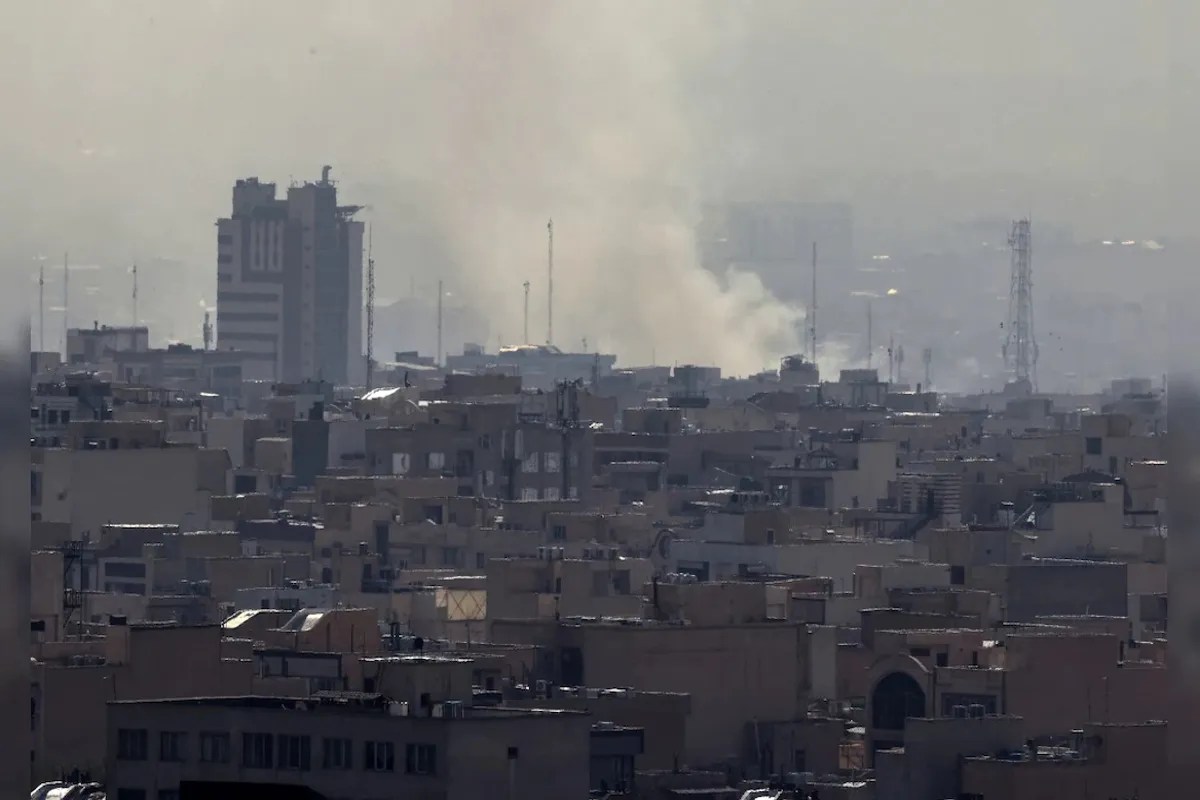
The Middle East just changed forever. If you woke up to reports of explosions over Tehran, you're looking at the start of what many are already calling the Second Iran War. This wasn't just another shadow-war skirmish or a "tit-for-tat" drone swap. Israel, backed by a massive US-coordinated push dubbed Operation Epic Fury, just hit the "red button."
They didn't just target missile silos. They went for the head. If you liked this article, you should read: this related article.
On February 28, 2026, a series of lightning strikes tore through the heart of the Islamic Republic. We’re talking about a multi-wave assault that didn’t just rattle windows in the capital—it decapitated the regime's leadership. The big takeaway you won't find in the dry headlines? The Supreme Leader, Ayatollah Ali Khamenei, is reportedly dead. Along with him, 40 of the country's most senior military commanders were wiped out in a single minute of high-precision strikes.
The gamble behind the preventive strike
Israel’s logic is brutal and simple. They’ve spent the last year watching Iran inch toward a nuclear breakout while stockpiling a terrifying number of surface-to-surface missiles. According to Brigadier General Effie Defrin, the Israeli military claims to have destroyed roughly half of that stockpile in this opening salvo. They didn't want to wait for the 1,500 additional missiles Iran was projected to build in the coming months. For another perspective on this event, check out the recent update from NPR.
It's a high-stakes play. By striking "preventively," Israel and the Trump administration are betting that a leaderless Iran will crumble from within rather than ignite a global conflagration. But betting on "regime change" is a historically dangerous game.
Right now, the Iranian streets are a chaotic mix of mourning and, in some corners, quiet celebration. An interim leadership council led by President Pezeshkian has already stepped in, but the real power—the Islamic Revolutionary Guard Corps (IRGC)—is currently a wounded animal with its back against the wall.
What was actually hit
This wasn't a localized event. The scale is staggering. Strikes hit 24 out of Iran's 31 provinces. Here’s the breakdown of the primary targets that were neutralized:
- Tehran: The Iranian Broadcasting Authority and central command centers.
- Kermanshah: The "Imam Ali" missile base, a core hub for Iran's long-range capabilities.
- Isfahan: Further strikes on the nuclear complex, which has been a thorn in the West's side for decades.
- Tabriz and Bandar Abbas: Airfields and naval assets, including at least one warship sunk by US Central Command.
The humanitarian cost is already surfacing. Reports indicate a strike on an elementary school in Minab killed 148 people. While the Israeli military says it isn't aware of such a strike, these are the "collateral" tragedies that often turn a military victory into a PR disaster and a recruiting tool for the next generation of hardliners.
Iran's retaliation is hitting everyone
If you think this is contained to Iran and Israel, look at the flight boards in Dubai and Doha. The region’s aviation hubs are effectively shuttered. Iran didn't just shoot back at Tel Aviv; they lashed out at every US ally in the vicinity.
Beit Shemesh, a city west of Jerusalem, took a direct hit from an Iranian ballistic missile, killing at least nine people. But the chaos spread much further. Drones hit the Port of Duqm in Oman. Explosions rocked the skies over Qatar. A fire broke out at the Jebel Ali port in Dubai after a drone interception.
Iran’s message is clear: "If we go down, we’re taking the global economy with us." By targeting the Strait of Hormuz and major Gulf ports, they’re aiming for the jugular of the world’s oil supply.
Why the nuclear question isn't settled
Despite the heavy bombing, the International Atomic Energy Agency (IAEA) is sounding the alarm. Director General Rafael Grossi warned that while the buildings might be rubble, the "expertise" and "material" aren't gone. Iran had over 400 kilograms of uranium enriched to 60% before this started.
The fear now isn't just about a state-sponsored bomb. It’s about the "loose nuke" scenario. If the central government in Tehran collapses, who secures the highly enriched uranium? We're looking at a potential repeat of the Soviet Union's collapse, but in a much more volatile landscape.
Reality check for the coming days
Don't expect this to blow over by next week. The US has repositioned aircraft carriers, and Israel is mobilizing nearly 100,000 reservists. This is a full-scale regional war.
The diplomatic world is split down the middle. Russia has called it "unprovoked aggression," while the US and Israel maintain it was a necessary surgery to prevent a nuclear cancer. For the average person, the immediate impact is going to be felt at the gas pump and in the global supply chain.
If you're tracking this, keep your eye on the "interim leadership" in Tehran. If the IRGC manages to stabilize and launch a coordinated seventh or eighth wave of strikes, the "preventive" nature of this mission will be remembered as the spark that lit the whole room on fire.
Next steps for you
- Check travel advisories: If you have any travel planned through Middle Eastern hubs like Dubai, Doha, or Istanbul, cancel or reroute now.
- Monitor energy markets: Expect a sharp spike in Brent Crude prices; if you're in a business sensitive to shipping costs, start looking at your fuel surcharges.
- Verify your news sources: In the next 48 hours, "deepfake" videos of Iranian leaders and false reports of "nuclear detonations" will flood social media. Stick to primary reporting from the ground.