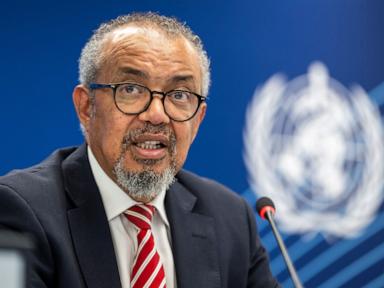
Ethiopia’s public health system is collapsing under the combined weight of ongoing regional warfare, targeted attacks on medical facilities, and severe international funding shortfalls. According to urgent warnings from World Health Organization Director-General Tedros Adhanom Ghebreyesus, persistent violence across regions like Amhara and Oromia has killed scores of civilians, destroyed vital clinics, and cut off millions from basic medical care. What looks on the surface like collateral damage from localized insurgencies is actually a systemic breakdown of primary healthcare infrastructure across Africa’s second-most populous nation, leaving preventable diseases to spread unchecked while hospitals run out of basic antibiotics and surgical supplies.
Most international coverage treats these warnings as routine humanitarian dispatches. A headline flashes across a wire service, a UN official expresses grave concern, and the news cycle moves on within hours. That surface-level reporting misses the structural reality on the ground. You cannot understand why hospitals are failing in Bahir Dar or Nekemte simply by counting airstrikes or drone attacks, though those strikes are devastating enough. The true story lies in how modern asymmetric warfare intersects with a fragile, underfunded public health model that was already stretched to its absolute limit long before the current fighting escalated.
The Anatomy of a Targeted Breakdown
War zones always strain hospitals. In Ethiopia, however, medical infrastructure has repeatedly moved from the periphery of the fighting straight into the crosshairs.
Over the past several years—from the brutal two-year conflict in Tigray that formally ended with the Pretoria agreement in late 2022, to the subsequent armed uprisings by Fano militias in Amhara and ongoing clashes with the Oromo Liberation Army in Oromia—health facilities have suffered systematic looting, occupation, and direct bombardment. Ambulances have been commandeered by armed groups or destroyed on rural roads. Health workers face abduction, extortion, and lethal violence simply for treating wounded patients from the wrong side of a shifting frontline.
When a rural clinic is ransacked in a remote woreda, the damage ripples outward for years. Consider a hypothetical example of a district hospital serving 150,000 people in rural Amhara. If fighting destroys its sole solar-powered cold-chain refrigerator and forces its two surgical nurses to flee to Addis Ababa, the immediate casualty count might be zero. Yet over the next twelve months, dozens of women will die from obstructed labor, hundreds of children will miss routine measles and polio immunizations, and routine traumatic injuries will turn fatal from untreated sepsis.
Indirect mortality almost always eclipses direct combat deaths in prolonged internal conflicts. By the time international monitors tally the bodies from a drone strike on a town square, three times as many civilians have quietly died in dark, unstaffed clinics miles away because there was no insulin, no blood bank, and no diesel to run the backup generator.
Why the Health Extension Program Is Failing
For nearly two decades, global health experts held up Ethiopia as a model for low-income nations. Through its ambitious Health Extension Program, launched in 2003, the government deployed tens of thousands of salaried community health workers into rural villages. These workers dramatically slashed maternal mortality, expanded vaccination coverage, and brought basic sanitation and malaria prevention to communities that had never seen a doctor.
That architecture depended entirely on two things: predictable supply chains radiating outward from Addis Ababa and basic physical security for local staff. Both pillars have fractured.
Supply Chain Paralysis
Pharmaceuticals and medical consumables in Ethiopia rely heavily on centralized procurement through the Ethiopian Pharmaceuticals Supply Service. Moving boxes of intravenous fluids, surgical gloves, and antiretrovirals from central warehouses to regional hubs requires secure highway corridors.
In Amhara and Oromia, major transport arteries are routinely severed by roadblocks, ambushes, and military curfews. Commercial truckers refuse to drive into active conflict zones without exorbitant hazard pay that regional health bureaus cannot afford. Even when humanitarian agencies secure temporary safe-passage guarantees, bureaucratic delays and checkpoint inspections frequently stall shipments for weeks. Temperature-sensitive vaccines spoil in the back of idling trucks while hospital pharmacies sit empty.
The Exodus of Medical Talent
Buildings and supplies mean nothing without people. Ethiopia already suffered from one of the lowest doctor-to-patient ratios in the world before 2020. Today, the country is experiencing an acute internal brain drain.
Physicians, anesthetists, and midwives working in regional public hospitals have gone months without regular salaries as regional budgets get diverted toward security operations or disrupted by administrative paralysis. Combined with the constant threat of violence—including documented incidents where soldiers or militants entered hospital wards to arrest or execute patients—the working conditions have become untenable.
Experienced clinicians are abandoning rural posts in droves. Some crowd into the already saturated private sector in Addis Ababa. Others leave the country entirely, taking jobs in the Gulf states, Europe, or North America. Once a regional referral hospital loses its senior specialists, rebuilding that institutional capacity takes a decade, even if peace arrives tomorrow.
The Funding Squeeze Nobody Wants to Admit
While bullets and blockades do the immediate physical damage, a quieter financial crisis is starving the rest of the system. Ethiopia’s health sector remains heavily dependent on external donor financing—from bilateral agencies like USAID to multilateral mechanisms like the Global Fund to Fight AIDS, Tuberculosis and Malaria.
Donor fatigue is real, and it is lethal. With global humanitarian budgets stretched thin by protracted wars in Ukraine, Gaza, and Sudan, international pledges for the Horn of Africa consistently fall short of assessed needs. The United Nations Office for the Coordination of Humanitarian Affairs has repeatedly warned that its humanitarian response plans for Ethiopia are severely underfunded, leaving massive gaps in health and nutrition clusters.
At the same time, macroeconomic turmoil inside Ethiopia has eroded the real value of domestic health spending. High inflation, foreign currency shortages, and the restructuring of sovereign debt have squeezed the federal treasury. When the government devalued the birr as part of broader economic reforms backed by the International Monetary Fund, the local-currency cost of imported medical equipment and raw pharmaceutical ingredients surged overnight. Public hospitals operating on fixed annual budgets suddenly found their purchasing power cut nearly in half.
This creates a grim triage at the policy level. Health officials are forced to choose between funding basic primary care in peaceful regions or mounting emergency epidemic responses in war-torn provinces. They rarely have enough cash to do both.
Outbreaks Thriving in the Vacuum
Infectious diseases do not respect ceasefires or regional borders. When vaccination campaigns halt and water treatment plants lose power, pathogens exploit the opening immediately.
Ethiopia has battled overlapping outbreaks of cholera, measles, and malaria across multiple regions simultaneously. Malaria cases in particular have surged to alarming levels over the past two years, driven by a combination of climate variability, the spread of invasive mosquito species like Anopheles stephensi in urban areas, and the collapse of vector-control programs in conflict zones.
Normally, a localized cholera outbreak can be contained within weeks through rapid deployment of oral rehydration salts, clean water trucking, and targeted vaccination drives. In areas where health posts have been burned down and aid workers cannot travel safely, cholera spreads along river systems and trade routes unchecked. By the time patients reach a functioning district hospital, many are already in hypovolemic shock.
| Disease Threat | Primary Driver in Conflict Zones | System Failure Point |
|---|---|---|
| Malaria | Halted bed-net distribution and indoor spraying | Lack of rapid diagnostic tests and artemisinin therapies |
| Cholera | Destroyed water infrastructure and displacement camps | Absence of rural oral rehydration points and clean water |
| Measles | Suspended routine childhood immunization drives | Broken cold-chain logistics and displaced populations |
| Maternal Mortality | Blocked roads and nighttime military curfews | Non-functioning emergency obstetric and surgical units |
The danger extends well beyond Ethiopia’s borders. Millions of displaced people are moving internally, while tens of thousands cross into neighboring Kenya, Sudan, and Djibouti. An uncontained epidemic in the Horn of Africa rapidly becomes a regional health security crisis.
The Accountability Vacuum and Complicity
Why does the destruction of hospitals continue with near-total impunity? Under international humanitarian law—specifically the Geneva Conventions—medical facilities, ambulances, and health personnel enjoy explicit protected status. Attacking them is a war crime, unless they are actively being used to commit hostile acts, and even then, strict proportionality rules apply.
In practice, accountability in Ethiopia has been virtually nonexistent. Both federal security forces and anti-government insurgents routinely accuse each other of hiding fighters inside clinics or using ambulances to transport weapons. Those accusations, whether fabricated or occasionally grounded in isolated abuses, are then used as blanket justifications to treat every medical facility as a legitimate military target.
International diplomacy has failed to impose meaningful consequences. Western governments, eager to stabilize the broader Horn of Africa and keep economic reform talks on track, have largely muted their public criticism compared to the diplomatic pressure applied during the height of the Tigray war. Regional bodies like the African Union, headquartered right in Addis Ababa, have shown little appetite for confronting the host government over internal security operations.
Without independent, on-the-ground investigations and real diplomatic or financial penalties for perpetrators, calls from the World Health Organization to "protect health care" remain moral appeals shouted into a void. Armed actors on all sides have learned a simple lesson: destroying a clinic carries zero political cost, while depriving an adversary’s civilian population of medical care offers a ruthless strategic advantage.
What Actually Needs to Happen on the Ground
Fixing a collapsing health system in the middle of an active insurgency requires abandoning comfortable bureaucratic routines. Standard development models assume a functioning state and peaceful access. Neither exists across vast stretches of Ethiopia right now.
First, international donors and UN agencies must decouple humanitarian health financing from broader political negotiations. Waiting for comprehensive peace agreements before funding hospital reconstruction guarantees tens of thousands of preventable deaths. Flexible, rapid-response funding needs to flow directly to local non-governmental organizations and community-based health networks that already operate inside contested territories and know how to negotiate access with local commanders.
Second, health delivery has to decentralize. When central supply chains fail, mobile clinics and cross-line humanitarian convoys become the only viable lifeline. Aid organizations must invest heavily in portable solar power, ruggedized diagnostic tools, and pre-positioned buffer stocks held at the community level rather than in vulnerable regional warehouses.
Third, the protection of medical neutrality requires concrete verification, not just press releases. Donor nations funding Ethiopia’s health sector—including those supporting its broader economic stabilization—must tie specific tranches of assistance to verifiable benchmarks on humanitarian access and the cessation of strikes on civilian infrastructure. Money remains the one lever that commands immediate attention in every ministry and military headquarters.
None of these measures will quickly restore what took twenty years of painstaking public health work to build. A clinic burned to its foundation cannot be replaced by a mobile medical team, and a surgeon who has fled to Europe will not return for a modest hazard stipend. Until the guns fall silent across Amhara, Oromia, and neighboring flashpoints, Ethiopia’s health workers will continue fighting an impossible battle—trying to save lives inside hospitals that the world has largely left to burn.