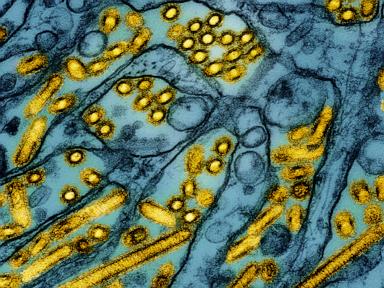
When a Washington state resident dies from bird flu following exposure to infected cattle, the public sees a terrifying isolated headline. Yet the reality inside America’s dairy barns tells a much deeper story of regulatory blind spots, economic pressure, and biological adaptation. The virus responsible, Highly Pathogenic Avian Influenza (HPAI) H5N1, did not suddenly learn how to infect mammals overnight. It spent decades mutating across global poultry populations before jumping into American dairy herds, creating an unprecedented occupational hazard for farmworkers who operate largely outside the traditional public health safety net.
For years, virologists warned that influenza A viruses carry an inherent, unpredictable capacity to cross species barriers. Birds are the natural reservoir. Cattle were never supposed to be part of this equation.
How a Bird Virus Took Root in Dairy Herds
To understand how a person in Washington state contracts a fatal avian virus from a cow, you have to look at the mechanics of viral receptors. Influenza viruses enter host cells by binding to specific sugar molecules on the cell surface known as sialic acids. Historically, avian influenza viruses preferred alpha-2,3 sialic acid receptors, which are abundant in the respiratory and intestinal tracts of birds, while human influenza viruses preferred alpha-2,6 receptors found in the human upper respiratory tract.
Dairy cattle threw a wrench into that neat biological rulebook. Researchers discovered that the mammary glands of dairy cows contain a high concentration of both alpha-2,3 and alpha-2,6 receptors. This biological quirk effectively turned the cow udder into a viral mixing vessel.
When H5N1 entered cattle herds—likely through wild migratory birds contaminating feed or water supplies—it found an ideal environment to replicate. Infected cows shed astronomical quantities of the virus in their raw milk. Unlike poultry, where H5N1 causes rapid, catastrophic die-offs that immediately alert farmers and regulators, dairy cattle rarely die from the infection. They get sick, their milk thickens and drops in volume, and then most recover.
That low mortality rate in cattle is precisely what allowed the outbreak to smolder undetected across state lines. You cannot easily hide ten thousand dead chickens. You can, however, miss a mild drop in milk production across a massive industrial herd, especially when reporting an outbreak threatens a farm’s financial survival.
The Invisible Frontline in the Milking Parlor
The fatality in Washington exposes the brutal physical reality of modern dairy farming. Milking parlors are loud, wet, high-speed environments. Workers stand in sunken pits at eye level with the udders of hundreds of cows per shift, attaching milking machines, cleaning teats, and managing hoses.
Aerosolized droplets and raw milk splashes are unavoidable.
When a worker is exposed to infected cattle in this setting, the virus does not need to be inhaled deep into the lungs to cause trouble. Direct contact with the mucous membranes of the eyes, nose, or mouth is enough. Conjunctivitis—severe eye redness and inflammation—emerged early in the cattle outbreak as a primary symptom among infected dairy workers. Because the eyes drain directly into the nasal passages via the nasolacrimal duct, an ocular infection can easily progress into a systemic or severe respiratory illness, particularly if the viral load is high or the individual has underlying vulnerabilities.
Why Farmworkers Avoid the Clinic
Public health officials routinely urge symptomatic farmworkers to get tested and seek antiviral treatments like oseltamivir (Tamiflu). On paper, the protocol is straightforward. On the ground, it routinely fails.
Consider a hypothetical example of a typical dairy milker in the Pacific Northwest. This worker is likely an immigrant, perhaps undocumented, earning an hourly wage with no paid sick leave and no employer-sponsored health insurance. If they develop a fever and red eyes, going to a state health clinic triggers immediate fears. Will they lose their job if they test positive and force a quarantine on the farm? Will federal immigration authorities get involved? Who pays the rent if they miss two weeks of shifts?
Faced with immediate financial ruin versus a seemingly mild viral illness, most workers take over-the-counter pain relievers and go back to the milking parlor. By the time severe respiratory distress forces them into an emergency room, the window for effective antiviral intervention has closed. Antivirals work best within 48 hours of symptom onset. Once the virus triggers a massive immune overreaction—known as a cytokine storm—and causes acute respiratory distress syndrome (ARDS), modern medicine can only offer supportive care like mechanical ventilation.
Regulatory Friction and the Patchwork Surveillance Problem
The federal response to H5N1 in cattle has been defined by friction between agricultural interests and public health mandates. The United States Department of Agriculture (USDA) is tasked with protecting the food supply and supporting American farmers, while the Centers for Disease Control and Prevention (CDC) is focused on preventing human pandemics. Those two missions frequently collide.
When the virus first surfaced in dairy cattle in early 2024, testing was largely voluntary. State agriculture departments, protective of their local dairy economies, sometimes resisted federal epidemiologists entering farms to trace transmission chains. Even after the USDA mandated testing for lactating dairy cows moving across state lines, massive gaps remained:
- Non-lactating cattle and beef herds were largely excluded from mandatory testing protocols, leaving huge blind spots in national tracking.
- Bulk tank milk testing, which screens pooled milk from farms to detect viral RNA without testing individual cows, took months to roll out nationally due to industry pushback and logistical disputes.
- Personal Protective Equipment (PPE) distribution failed to account for working conditions, as standard N95 masks and plastic face shields quickly fog up and soak through in humid milking parlors.
Washington state has historically maintained one of the more proactive public health infrastructures in the country, actively monitoring agricultural workers and offering testing. Yet even an aggressive state-level response cannot compensate for a national system where viral surveillance relies heavily on the cooperation of private businesses facing catastrophic economic losses if an outbreak is confirmed.
What Pasteurization Protects and What It Misses
Whenever a human death from bird flu makes the news, consumers immediately worry about the grocery store. The science on commercial milk is clear: pasteurization works. Standard high-temperature, short-time pasteurization completely inactivates the H5N1 virus, rendering commercial dairy products safe to consume.
Raw milk is a completely different story. Consuming unpasteurized milk or raw milk cheeses from infected herds introduces live, concentrated virus directly into the human body. Public health agencies have repeatedly warned against raw milk consumption during this outbreak, yet sales of raw dairy products have paradoxically spiked in several states, driven by wellness trends and distrust of federal health guidance.
Beyond the dinner table, the broader ecological spillover continues unchecked. H5N1 has decimated wild bird populations, killed tens of thousands of marine mammals along the coasts of South America, and repeatedly infected domestic cats on dairy farms—often fatally, after the cats drank raw milk from sick cows. Every time the virus infects a mammal, it undergoes millions of replication cycles, rolling the genetic dice.
The Genetic Gamble of Sustained Transmission
Virolgists track specific mutations in the H5N1 genome to gauge how close the virus is to sparking a human-to-human pandemic. Two major hurdles stand between the current strain and sustained human spread:
- Receptor binding: The virus must shift its preference from bird-like alpha-2,3 receptors to human-like alpha-2,6 receptors in the upper airway so it can spread easily through coughing and sneezing.
- Polymerase adaptation: Avian viruses thrive at the higher body temperature of birds (around 40 to 42 degrees Celsius), whereas the human upper respiratory tract is cooler (around 33 degrees Celsius). Mutations like PB2 E627K allow the virus to replicate efficiently at lower human temperatures.
Scientists have already detected the PB2 E627K mutation in samples taken from infected mammals and isolated human cases. So far, the virus has not assembled the full suite of genetic changes required for efficient airborne transmission between people. Every human infection—and especially a severe, fatal infection like the one in Washington—gives the virus a prolonged opportunity to adapt inside a human host.
Rebuilding Biosecurity Before the Next Spillover
Treating the Washington fatality as a tragic anomaly misses the structural warning signs flashing across the agricultural sector. Preventing the next human death requires abandoning the fiction that animal health and human health operate in separate spheres.
True biosecurity starts with aligning financial incentives. Dairy farmers need guaranteed federal compensation for lost milk production and herd quarantines so they report sick animals immediately rather than hiding them. Farmworkers need anonymous, penalty-free access to medical care, paid sick leave during infectious outbreaks, and PPE engineered specifically for hot, wet agricultural environments. Until public health authorities treat the milking parlor with the same epidemiological rigor as a hospital ward, the virus will continue to find open doors.