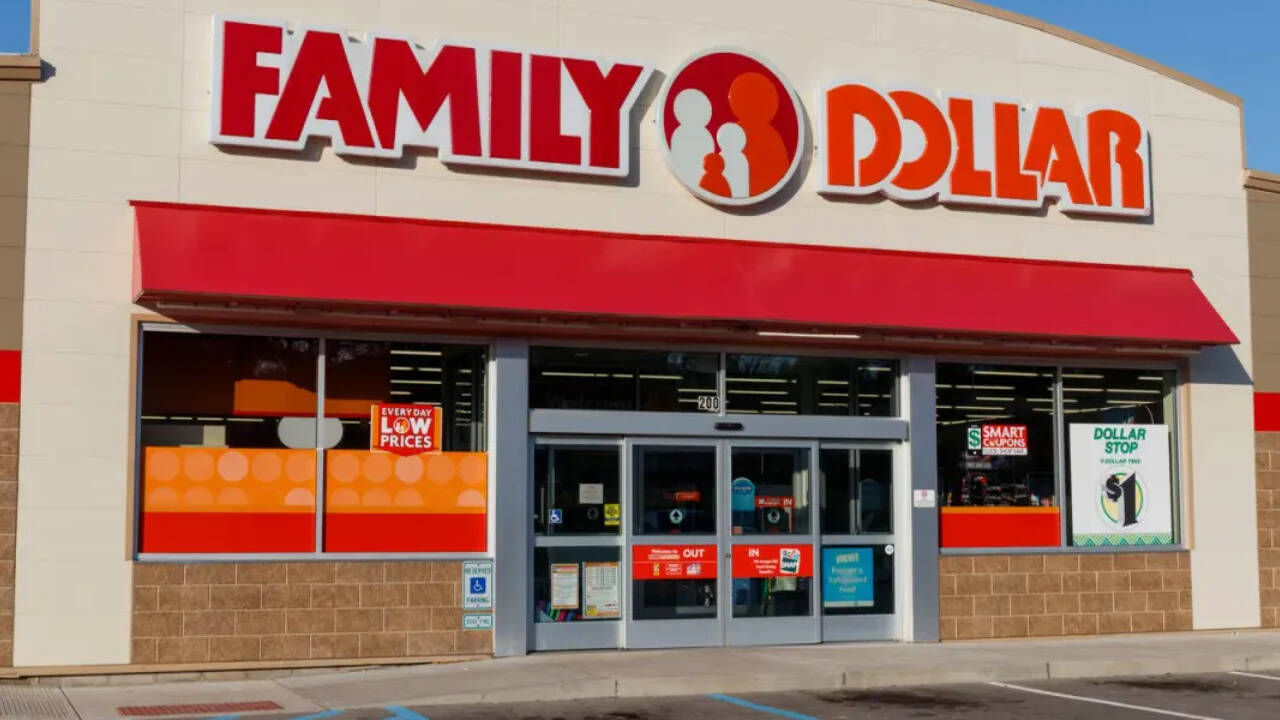
Family Dollar agreed to pay $63 million to resolve a massive multistate investigation into systematic scanner overcharges across thousands of its discount retail locations. The settlement concludes years of regulatory scrutiny from state attorneys general who found that customers were routinely charged more at the cash register than the prices advertised on store shelves. While the headline figure appears substantial on paper, the true mechanics behind this breakdown reveal a deeper operational failure within the extreme-value retail model.
For shoppers living paycheck to paycheck, a discrepancy of fifty cents or a dollar at the register is not a rounding error. It is a direct hit to a tightly calibrated household budget. When an item rings up higher than the shelf tag, most customers in a rush either fail to notice or decline to hold up the checkout line to argue over pocket change. Multiply those quiet pennies across millions of daily transactions, and you uncover a structural flaw that regulators finally decided could no longer be ignored.
The Mechanics of the Shelf-to-Scanner Gap
Retail pricing errors happen everywhere, from high-end department stores to local hardware shops. However, the sheer scale and persistence of the pricing discrepancies uncovered at Family Dollar pointed to something far more systemic than occasional human error. State weights and measures inspectors repeatedly documented failure rates that blew past standard industry tolerances.
In a healthy retail operation, price changes flow seamlessly from corporate headquarters to local store servers, accompanied by clear labor allocations to swap out physical shelf tags. At Family Dollar, that pipeline fractured. Corporate algorithms rapidly adjusted prices upward to combat inflation and protect shrinking margins, pushing digital updates directly to the point-of-sale registers. Meanwhile, the physical stores lacked the payroll hours required to print, sort, and place the corresponding paper tags on the aisles.
The result was predictable. The register knew the new price, while the shelf told a lie.
Consider a hypothetical example to see how this plays out on a Tuesday afternoon. A corporate pricing analyst raises the cost of a box of cereal from $3.25 to $3.75 to offset supplier increases. That digital update hits the store's register system overnight. At 8:00 AM, the single employee opening the store has to unlock the doors, unload a delivery truck, stock three aisles, and man the register. Updating four hundred paper shelf labels falls to the bottom of an impossible to-do list. Every shopper who grabs that cereal pays an extra fifty cents they never agreed to spend.
Why Extreme Discount Retail Breeds Operational Friction
To understand how a national chain allows its pricing infrastructure to degrade to the point of a $63 million penalty, you have to look at the unit economics of the dollar store sector. Unlike traditional grocers that rely on high-volume throughput and sophisticated automated inventory systems, small-box discounters built their empires on ruthless cost containment.
Every square foot is maximized for merchandise, leaving minimal backroom storage. Every labor hour is scrutinized at the corporate level. Store managers frequently operate on salaried schedules that force them to work sixty or seventy hours a week just to keep freight off the sales floor. When corporate leadership prioritizes rapid store expansion and margin preservation over store-level staffing, basic operational hygiene is the first casualty.
- Chronic understaffing leaves single employees juggling cashier duties, freight unloading, and compliance tasks simultaneously.
- Aggressive dynamic pricing pushes frequent cost adjustments down to stores faster than skeleton crews can physically execute them.
- Cluttered backrooms often bury boxes of newly printed price tags underneath pallets of seasonal merchandise.
- Outdated hardware in legacy storefronts slows down the handheld scanning devices employees use to verify shelf accuracy.
Parent company Dollar Tree, which acquired Family Dollar in 2015 after a fierce bidding war, spent nearly a decade trying to untangle these operational knots. The integration proved notoriously difficult. Supply chains clashed, store formats overlapped, and deferred maintenance piled up across thousands of aging Family Dollar locations. Regulators began noticing that the pricing violations were not isolated to one rogue district manager or a single state; they were baked into the daily reality of the chain's operating model.
Breaking Down the $63 Million Accountability Deal
State attorneys general do not typically coordinate multistate consumer protection actions unless the paper trail is overwhelming. Before reaching the $63 million agreement, state inspectors conducted hundreds of unannounced audits. In several jurisdictions, inspection failure rates exceeded ten or twenty percent, far above the standard two percent error threshold typically permitted by state weights and measures guidelines.
Financial penalties in corporate settlements often look intimidating in press releases, yet their actual deterrent power depends entirely on the fine print. A flat check written to state treasuries rarely changes behavior on the sales floor if the underlying business model remains untouched. Recognizing this, regulators paired the monetary payout with strict injunctive relief designed to force operational reform.
| Settlement Component | Operational Impact on Stores | Consumer Protection Mechanism |
|---|---|---|
| Financial Restitution and Penalties | Direct hit to corporate cash reserves and quarterly earnings. | Funds state consumer protection enforcement and restitution pools. |
| Mandatory Pricing Audits | Requires dedicated labor hours for regular shelf-to-register checks. | Catches digital-to-physical price mismatches before shoppers reach checkout. |
| Instant Register Overrides | Empowers cashiers to honor lower shelf prices without manager approval. | Eliminates checkout friction and ensures immediate point-of-sale fairness. |
| Corporate Compliance Reporting | Forces executive leadership to submit verified audit data to state monitors. | Creates ongoing legal liability if error rates spike again. |
The mandate requiring stores to honor the lowest advertised price at the register is particularly significant. Historically, a shopper who caught an overcharge had to wait for a busy cashier to call a manager, walk back to the aisle, verify the tag, and manually key in an override. Most shoppers simply gave up. Streamlining that correction process shifts the burden of proof back onto the retailer, where it belongs.
The Hidden Vulnerability of Food Deserts
There is an uncomfortable demographic reality sitting beneath this settlement. Family Dollar and its direct competitors do not build the bulk of their stores in affluent suburbs where shoppers have four competing supermarkets within a three-mile radius. They thrive in rural towns and low-income urban neighborhoods that major grocery chains abandoned decades ago.
In these communities, the local dollar store often functions as the primary source for pantry staples, milk, eggs, and basic household goods. When a shopper lacks reliable transportation to drive twenty minutes to a regional supermarket, they lose their leverage as a consumer. They cannot easily take their business elsewhere when they spot a pricing discrepancy.
Economists often describe this dynamic as a captive market. Because alternative retail options are scarce, foot traffic remains steady even when store conditions deteriorate or checkout prices fail to match shelf labels. Regulators took a particularly hard line on Family Dollar precisely because the company's core customer base is disproportionately vulnerable to incremental price inflation. Extracting an extra few dollars per basket from families relying on fixed incomes or government nutrition assistance carries a much heavier social cost than a pricing glitch at a luxury boutique.
Industry Precedent and the Regulatory Domino Effect
Family Dollar is hardly the first major retailer to collide with state weights and measures laws over scanner accuracy. Over the past two decades, big-box giants, national pharmacy chains, and regional grocers have all faced similar enforcement actions. Yet the $63 million price tag places this settlement among the more severe penalties handed down for retail pricing violations in recent memory.
The timing of the enforcement wave is no accident. Following years of aggressive post-pandemic food inflation, state attorneys general placed retail pricing practices under a microscope. Consumers grew hyper-aware of grocery bills, leading to a surge in formal complaints filed with state consumer protection offices. When local inspectors followed up on those complaints, they found systemic vulnerabilities across the entire discount sector.
Dollar General, Family Dollar's fiercest rival, has faced its own wave of state-level fines and lawsuits over identical shelf-to-scanner discrepancies in states like Ohio, Missouri, and North Carolina. Together, these enforcement actions send an unmistakable signal to retail executives across the country. Regulators are no longer willing to accept corporate excuses about supply chain volatility or tight labor markets as justification for inaccurate shelf tags.
What Meaningful Reform Actually Requires
Signing a consent decree and wiring $63 million is the easy part for a publicly traded corporation. Actually fixing the problem across thousands of dispersed retail locations is an entirely different challenge.
True compliance requires fundamental changes to how stores operate on a Tuesday morning. Technology offers partial solutions. Electronic shelf labels, which use e-ink displays connected wirelessly to the store's central pricing server, completely eliminate the lag between register updates and aisle tags. When corporate changes a price, the shelf display updates within seconds.
However, electronic shelf labels require massive upfront capital expenditure. Outfitting thousands of small-box stores with digital tags runs into the hundreds of millions of dollars, an investment that clashes violently with the low-capex philosophy of extreme discount retail. Until that technology becomes cheap enough to deploy at scale, Family Dollar must rely on human beings to bridge the gap.
That brings the issue right back to payroll. You cannot audit thousands of SKUs per store without paying people to walk the aisles with barcode scanners. If corporate leadership attempts to absorb the cost of this settlement by quietly trimming store-level labor hours elsewhere, they will inevitably recreate the exact conditions that triggered the investigation in the first place.
For the everyday shopper walking into a discount store, the immediate takeaway is straightforward. Never assume the screen at the register matches the sticker on the shelf. Keep an eye on the digital display as items are scanned, check your receipt before stepping away from the counter, and insist on the shelf price whenever a discrepancy appears. Regulators have finally forced the corporate checkbook open, yet the most reliable defense against retail overcharging remains a vigilant customer standing right in front of the register.