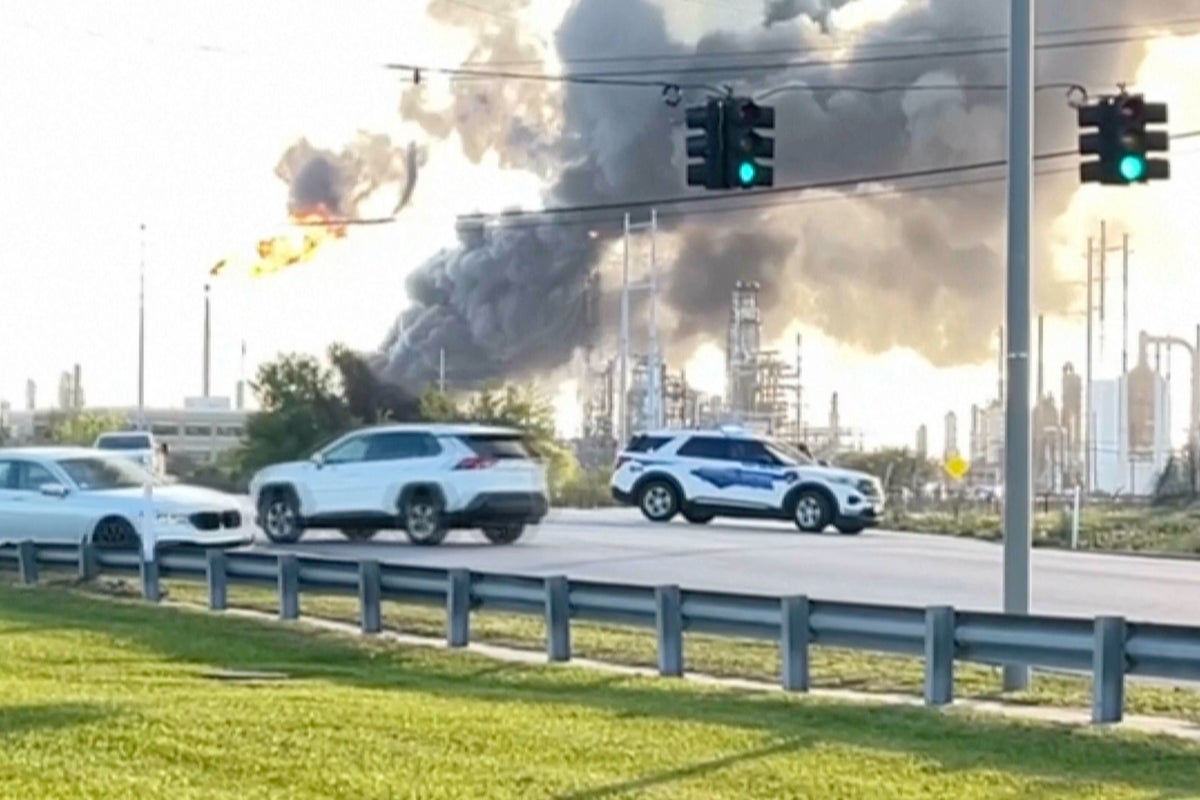
The failure of a high-pressure hydrocarbon processing unit is never an isolated event; it is the culmination of a kinetic chain where mechanical fatigue, sensor latency, and chemical instability intersect. When a Texas oil refinery experiences a "loud boom" followed by sustained atmospheric combustion, the incident represents a catastrophic breach of the containment boundary—the physical and operational shell designed to keep volatile feedstocks under control. Assessing the impact of such an explosion requires moving beyond the visual spectacle of smoke plumes to quantify the structural, economic, and systemic vulnerabilities exposed by the event.
The Triad of Refined Product Vulnerability
Refineries operate as closed-loop systems where thermal energy and pressure are precisely balanced to crack long-chain hydrocarbons. A disruption in this balance typically originates in one of three critical domains:
- Mechanical Integrity and Metallurgy: High-temperature hydrogen attack (HTHA) or localized corrosion can thin the walls of pressure vessels. If the internal pressure exceeds the hoop stress capacity of the metal, the resulting rupture releases a mass of pressurized gas that expands at supersonic speeds—the source of the audible "boom" reported by local populations.
- Process Control Latency: Modern refineries rely on Distributed Control Systems (DCS). If a sensor fails to register a pressure spike or a relief valve fails to actuate within a millisecond window, the system enters a runaway state. The delta between the detection of an anomaly and the automated mitigation is the primary predictor of explosive force.
- Hydrocarbon Containment Breach: Once the vessel is compromised, the primary fuel source—whether crude oil, naphtha, or butane—atomizes upon contact with oxygen. This creates a fuel-air mixture that, when met with an ignition source such as friction-generated heat or electrical discharge, transitions from a leak to a deflagration.
The Physics of the Blast Radius
The "loud boom" described by witnesses is the acoustic signature of a shockwave. In industrial forensic analysis, this is mapped using the TNT equivalence method. This framework calculates the energy potential of the released hydrocarbons to determine the overpressure generated at specific distances.
- 1.0 psi Overpressure: Sufficient to shatter glass and cause minor structural damage to surrounding residential areas.
- 3.0 to 5.0 psi Overpressure: Causes significant damage to non-reinforced masonry and can derail railcars parked at the depot.
- 10.0+ psi Overpressure: Results in total destruction of steel-frame buildings within the immediate refinery perimeter.
The smoke plumes serve as a qualitative indicator of the combustion's efficiency. Black, opaque smoke suggests incomplete combustion of heavy aromatics, indicating that the fire is fueled by unrefined or partially processed feedstocks. The environmental footprint of this plume is dictated by the atmospheric mixing layer; a low-hanging plume poses a higher immediate toxicity risk to the local ZIP codes than one that ascends rapidly into the upper troposphere.
Economic Friction and the Supply Chain Ripple
A refinery explosion is a supply-side shock that immediately alters the regional crack spread—the difference between the price of crude oil and the products extracted from it. Texas, as a global hub for petroleum refining, carries a disproportionate weight in these calculations. The loss of a single high-capacity facility creates three distinct economic bottlenecks.
Inventory Displacement
The immediate cessation of operations at a refinery depot forces midstream providers to reroute pipelines. This creates a "logistical dam" where crude oil intended for the facility must be stored at higher costs or diverted to refineries already operating near 95% utilization. This inefficiency is priced into the market as a premium.
Capital Expenditure and Insurance Re-rating
The cost of an explosion extends far beyond the immediate damage to the cracking unit. Insurance providers utilize the "Estimated Maximum Loss" (EML) metric to recalibrate premiums across the entire sector following a Texas-based event. A major fire signals to the market that the aging infrastructure in the Gulf Coast region may require a massive infusion of preventative capital expenditure, dragging down the short-term free cash flow of the operating firm.
Regulatory and Compliance Drag
Following a "loud boom" event, the Occupational Safety and Health Administration (OSHA) and the Chemical Safety Board (CSB) initiate investigations that can last 12 to 24 months. During this period, the facility—or specific units within it—remains offline. The opportunity cost of this downtime often exceeds the physical repair costs, as the firm loses its market share of gasoline, diesel, and jet fuel production during peak demand cycles.
The Human-System Interface
Safety in high-hazard environments is often analyzed through the "Swiss Cheese Model," where multiple layers of protection (alarms, physical barriers, automated shutdowns, and human intervention) must all fail simultaneously for an accident to occur.
In many Texas refinery incidents, the "loud boom" is the result of an ignored or misinterpreted alarm. Alarm fatigue occurs when operators are flooded with low-priority notifications, leading them to miss the critical signal of an impending vessel failure. The organizational culture surrounding "Process Safety Management" (PSM) determines whether a facility treats a minor leak as a fluke or a systemic warning.
Quantifying the Recovery Timeline
The restoration of a damaged refinery follows a rigid sequence of forensic and engineering milestones.
- Quenching and Stabilization: The primary objective is to isolate fuel lines and extinguish the atmospheric fire. This stage often takes 24 to 72 hours, depending on the volume of the depot.
- Structural Assessment: Engineers must determine if the heat from the fire has "annealed" the surrounding steel structures, rendering them brittle and unsafe for continued use.
- Root Cause Analysis: Before a restart is permitted, the firm must prove to regulators that the specific failure mechanism—be it a faulty weld or a software glitch—has been eradicated across all similar units.
- Recalibration: Restarting a refinery is more dangerous than running it. The "startup" phase involves bringing cold systems up to 900 degrees Fahrenheit, a period where thermal expansion causes the most mechanical stress on the pipes.
The immediate strategic priority for stakeholders is the assessment of the facility's "Complexity Index." High-complexity refineries that process sour crude are more difficult to repair and restart than simple refineries. If the damage occurred in a fluid catalytic cracker (FCC), the financial impact on the regional gasoline supply will be acute, as these units are the primary drivers of high-octane fuel production.
Organizations must now pivot from reactive containment to a proactive audit of all high-pressure sensor nodes. The immediate data play is the deployment of thermal imaging and acoustic sensors across the site's perimeter to detect "silent" leaks before they reach the ignition threshold. The goal is to move the detection window from seconds to hours, effectively decoupling the kinetic chain before the pressure reaches the point of no return.