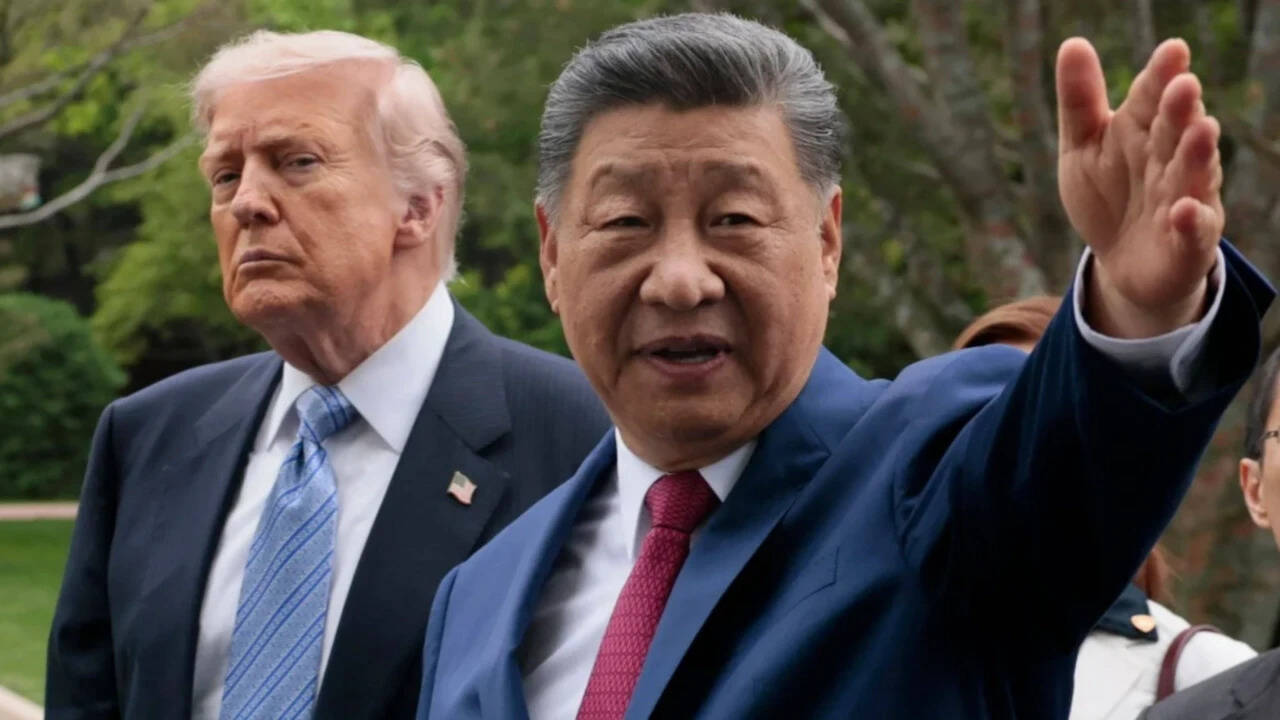
US President Donald Trump recently floated the prospect of renaming Lake Ontario to Lake America, using the digital megaphone of Truth Social to signal that Washington no longer expects to conduct significant commerce with Canada's economic engine. This rhetorical salvo arrives directly on the heels of collapsed trade negotiations, fifty percent tariffs on twenty billion dollars worth of Canadian goods, and mutual threats targeting the shared auto manufacturing sector. Yet beneath the headline-grabbing geographic provocation lies a much grimmer structural reality. The North American free trade architecture is not merely straining; it is actively fracturing into economic nationalism.
Geographic renaming stunts are rarely just about cartography. They serve as psychological markers in broader policy conflicts. Last year's executive order targeting the Gulf of Mexico provided a clear blueprint for this behavior. Translating that playbook to an international body of water like Lake Ontario introduces a different magnitude of friction. The lake is shared. Its northern shores belong to the sovereign territory of Ontario, while its southern borders touch New York State. A unilateral declaration from Washington carries zero legal weight in Ottawa or across international maritime boards, rendering the proposal an exercise in pure economic coercion rather than practical mapping.
Ontario sits at the absolute center of this geopolitical storm for a reason. The province anchors Canada's industrial base, particularly within the automotive supply chain. Vehicles and components routinely cross the border multiple times during assembly, stitched together by decades of integrated logistics. Threatening fifty percent duties on these components while publicly insulting provincial leadership destroys the predictable environment that manufacturers require to plan capital expenditures.
Canadian Prime Minister Mark Carney walked away from the negotiating table after recognizing that Washington's terms crossed the line from hardball bargaining into structural dismantling. According to Ottawa, American proposals aimed directly at weakening core Canadian sectors like steel, aluminum, and autos. When a trade partner demands terms that resemble corporate liquidation rather than mutual exchange, diplomacy stalls. Ottawa's retaliatory tariffs targeting American agricultural goods, pulp, paper, and electronics prove that Canadian leadership has chosen a protracted economic duel over quiet capitulation.
The human cost of this escalation extends far beyond executive suites and social media feeds. Consider a hypothetical mid-sized automotive supplier operating out of Windsor, Ontario, or a family-owned furniture manufacturer in Michigan relying on cross-border lumber. These enterprises cannot simply pivot their supply chains overnight without absorbing crippling cost increases. Every percentage point added to a tariff wall translates directly into higher sticker prices for consumers, pinched profit margins for small businesses, and eventual layoffs on factory floors in both nations.
Washington's stance relies on the premise of absolute leverage. The underlying theory assumes that because Canada executes a massive share of its trade with the United States, Ottawa must eventually fall in line. This calculation ignores the political cost of submission. No sovereign government can accept terms explicitly designed to subordinate its domestic industries without facing immediate political extinction at home. By framing the relationship as a zero-sum game of dominance, the White House has backed Canadian officials into a corner where fighting back is the only viable political survival strategy.
International relations are governed by gravity, proximity, and shared history. You can alter the labels on a map, but you cannot dredge a trench deep enough to separate two economies that have spent a century fusing their industrial DNA. As retaliatory duties take effect and diplomatic channels freeze, the dispute over a lake's name exposes a darker truth about modern statecraft. Symbols have replaced strategy, and the collateral damage is being paid by the workers who built the world's most successful cross-border manufacturing alliance