The green leather benches of the House of Commons are narrower than they look on television. They are packed tight, designed to squeeze opponents close enough to feel the heat of each other's breath. It is a chamber built for theater, but on Wednesday afternoon, the theater gave way to the heavy, quiet friction of reality.
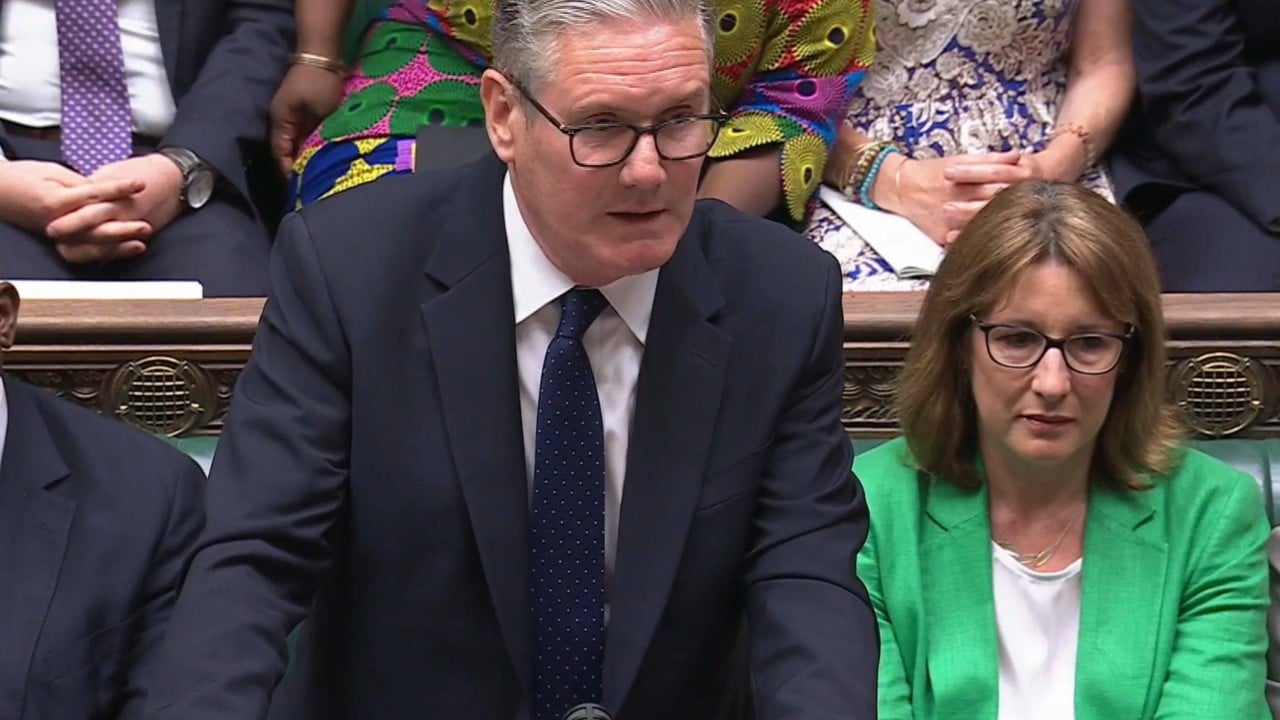
Keir Starmer stood at the despatch box. His fingers rested on the brass-bound edges of the wooden chest that has anchored British prime ministers for over a century. He looked up toward the gallery, where his wife, Victoria, and his two teenage children sat watching. Two years ago, he had entered Downing Street with a historic, crushing landslide. Now, he was preparing the ground for his own departure, a leader cut down not by a general election, but by the relentless, grinding machinery of his own party.
To understand the British premiership is to understand the illusion of the levers.
There is a myth that when a prime minister walks through the black door of Number 10, they gain access to a grand control room. They believe that by pulling a lever, a policy moves, a hospital is built, or an economy stabilizes. But as Starmer’s predecessor-but-several once found, and as he himself experienced, the levers of government are often unattached to the floor. You pull them, and they simply sway in your hand.
"We did pull the levers," Starmer insisted to the chamber, his voice carrying the defensive weight of a man who knows his legacy is already being drafted by skeptics.
He listed the things he believed had moved. Waiting lists for the National Health Service were finally dipping. Child poverty initiatives were grinding forward. He spoke of the quiet, unseen victories: the legislation designed to prevent official cover-ups after national tragedies, the strengthened protections for working-class people who live paycheck to paycheck.
But the room knew the ledger was more complicated. The soaring cost of living, tattered public services, and the brutal reality of May's local elections had turned his own party against him. In politics, gratitude is a highly perishable commodity. The same colleagues who once cheered his historic 2024 victory had spent the last two months quietly, then loudly, demanding his head. He had surrendered to the pressure with what he termed "good grace," paving the way for Andy Burnham to take the mantle.
The session on Wednesday was not the usual, snarling bear pit of Prime Minister's Questions. The sharp edges had been filed down by the shared realization of how fragile the whole endeavor truly is.
Only days earlier, former lawmaker Ann Widdecombe had been killed, her death investigated by counterterrorism police as a murder. It was the third time in eleven years that a current or former member of this parliament had been slain. When Starmer spoke of her, suggesting a protective shield be mounted in the chamber in her honor, the partisan divide dissolved. The politicians sitting on those narrow green benches looked less like combatants and more like vulnerable human beings caught in a dangerous, unforgiving trade.
"Life comes at you fast," remarked Kemi Badenoch, the Conservative opposition leader.
There was no malice in her voice. She had survived her own party’s chaotic revolving door of leadership. She knew, as Starmer knew, that the dispatch box is a temporary leasehold. She thanked Starmer’s family for the sacrifices they had made—sacrifices that included enduring attacks on their home and the quiet, private grief of losing a brother while the cameras remained trained on the prime minister's face.
Starmer nodded, acknowledging the private kindness Badenoch had extended to him during his darkest personal moments. In that brief exchange, the mask of Westminster fell away. It revealed the intense, exhausting human toll of holding power in a country that expects its leaders to be superhuman while punishing them for being human.
Between the solemn tributes and the ledger of policy, there was the ordinary, desperate reach for normalcy. Starmer joked about his evening plans: an "important appointment with the television" to watch England face Argentina in the World Cup semifinal.
When asked what advice he would pass to Burnham, his successor, or to the young men wearing the England shirt tonight, Starmer shook his head.
"I won't give advice," he said. "I will simply give my wholehearted support."
The final question of the afternoon fell to Carolyn Harris, a Labour MP who had walked the long road of party reform alongside him. Her voice cracked, tears visible as she spoke of the decency that lay beneath Starmer's often stiff, lawyerly exterior.
Starmer stood for the last time. His voice, usually disciplined and measured, began to fray at the edges.
He looked not at the journalists writing his political obituaries in the press gallery, nor at the opposition benches. Instead, he looked at the guests invited to the gallery—the ordinary people, the Jaguar Land Rover workers, the parents who had lobbied for social media bans to protect their children, the people whose names never make the front page but whose struggles are the raw material of legislation.
"You're the reason I came into politics," he said, his voice dropping to a near whisper.
He turned his eyes to his family, offering a quiet, public declaration of love, before uttering a single, final word.
"Goodbye."
He gathered his papers, turned his back on the dispatch box, and walked down the center of the chamber. The applause started on his own benches, then crossed the floor, rising into a rare, standing ovation that filled the high-arched room. He did not look back. On Monday, he will ride to Buckingham Palace, hand a piece of paper to the King, and walk out into the London rain, a private citizen once more.