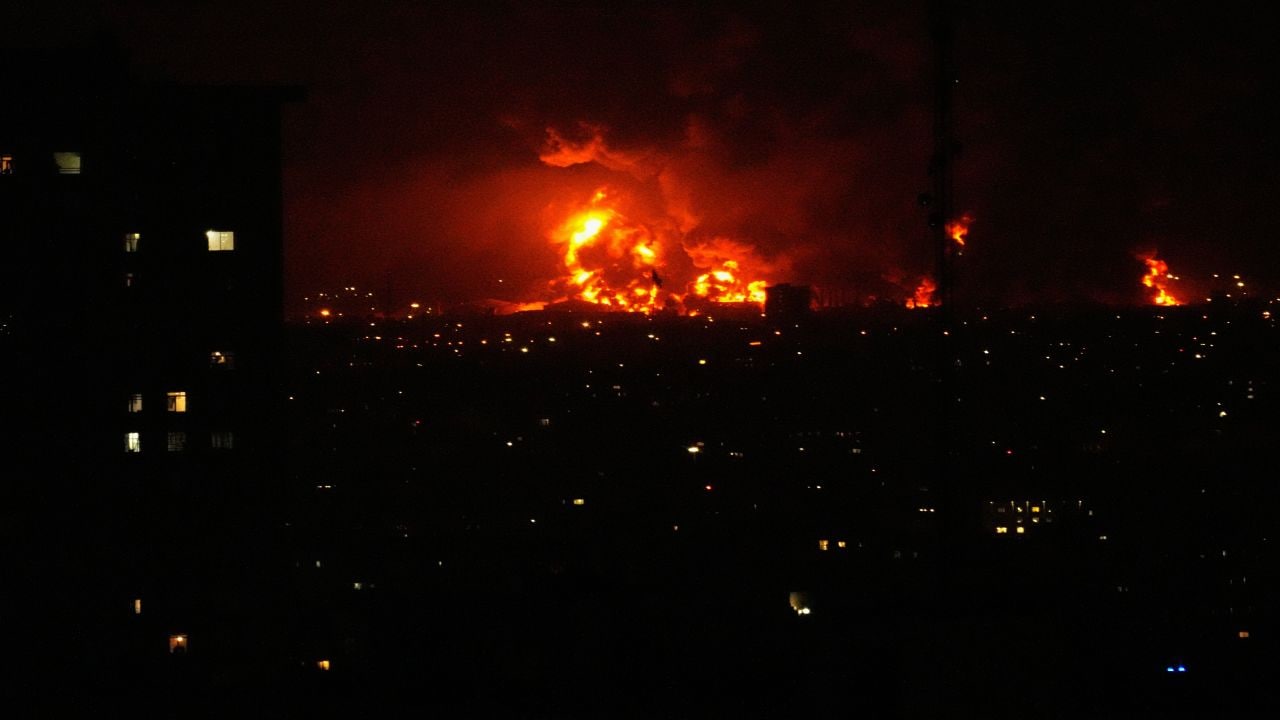
The air in Abu Dhabi carries a specific weight. It is not just the humidity drifting off the Persian Gulf or the scent of expensive oud lingering in the marble lobbies of the Etihad Towers. It is the weight of silence. For days, that silence felt heavy, pressurized by the distant thud of ballistic calculations and the orange glow of interceptions lighting up the horizon. When the sky finally cleared following the unprecedented Iranian strikes across the region, the world turned its gaze toward one man.
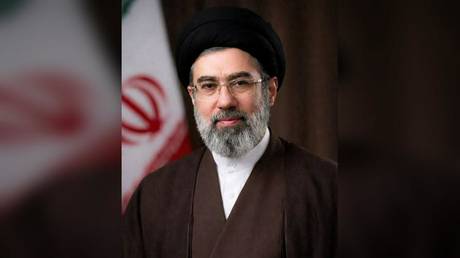
Sheikh Mohammed bin Zayed Al Nahyan did not step to a podium draped in the aggressive iconography of a war footing. He didn't need to. When he finally spoke to his people, and by extension, the nervous markets of the West, his message was stripped of theatrics.
"The country is well," he said.
Four words. They functioned as a structural beam for a nation that has spent five decades transforming a coastal desert into a global clearinghouse for gold, data, and aviation. But beneath that calm sits a cold, hard reality that every resident of the Emirates understands implicitly: peace here is not a natural state. It is a manufactured product. It is an engineering feat as complex as the Burj Khalifa, maintained by a relentless, invisible vigilance.
The Illusion of Fragility
To the casual observer, the United Arab Emirates looks like a target made of crystal. You see the glass-bottomed pools suspended fifty stories in the air, the delicate AI laboratories in Masdar City, and the vast, sprawling ports of Jebel Ali. It looks breakable. Critics often mistake this sophistication for softness. They assume that a nation built on luxury and logistics must be "easy prey" once the missiles start flying.
They are wrong.
Consider a hypothetical merchant named Omar. Omar runs a mid-sized logistics firm out of Dubai. When the sirens echoed and the news alerts began to scream about regional escalation, Omar didn’t pack a bag for the airport. He went to work. He watched the flight trackers. He saw that while the world’s headlines were bleeding red, the Emirates’ systems were holding. This isn't because of luck. It is because the UAE has spent the last decade becoming one of the most defended patches of earth on the planet.
The "well-being" the President spoke of isn't just a state of mind. It’s a state of hardware. The UAE was the first foreign customer for the THAAD missile defense system. They operate a layered umbrella of protection that includes Patriot batteries and advanced "Bark" electronic warfare suites. When Sheikh Mohammed says the country is no easy prey, he is referencing a multi-billion dollar shield that operates while the rest of the city sleeps.
The Sovereignty of the Ledger
While the military hardware provides the physical shell, the true battlefield is the economy. War in the Middle East usually triggers a flight of capital. Investors are notoriously skittish creatures; they spook at the first sign of smoke. Yet, in the wake of the recent tensions, the UAE’s financial hubs didn’t see an exodus. They saw a confirmation.
The strategy here is deeper than just surviving a strike. It is about becoming "un-attackable" through interconnectedness. When you hold the sovereign wealth of a dozen different nations, when you are the primary hub for East-West trade, and when you are the world’s laboratory for renewable energy, an attack on you is an attack on the global supply chain.
The President’s comments were a signal to the boardrooms in London, New York, and Tokyo. He was telling them that the "safe haven" status of the UAE is not a fair-weather arrangement. It is a core tenet of their identity. They have built a fortress, yes, but it is a fortress with open doors.
The Human Core of the Shield
Numbers and defense systems are cold. They don't capture the anxiety of a mother in Sharjah or the determination of a young Emirati engineer working on the nation's lunar rover. The "human element" of this story is the psychological contract between the leadership and a population that is 90% expatriate.
If the UAE is "well," it means the social fabric hasn't frayed. In many neighboring states, regional conflict leads to internal crackdowns or public panic. In the Emirates, the reaction was a measured, almost defiant, return to business. This stems from a specific brand of trust. The people here have seen the country navigate the Arab Spring, the global financial crisis of 2008, and a once-in-a-century pandemic with the same clinical efficiency.
The President’s choice to address the public was an act of transparency in a region where silence is usually the default. He acknowledged the tension without feeding the hysteria. By stating that the UAE is not easy prey, he wasn't just warning external adversaries; he was reminding his own people of their collective strength.
The Invisible Stakes
Why does this matter to someone sitting in a coffee shop in Seattle or a flat in Berlin?
Because the UAE is the world's canary in the coal mine for the "Global City" experiment. If a nation that has staked everything on openness and modernity can be bullied into submission by regional kinetic strikes, then the model of the modern, peaceful trading state is at risk.
If the UAE falls, the price of your smartphone goes up. Your energy bills spike. The transition to green hydrogen slows down. The stakes are not just about who controls a piece of land; they are about whether a nation can choose a path of prosperity over a legacy of grievance.
The President’s "all is well" wasn't a boast. It was a status report from the bridge of a ship that has navigated much worse storms.
The UAE occupies a jagged piece of geography. To the north, a revolutionary power with long-range ambitions. To the south and west, a world still reeling from decades of instability. In the middle sits this anomaly of chrome and ambition. It is a place where the future is being written in real-time, often in the face of those who would prefer the past.
The Architecture of Resilience
Resilience is a word that gets tossed around until it loses its meaning. In the context of the UAE, it is better described as "redundancy."
Think of the country like a high-end server farm. If one power line is cut, three more kick in. If one port is blocked, another has the capacity to take the load. This is the "no easy prey" philosophy. It isn't just about biting back; it’s about being impossible to swallow.
When Sheikh Mohammed bin Zayed spoke, he was leaning on fifty years of nation-building that prioritized stability above all else. He was speaking to the ghost of his father, Sheikh Zayed, who founded the country on the radical idea that the tribes of the coast were stronger together than apart. That unity is the ultimate defense system.
The missiles may be fast, and the rhetoric may be loud, but the ledger of the Emirates is long. The country remains a place where a person from any corner of the globe can come, build a life, and feel a level of safety that is becoming increasingly rare in the "civilized" West.
The sun sets over the Persian Gulf, turning the water into a sheet of hammered gold. The lights of the skyline flicker on, one by one, a defiant grid of electricity against the darkening sky. There is no blackout. There is no curfew. There is only the steady, rhythmic pulse of a country that refused to be a victim of its geography.
The President’s words linger in the air like the humidity. They are a promise made in the sand and kept in the steel. The world will keep watching, waiting for a crack in the glass, but for now, the fortress stands. It is well. It is ready. It is anything but easy.