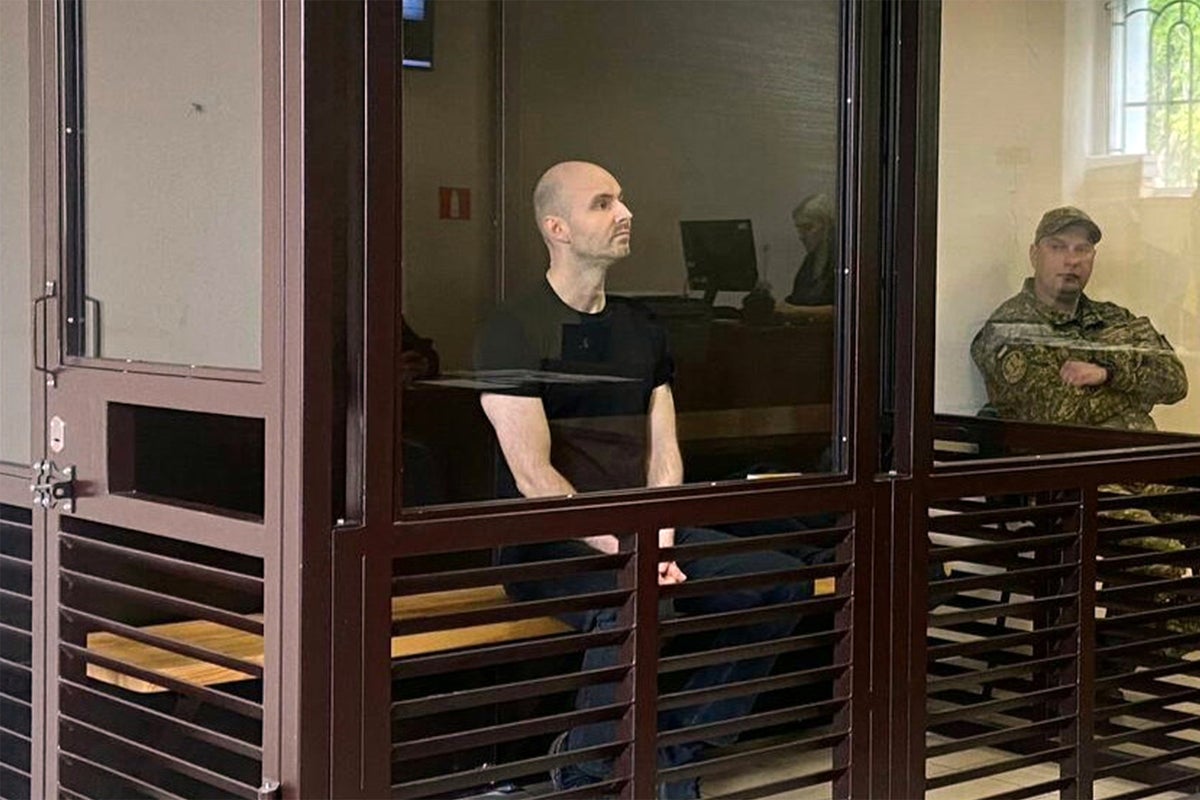
The headlines are predictable. They call it a victory for national security. They paint the eight-year sentence handed to Callum Flynn—the Scottish man who funneled sensitive military data to Russian intelligence—as a stern message to would-be traitors.
They are wrong.
The British judicial system just signaled that the price of betraying the West is remarkably affordable. If you are an operative for a foreign power, or a disgruntled citizen looking to monetize your access, the math now looks incredibly favorable. You trade a few years of state-sponsored housing for the chance to destabilize a sovereign nation’s defense.
This isn't a victory. It’s a clearance sale on national integrity.
The Myth of the Significant Sentence
Eight years is the "lazy consensus" of a functional justice system. On paper, it sounds substantial. In reality, with standard parole eligibility, Flynn could be walking free in four or five years.
Contrast this with the damage done. Flynn wasn't just leaking gossip; he was mapping the vulnerabilities of the Ukrainian military during an active, high-stakes invasion. He provided the Russian GRU with actionable intelligence that directly correlates to the loss of lives and the destruction of infrastructure.
When you weigh "four years served" against "thousands of dead soldiers and a shifted geopolitical border," the scales aren't just tipped—they’re broken.
The courts treat espionage like a white-collar crime. They look at it through the lens of data theft or corporate sabotage. But intelligence is not a commodity; it is a life-and-death utility. We are applying 20th-century sentencing guidelines to 21st-century hybrid warfare, and the gap between the two is where our enemies live.
The Intelligence Economy is Undervaluing Betrayal
In the world of high-level security, we often talk about the "cost per bit." How much does it cost an adversary to acquire a specific piece of information?
Usually, the cost involves years of deep-cover planting, sophisticated cyber-attacks, or massive financial bribes. By handing out an eight-year sentence, the UK has effectively lowered the "human cost" of domestic recruitment.
The Russian intelligence services are experts at the long game. They don't mind if their assets get caught eventually, provided the asset was cheap to acquire and the fallout is manageable. If the "fallout" for their Scottish source is a brief stint in a Category B prison followed by a quiet life on license, the GRU’s Return on Investment (ROI) is through the roof.
I have seen intelligence frameworks crumble because the leaders assumed "patriotism" was a sufficient barrier to entry. It isn't. The barrier to entry is the severity of the consequence. When the consequence is less than a decade of time, the risk-reward ratio shifts dangerously toward the "reward" side for any ideological extremist or financial desperate.
Dismantling the Ukrainian Military Argument
The public narrative focuses on the "Scottish Man." That is a distraction. The focus should be on the technical nature of the breach.
Flynn’s data wasn't just a list of names. It was a blueprint of logistics. In modern warfare, logistics is the only thing that matters. You can have the best tanks in the world, but if an adversary knows exactly where your fuel depots are and what time your rotations happen, those tanks are just expensive paperweights.
By selling this data, Flynn wasn't just "spying." He was acting as a force multiplier for the Russian artillery. Every coordinate he confirmed was a shell that didn't miss.
The court’s failure to recognize this as an act of active combat participation is a legal travesty. We are clinging to an outdated definition of "combatant." In the digital age, a man behind a keyboard in Scotland can kill more people than a sniper in a trench. Yet, we sentence the sniper to life and the keyboard operative to a decade.
The Deterrence Gap
We often hear the question: How do we stop domestic radicalization and foreign recruitment?
The answer is never "holistic community outreach." It is never "better digital literacy."
The answer is deterrence.
True deterrence requires a penalty so disproportionate that the thought of the act becomes unthinkable. The Cold War worked because the stakes were total. Today, we treat national security breaches as "misunderstandings" or "errors in judgment."
Flynn’s defense argued that he was motivated by a "warped sense of reality" or "misguided ideology."
Stop.
Ideology is not a mitigating factor; it is an aggravating one. A man who betrays his country for money is a mercenary. A man who betrays his country because he believes the enemy is right is a true believer. The true believer is infinitely more dangerous because they cannot be bought back. They can only be removed from the equation.
The Hidden Cost of "Fairness"
The downside of my stance is obvious: it threatens the very liberal values we are trying to protect. We pride ourselves on a fair, measured justice system. We don't want to be the monsters we are fighting.
But there is a point where "fairness" becomes a suicide pact.
When an individual actively works to dismantle the safety of the state and its allies, they are opting out of the social contract. To then use that same social contract to protect them from the full weight of their actions is a paradox that only benefits the aggressor.
Russia knows this. They use our own commitment to due process and "reasonable" sentencing as a weapon against us. They know we won't disappear a traitor. They know we won't impose life without parole for "minor" data breaches. And so, they keep recruiting.
Stop Asking the Wrong Questions
People keep asking: How could he do this?
That is a useless question. People do terrible things for ego, money, or boredom every single day.
The real question we should be asking is: Why did we make it so easy for him to survive the consequences?
We are currently operating under a delusion that the war in Ukraine is "over there." It isn't. It is in every server, every military database, and every citizen's laptop who has access to sensitive files.
If we continue to treat espionage as a mid-tier felony, we will continue to see a rise in "freelance" traitors. Eight years is not a sentence. It’s a sabbatical.
The next person considering a deal with the GRU isn't looking at Flynn and feeling fear. They are looking at Flynn and calculating that they can handle five years in exchange for being a "hero" in the eyes of the Kremlin.
The justice system didn't protect us this week. It just set the market price for the next betrayal.
Build a bigger cage, or prepare for more rats.